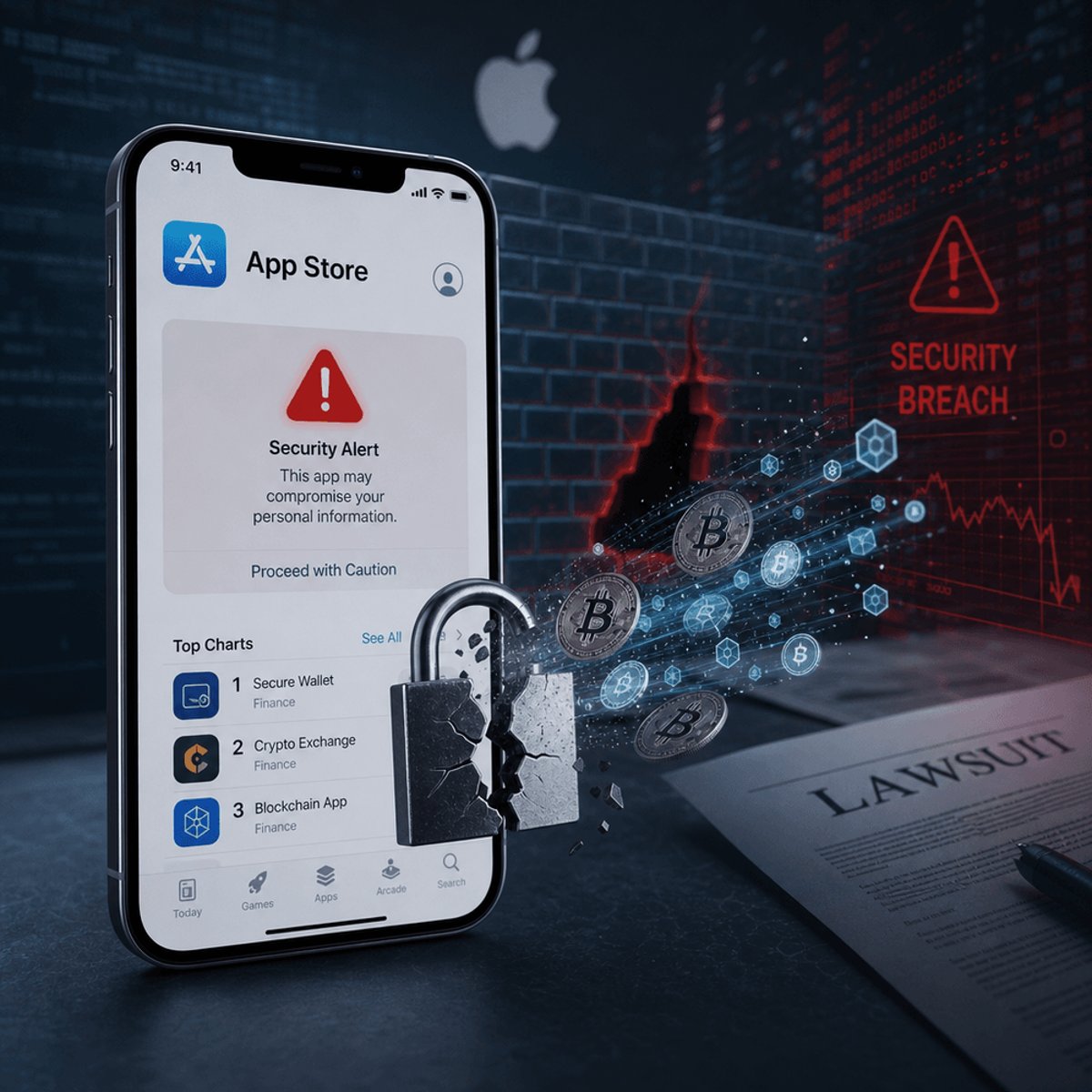
Apple is getting hit where it hurts most - its long-touted App Store security claims. Three users just filed a lawsuit alleging they collectively lost more than $1.8 million after downloading a fraudulent crypto wallet that somehow slipped through Apple's supposedly rigorous app review process. The case directly challenges the core promise Apple's used for years to justify its tight grip on iOS app distribution: that its human reviewers keep users safe from scams.
Apple just got served with a lawsuit that strikes at the heart of its App Store defense strategy. Three users claim they lost a combined $1.8 million after downloading what turned out to be a fraudulent crypto wallet app - one that was supposedly vetted and approved by Apple's human review team.
The timing couldn't be worse for Apple. The company's been fighting regulatory battles on multiple fronts, insisting that its closed ecosystem and strict app review process justify the 30% commission it charges developers. Apple's pitch has always been simple: we keep you safe, and that's worth the price of admission. But this lawsuit suggests that promise might be cracking.
According to the complaint reported by TechCrunch, the fraudulent app made it past Apple's reviewers and onto users' devices, where it proceeded to drain their crypto holdings. The collective $1.8 million loss represents a significant hit for individual users - and a potentially bigger credibility problem for Apple's security narrative.
Crypto scams have become an increasingly thorny issue for app platforms. Unlike traditional financial apps, crypto wallets give users direct control over their assets with no chargeback mechanism. Once funds are transferred to a scammer's address, they're gone. That makes the front-line defense - the app review process - critically important.
Apple's historically pointed to its human review team as a key differentiator from Google's more automated approach on the Play Store. Every app submission supposedly gets eyes-on evaluation to catch malicious behavior, copycats, and scams. But as scammers get more sophisticated, that human layer isn't always enough.
The lawsuit comes as Apple faces mounting pressure over App Store policies from multiple directions. The European Union's Digital Markets Act has already forced Apple to allow alternative app stores in the EU. Similar legislation is being considered in other jurisdictions, with Apple consistently arguing that opening up iOS would compromise security.
But cases like this undercut that argument. If Apple's vaunted review process can't catch a crypto wallet scam that costs users $1.8 million, what exactly is the safety premium users are paying for?
The crypto angle makes this particularly sensitive. Apple's been cautiously expanding its crypto-related offerings, allowing certain wallet apps and NFT features while maintaining strict guidelines. But every high-profile scam that slips through damages user trust and gives ammunition to regulators questioning whether Apple's control actually delivers the promised protection.
For the three plaintiffs, the lawsuit likely hinges on whether Apple can be held liable for third-party app behavior. Apple's developer agreement and App Store terms typically include broad liability shields, but consumer protection laws in various jurisdictions sometimes override those protections when platforms fail to exercise reasonable care.
The case also raises questions about Apple's review process specifics. How did the fraudulent app gain approval? Did it start legitimate and turn malicious through an update? Was it a convincing clone of a real wallet? Those details will matter both for the lawsuit's outcome and for understanding where Apple's security actually failed.
This isn't Apple's first rodeo with App Store scam allegations. The company regularly removes fraudulent apps and has faced criticism over the years for allowing scams to proliferate, particularly in categories like cryptocurrency and fleecing apps that trick users into expensive subscriptions. But a lawsuit with $1.8 million in alleged damages puts concrete numbers on the problem.
Apple's likely to defend itself by pointing to the millions of apps reviewed and the thousands of scams caught. But that defense only goes so far when users have lost substantial sums. The company will also probably argue that users bear some responsibility for verifying apps and protecting their crypto assets. That argument tends to wear thin when Apple's own marketing emphasizes how safe and trustworthy the App Store is compared to alternative sources.
The lawsuit lands as the broader crypto industry grapples with security and trust issues. Major exchanges have faced hacks, DeFi protocols have been exploited, and scams have proliferated across the ecosystem. If even Apple's curated App Store can't keep crypto users safe, it reinforces the narrative that crypto remains the Wild West.
For developers building legitimate crypto apps, cases like this create additional headaches. Apple's likely response will be even stricter review requirements and more cautious approval for crypto-related apps, which slows down innovation and makes it harder for legitimate projects to reach users.
This lawsuit represents more than just three users seeking compensation - it's a test case for Apple's entire App Store security narrative. As the company fights to maintain its platform control against regulatory pressure worldwide, it needs to prove that its review process actually delivers the protection it promises. A $1.8 million crypto scam slipping through suggests that system isn't working as advertised. How Apple responds, both in court and in strengthening its review process, will signal whether it can back up its security claims or whether those claims are becoming a liability in their own right. For crypto users on iOS, the message is clear: even Apple's walled garden has holes.