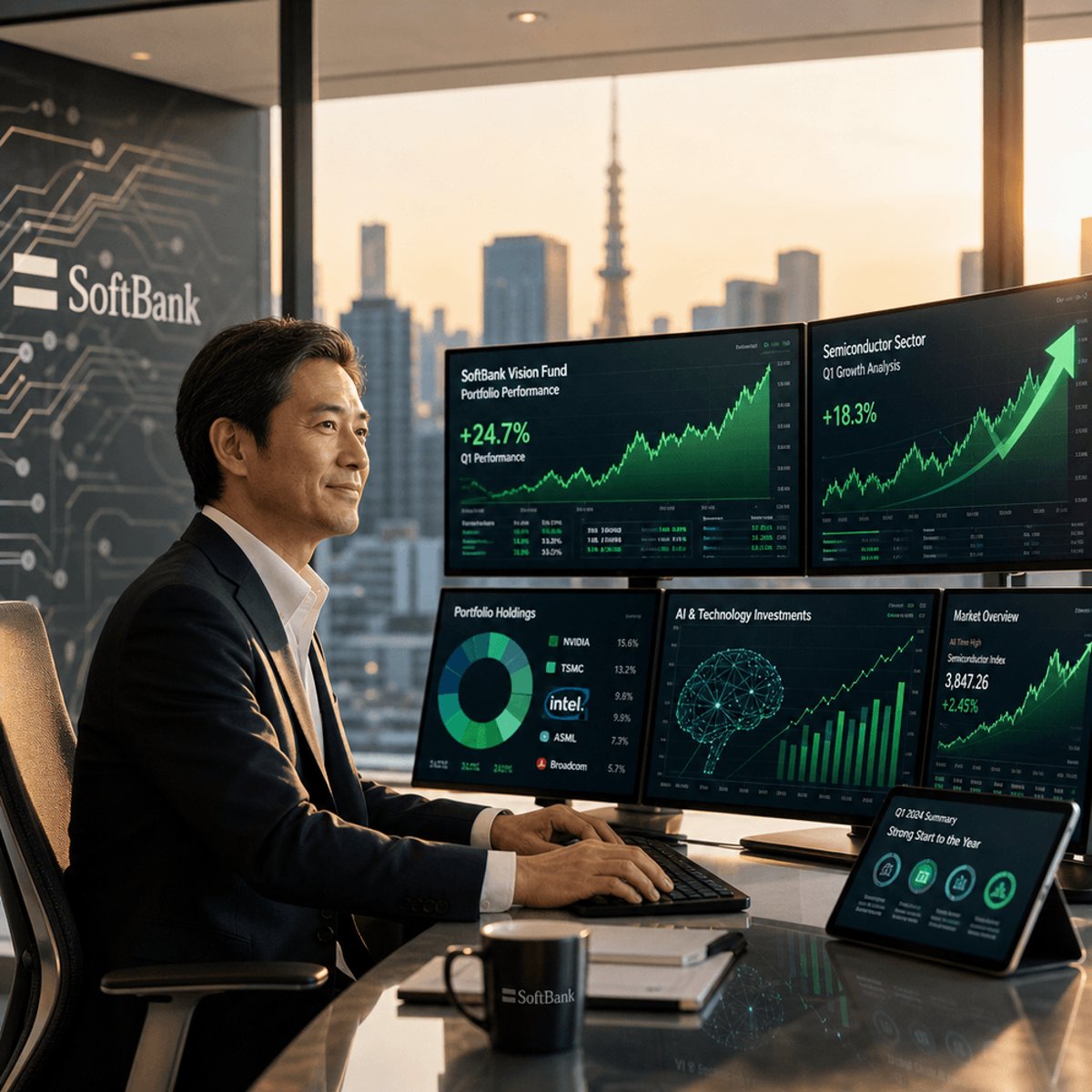
SoftBank Group just delivered a surprise earnings beat that's sending ripples through the investment world. The Japanese conglomerate posted better-than-expected fiscal Q1 profit on Thursday, propelled by an eye-popping $8.2 billion valuation gain on its Intel stake. The results mark a dramatic reversal for Masayoshi Son's investment empire, which has weathered brutal tech writedowns over the past year. For investors tracking the Vision Fund's volatile portfolio, this Intel windfall signals that at least some of SoftBank's big chip bets are finally paying off.
SoftBank Group is back in the black, and it's got Intel to thank. The Tokyo-based investment powerhouse posted fiscal first-quarter profit Thursday that sailed past analyst estimates, powered almost entirely by an $8.2 billion valuation bump on its Intel holdings. For Masayoshi Son's beleaguered empire, it's the kind of win that's been painfully rare lately.
The Intel windfall couldn't come at a better time. SoftBank's been nursing some serious wounds after its Vision Fund portfolio took a beating during the tech meltdown. Startups that once commanded sky-high valuations suddenly looked overpriced, forcing the firm to write down billions in holdings. But Intel's recent rally - driven by renewed investor enthusiasm for chip makers amid the AI boom - just handed SoftBank its biggest single-quarter investment gain in recent memory.
Here's what makes this particularly interesting: SoftBank's been betting big on semiconductors for years, long before the current AI frenzy made chips the hottest commodity in tech. The firm's positioned itself across the semiconductor value chain, from chip designers to manufacturers. That Intel stake, which many analysts questioned during the chipmaker's rough patches, is now looking prescient as Intel reclaims ground in data center processors and AI accelerators.
The timing syncs up with broader market dynamics. Intel's stock has been on a tear as the company executes its turnaround strategy under CEO Pat Gelsinger, winning back data center customers and landing major government subsidies for US chip manufacturing. SoftBank's essentially riding that wave, watching paper gains pile up without lifting a finger. It's the kind of passive win that Vision Fund investors have been desperate to see.
But let's not pretend everything's rosy in SoftBank's portfolio. While Intel's delivering blockbuster gains, other holdings remain underwater. The firm's stake in ByteDance, TikTok's parent company, faces ongoing regulatory uncertainty. Numerous late-stage startups in the Vision Fund portfolio are still struggling to justify their pre-downturn valuations. This Intel gain might pad the quarterly numbers, but it doesn't solve SoftBank's fundamental challenge - proving that its spray-and-pray investment approach can generate consistent returns.
The market's clearly taking notice though. SoftBank's ability to post an earnings beat despite the challenging environment for venture capital demonstrates the leverage that comes from holding massive positions in rebounding tech giants. When you've got billions tied up in a company like Intel, even modest percentage gains translate to staggering absolute numbers. That $8.2 billion boost represents the kind of return that can offset a lot of startup writedowns.
For Son, this earnings report offers some vindication of his long-term vision, even if the path's been rocky. He's spent years arguing that SoftBank isn't just a venture firm but a strategic investor in the technologies that'll define the next decade - AI, robotics, semiconductors, autonomous vehicles. The Intel gains suggest that at least some of those big infrastructure bets are starting to mature.
What happens next will largely depend on whether Intel can sustain its momentum and whether SoftBank's other major holdings start contributing similar gains. The firm's reportedly been exploring ways to monetize parts of its portfolio, potentially through asset sales or spinning off certain Vision Fund holdings. Strong quarterly results like these give Son more flexibility to be patient rather than forced into fire sales.
The broader investment community's watching closely too. SoftBank's results often serve as a bellwether for late-stage tech valuations and venture capital health. An earnings beat driven by real portfolio appreciation - not accounting tricks - sends a signal that maybe, just maybe, we're past the worst of the tech valuation reset.
SoftBank's Q1 earnings beat is more than just good news - it's a potential inflection point for one of tech's most ambitious and controversial investors. The $8.2 billion Intel windfall proves that patient capital in foundational technologies can pay off spectacularly, even when the journey gets rough. But one stellar quarter doesn't erase years of Vision Fund struggles or answer lingering questions about SoftBank's hit rate on startup bets. What it does do is buy Son time and credibility to let his broader portfolio thesis play out. As AI continues reshaping the tech landscape and semiconductor demand stays strong, SoftBank's positioned to capture upside across multiple holdings. The real test is whether this Intel win signals the start of sustained portfolio recovery or just a one-time paper gain in an otherwise challenging investment environment.