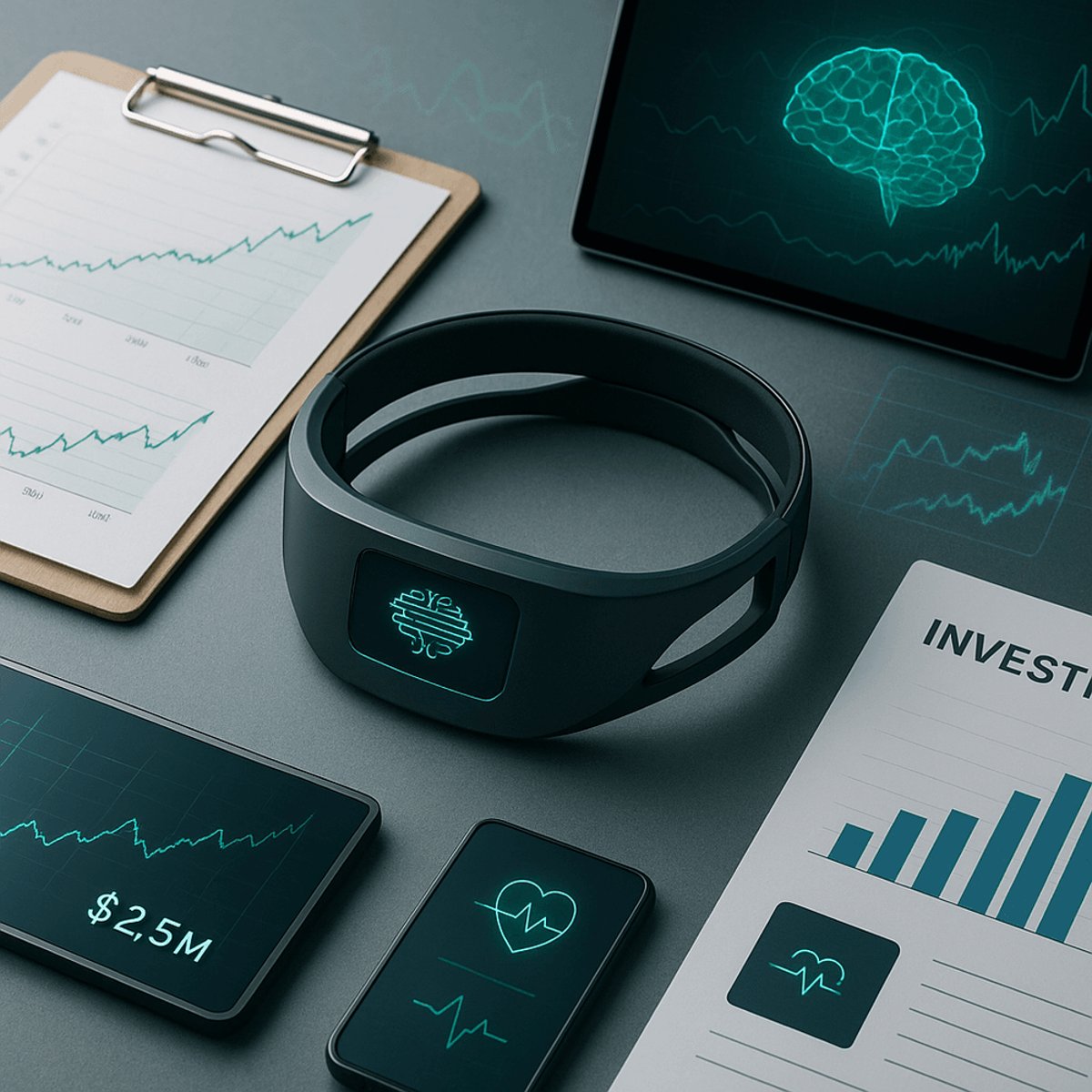
Deepinder Goyal just made one of the biggest friends-and-family bets in startup history. The Zomato co-founder's new venture Temple pulled in $54 million at a $190 million post-money valuation, according to TechCrunch. The brain-monitoring wearable startup signals Goyal's pivot from food delivery to health tech, and the unusually large early-stage round reveals just how much confidence his network has in his next act.
The size of Temple's friends-and-family round is raising eyebrows across India's startup ecosystem. Most pre-seed rounds from personal networks clock in under $5 million, but Goyal's track record apparently unlocked something closer to a Series A. The Zomato co-founder built one of India's most valuable consumer tech companies, and his inner circle is betting he can do it again in an entirely different category.
Brain-monitoring wearables represent one of the hottest emerging spaces in consumer health tech. Companies like Neuralink have generated massive buzz around brain-computer interfaces, while more accessible consumer devices from startups like Muse and Emotiv have carved out early market share. Temple appears positioned to bring brain monitoring into mainstream wellness, though details about the actual product remain scarce.
Goyal's pivot from food delivery to neurotechnology might seem random, but there's logic in the founder-market fit. Building Zomato required mastering consumer behavior, supply chain logistics, and hardware integration through restaurant tablets and delivery infrastructure. Those skills translate surprisingly well to consumer wearables, where understanding user habits and managing hardware production pipelines matter just as much as the underlying technology.
The $190 million valuation before shipping a single unit shows how much startup valuations have shifted toward founder reputation over demonstrated traction. Traditional venture wisdom says valuations should reflect product-market fit, revenue multiples, or at minimum a working prototype. But in 2026's founder economy, a successful exit and a compelling pitch can unlock nine-figure valuations at the friends-and-family stage. It's a bet on Goyal's execution ability rather than Temple's current progress.
India's health tech sector has exploded over the past three years, with telemedicine platforms like Practo and diagnostic chains like Thyrocare proving consumers will adopt digital health solutions at scale. Wearables remain the next frontier, and Apple's success with health monitoring features on the Apple Watch has shown there's genuine demand for preventive health tracking. Temple's brain-monitoring focus could tap into rising anxiety around mental health and cognitive performance, particularly among India's stressed startup workforce.
The friends-and-family round structure also reveals Goyal's strategic thinking. By raising from his personal network rather than institutional VCs, he maintains maximum control and flexibility in Temple's early days. There are no board seats to negotiate, no investor update decks to prepare, and no pressure to hit arbitrary milestones set by outside capital. It's the ultimate founder-friendly structure, possible only for entrepreneurs with both proven exits and wealthy networks willing to write massive checks.
Competitive pressure in brain wearables is intensifying fast. Meta has reportedly been testing neural interface prototypes internally, while OpenAI-backed startups are exploring AI-powered mental health monitoring. Temple will need to move quickly from capital raise to product launch before larger players dominate the category. The $54 million war chest gives Goyal runway to hire top talent and iterate on hardware, but the clock is ticking.
What makes this bet particularly interesting is the manufacturing challenge. Consumer wearables require supply chain expertise, regulatory approvals for health claims, and distribution partnerships that take years to build. Zomato never manufactured physical products at scale, so Temple represents Goyal's first real hardware play. The friends-and-family investors are essentially betting he can learn an entirely new playbook while competing against established players like Samsung and Apple who've spent decades perfecting wearable production.
Temple's massive friends-and-family round marks a new chapter in founder-driven startup economics, where track records unlock institutional-sized capital without institutional constraints. Goyal's jumping into one of the most technically challenging consumer categories, betting he can replicate his food delivery success in brain-monitoring hardware. Whether Temple becomes the next breakthrough in consumer health tech or a cautionary tale about founder hubris will depend on execution over the next 18 months. But with $54 million in the bank and zero external pressure, Goyal's bought himself maximum runway to figure it out. The real test comes when Temple actually has to ship hardware, navigate FDA-equivalent approvals in India, and convince consumers their brains need monitoring as much as their heart rates.