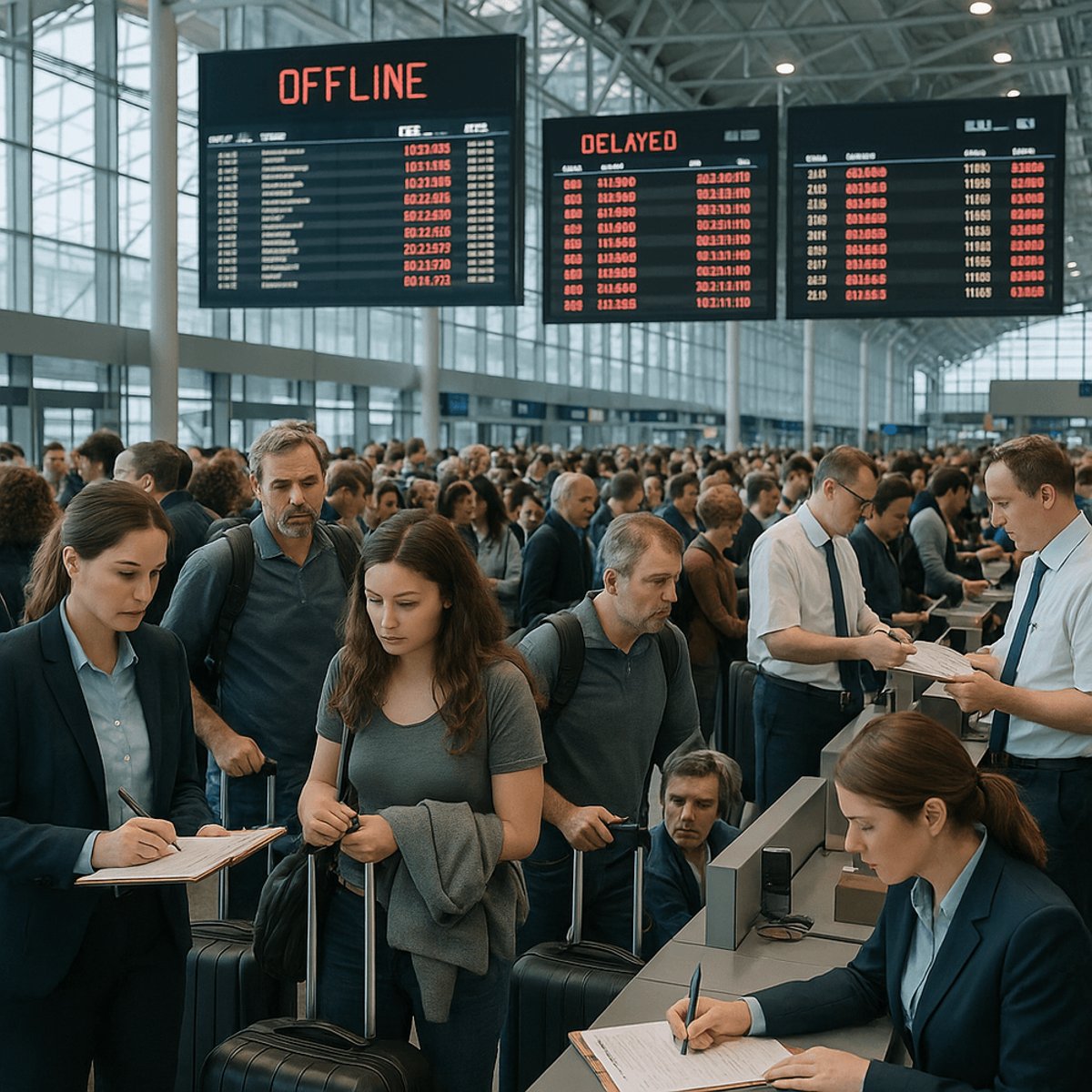
A ransomware attack against Collins Aerospace is entering its fourth day, keeping major European airports in chaos. Flight delays are hitting 90% at London Heathrow, 94% at Berlin Brandenburg, and similar rates across Brussels and Dublin, with no timeline for recovery as airlines scramble with manual workarounds.
European air travel remains in turmoil as a ransomware attack against Collins Aerospace stretches into its fourth consecutive day, paralyzing check-in systems across major airports. The attack has created a domino effect that's rippling through the continent's aviation infrastructure with no end in sight.
The numbers paint a grim picture for travelers. According to FlightRadar24, London's Heathrow airport is seeing 90% of flights delayed with an average wait of 29 minutes. Brussels faces 88% delays averaging 43 minutes, while Berlin Brandenburg airport hits 94% delays stretching to a full hour. Dublin rounds out the chaos with 91% of flights delayed by an average of 26 minutes.
"There is no timeline at the current time for a fix to be implemented," Dublin airport spokesperson Graeme McQueen told TechCrunch in a stark admission that underscores the severity of the situation. Airlines continue deploying manual workarounds while technicians battle to restore the compromised IT systems that power check-in and boarding operations.
The attack highlights the fragile interconnectedness of modern aviation infrastructure. Collins Aerospace, owned by defense contractor RTX, provides critical check-in systems that thousands of passengers rely on daily. When those systems went dark, it exposed how dependent major airports have become on centralized technology providers.
Brussels airport tried to project optimism, posting on X that it expects only "limited disruptions" Tuesday and Wednesday. But the airport's official website tells a different story: "the service provider is actively working on the issue and trying to resolve the problem as quickly as possible. At the moment it is still unclear when the issue will be resolved."
Berlin's airport has been more direct about the ongoing problems, warning travelers on its official website to expect "longer waiting times." The understated language belies the frustration building among passengers facing hour-long delays during what should be routine check-in procedures.
The European Union's cybersecurity agency ENISA confirmed Monday that ransomware was indeed behind the disruptions, lending official weight to what many in the industry suspected. The confirmation came after days of speculation about the cause of the widespread technical failures.
This attack joins a troubling trend of ransomware groups targeting critical infrastructure. Aviation systems have become increasingly attractive targets due to their high visibility and the immediate economic pressure they can create. The longer this attack drags on, the more it demonstrates how a single point of failure can cascade across an entire industry.
Spokespersons for Heathrow, Brussels, and Berlin airports haven't responded to requests for comment, while RTX, Collins Aerospace's parent company, has remained silent on recovery efforts. The lack of communication is adding to traveler uncertainty as passengers struggle to plan around the ongoing disruptions.
What makes this attack particularly concerning is its duration. Most ransomware incidents targeting major infrastructure see some level of restoration within 24-48 hours, even if it's partial service. The fact that we're now at day four suggests either the attack was particularly sophisticated or the recovery process is proving more complex than initially anticipated.
This ransomware attack exposes the vulnerability of Europe's aviation infrastructure to cyber threats. As Collins Aerospace struggles to restore services and passengers face mounting delays, the incident serves as a wake-up call about the risks of centralizing critical airport systems with single providers. The aviation industry will likely need to reassess its cybersecurity protocols and backup systems to prevent future disruptions of this magnitude. For now, travelers across Europe should expect continued delays until Collins Aerospace can fully restore its check-in systems.