Real Estate Agents Are Starting to Claim AI Agents Like Digital Property
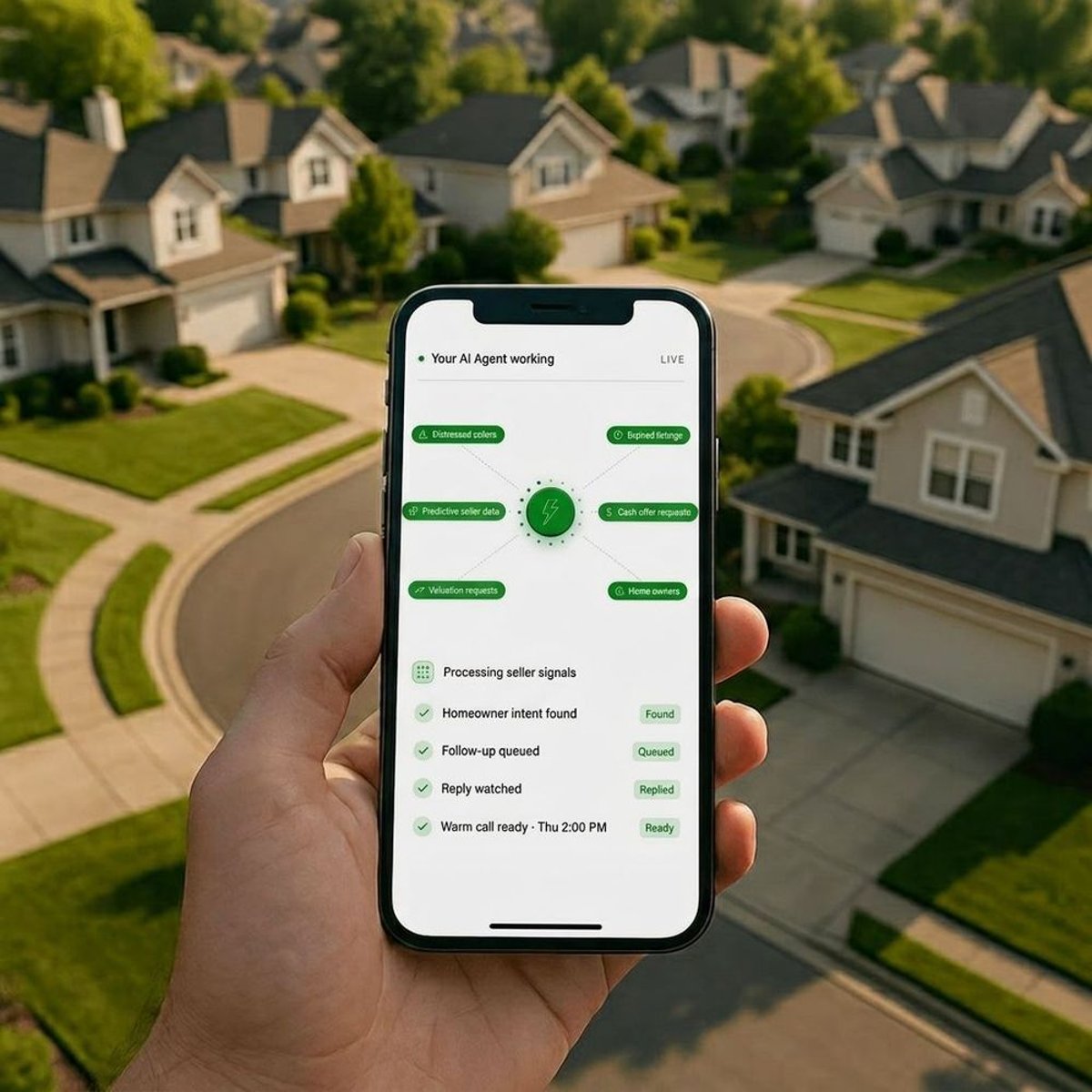
ZipISA is selling AI agents to real estate professionals, and it is doing something strange for a software company. It is refusing to sell to everyone. Over 300 agents have joined in just 7 weeks since launch, but only 6 AI agents exist per ZIP code, and only 3 of those are the higher-tier Pro version. Once a ZIP is full, it is full. Founders Aaron Rafferty and Martin Simms pitch the company as an AI operating system where your AI is data-rich land you own, not a bill you rent. Agents hear a way to lock down territory and cut fees. Investors should hear something bigger: a software company building scarcity into a market that usually runs on infinite copies.
The Product Is An Employee Named Sophie
At the center of ZipISA is Sophie, an AI inside sales agent built for real estate. She hunts for homeowner leads, follows up, and runs the proven workflows agents already use by hand. Two features landed in the latest update at no extra cost. First, website visitor identification. About 9 out of 10 site visitors never fill out a form. Sophie spots them and reaches out before they drift off. Every visitor she names becomes a record only that agent holds, so the feature runs as a quiet data engine. Second, CRM integration with Follow Up Boss and BoldTrail, with more planned.
The Money Math Is The Hook
ZipISA is also cutting into the fees that eat an agent's income. Through a partnership with Home Value Pros, Pro members get inbound referrals at 15%. A typical referral runs 25% to 40%, a real gap. Home Value Pros lists its local seat at $500 a month plus a 25% referral fee direct. Through ZipISA that cost is folded in, and Pro members can advertise there as the local expert. It is all opt-in. But every new partner lands with Pro members first, which tells you where the value pools.
Scarcity Is The Entire Strategy
Here is the part that should make investors pay attention to this model. Software normally makes money by scaling to everyone: copy the code, sell it again, repeat. ZipISA is doing the opposite on purpose. Each membership gets a different slice of homeowner data, so two agents in the same market are not buying identical software tied to the same records. Cap supply at 6 per ZIP and the product never becomes the commodity everyone else already has. For investors, this is the rare SaaS with a moat inside each seat. A ZipISA agent carries an exclusive dataset that widens with age.
Your Data Is What Actually Appreciates
Every homeowner lead Sophie gathers stays attached to your profile, and everything the agent learns about your market builds over time. The gap compounds. An agent who locks a ZIP in month one logs homeowners, showings, and follow-ups a latecomer can never recover, because the latecomer cannot buy in. In most software, everyone runs the same engine on the same public data. Here the engine is shared and the fuel is not.
"Most AI software becomes another expense. We think agents should be able to build lasting value into the AI, data and market position they use every day."
Aaron Rafferty, co-founder, ZipISA
The Exit Is Where It Gets Interesting
Cancelling works differently here. If you leave, your agent does not get deleted. It passes to the next person waiting for that ZIP, and everything it learned goes with them. A marketplace is coming to let you sell it outright when you retire, move, or cash out. When it opens, buyers will bid on the dataset behind it: the leads, the local history, the homeowner behavior tied to that ZIP. Rafferty and Simms, who spent 5 years building tools for thousands of agents, say to think about it like a domain. Domains were valuable because they were scarce. This one gets smarter the longer you hold it.
"So if you're ever done, don't cancel, sell it."
Martin Simms, co-founder, ZipISA
Why The Timing Fits
Real estate is a smart place to test this. Business is local, follow-up matters, and the data is fragmented. The housing recession that ran since early 2022 may be thawing, San Francisco rents just jumped 18% to $3,728 on AI money, and JPMorgan is putting $750B into the sector through 2035. ZipISA hands agents a tool it says they can own and sell. The bigger bet: the next vertical AI platforms will not be unlimited copies of one assistant. They will be limited operators tied to specific markets, distinct data, and real relationships. Whether that trades like property is the part nobody can answer yet, but it seems like a reasonable bet to make.