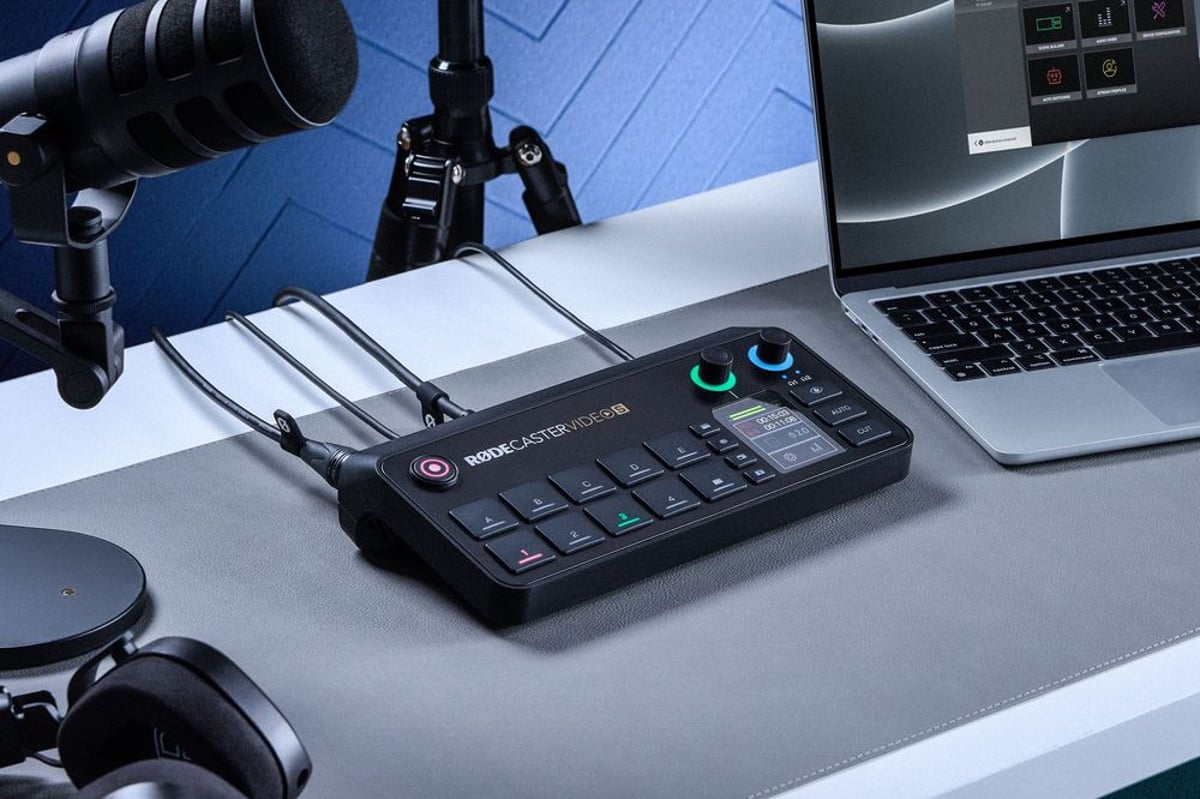
Rode just dropped a budget-friendly bombshell in the video production space. The Australian audio company's new Rodecaster Video S costs $499 - less than half the price of last year's $1,199 original - while packing most of the same functionality into a smaller package. For podcasters eyeing the video transition, this could be the accessibility breakthrough they've been waiting for.
Rode just made video production accessible to a much wider audience. The Australian audio specialist's new Rodecaster Video S launches at $499, slashing more than half the cost off last year's original while delivering most of the same punch in a more portable package.
The timing couldn't be better. Content creators are scrambling to add video capabilities as platforms prioritize visual content, but professional video switchers typically cost thousands. The original Rodecaster Video launched at $1,199 in September 2024, already positioned as an affordable alternative to studio-grade equipment.
Now the Video S pushes that accessibility even further. "This isn't about replacing the original," the company emphasizes - it's about opening doors for creators who found even $1,199 too steep. The new model targets established podcasters specifically, those testing video waters without committing to full studio setups.
The hardware tells the story of smart compromises. Both models run on the same unnamed "high-performance octa-core processor" with 1080p video capabilities, but the S version makes strategic cuts. Where the original offered four HDMI inputs and two outputs, the new model drops to three inputs and one output. The dual USB-C ports shrink to a single multifunction connection.
But Rode kept the features that matter most to its audio-focused customer base. The Video S retains the original's combo XLR/1/4" jack inputs for professional microphones, plus compatibility with USB mics and the company's Series IV wireless systems through two built-in receivers. The 2-inch touchscreen with dial controller survives the downsizing, though the large scene-switching buttons drop from 14 to 10.
The physical changes are equally deliberate. At 400 grams lighter and a couple inches shorter, the Video S lives up to its "portable production console" billing. Those dedicated speaker outputs are gone, replaced by dual headphone jacks - a choice that reflects how most solo creators actually work.
Rode's feature retention strategy shows they understand their market. The Video S keeps all the software capabilities that justify its price point: direct livestreaming to YouTube, Twitch, and Facebook, plus the ability to record individual video and audio sources separately for post-production flexibility. The automatic camera switching based on voice detection remains - crucial for one-person operations.
The broader context matters here. Professional video switchers from companies like Blackmagic Design or Roland start around $2,000 and climb quickly. Even entry-level streaming mixers rarely drop below $800. Rode's positioning strategy creates a clear upgrade path: amateur streamers might start with basic software, graduate to the Video S, then potentially move to the full Rodecaster Video as their productions grow.
Industry observers note this fits Rode's broader democratization playbook. The company built its reputation making professional audio accessible to prosumers, from the original VideoMic to the PodMic series. Extending that philosophy to video production tools seems inevitable.
The $499 price point also threads a strategic needle. It's accessible enough for serious hobbyists but expensive enough to maintain premium positioning. More importantly, it undercuts most competitors while delivering integrated audio/video functionality that usually requires multiple devices.
Preorders open immediately, with shipping expected soon. The question isn't whether the Video S will find its audience - it's whether Rode can manufacture enough units to meet demand from podcasters ready to make their video debuts.
The Rodecaster Video S represents more than just a cheaper alternative - it's Rode's bet that the podcasting-to-video transition is about to accelerate. By cutting the entry price in half while preserving core functionality, the company is positioning itself perfectly for creators ready to add visual elements without studio-level investment. Whether this sparks a broader democratization of video production tools remains to be seen, but Rode has certainly made the first compelling argument that professional-grade video switching doesn't require a four-figure budget.