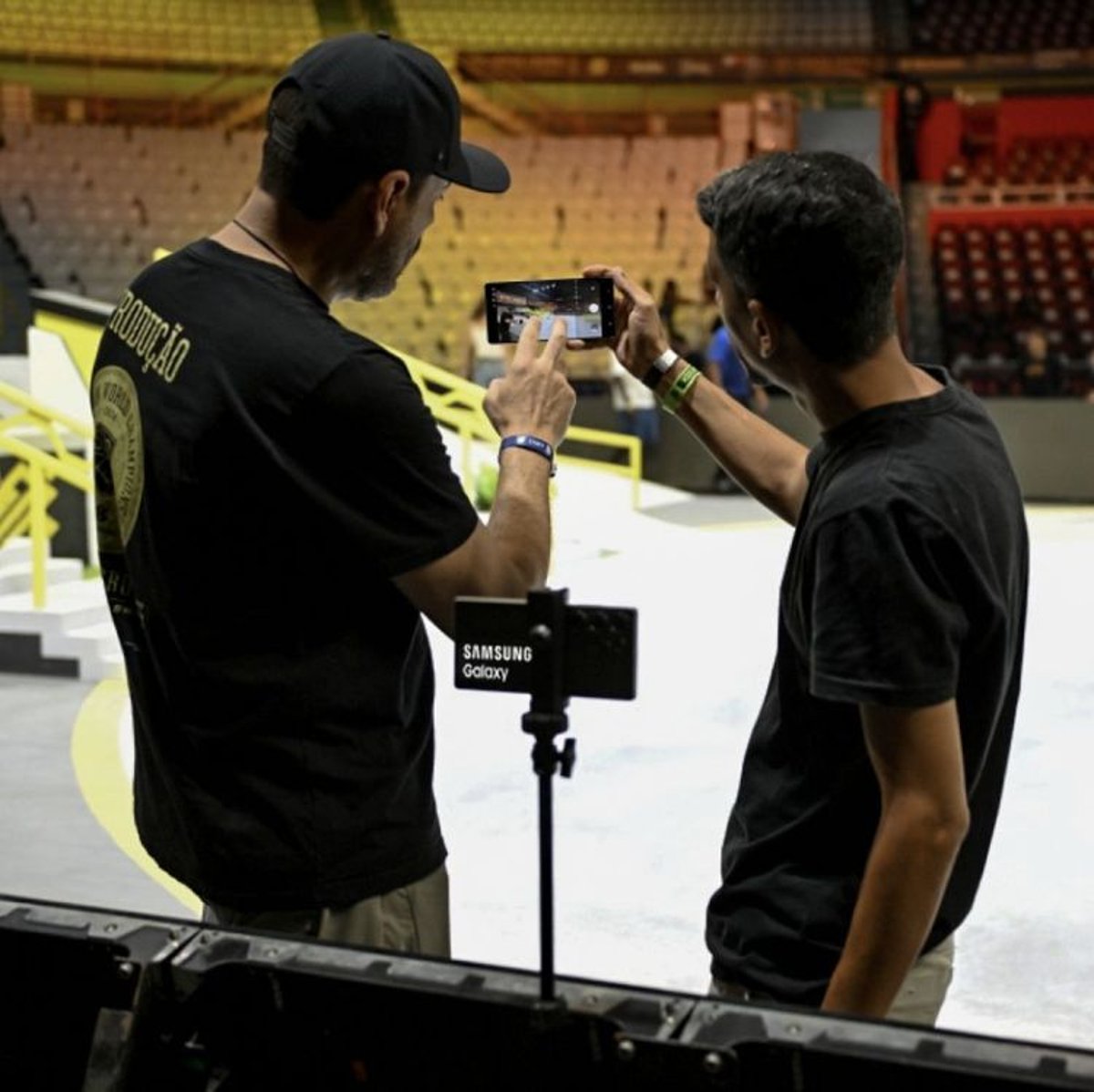
Samsung is embedding Galaxy S25 Ultra devices directly into skateboarding competition courses at the SLS Super Crown World Championship in São Paulo, creating cinematic broadcast footage from angles never seen before. The tech giant's partnership with Street League Skateboarding transforms how fans experience the sport, with champion Rayssa Leal helping design the camera integration that captures every trick in real-time.
Samsung just turned a skateboarding competition into a live camera laboratory. The company's mounting Galaxy S25 Ultra devices throughout the SLS Super Crown World Championship course in São Paulo, Brazil, creating what might be the most filmed skateboarding event in history.
The integration goes beyond typical sponsorship. These aren't just phones sitting on the sidelines - they're embedded within the actual competition course, capturing footage that feeds directly into the live broadcast. According to Samsung's announcement, the devices deliver "dynamic footage and replays of the night's most epic tricks" while transforming "the course itself into a creative lens for the sport."
The real story here isn't just the tech - it's who helped design it. Rayssa Leal, the three-time SLS Super Crown World Champion who's defending her title this weekend, worked directly with Samsung and SLS teams to determine camera placement. "Skateboarding has always been about sharing moments, from tricks to emotions, capturing it all is part of our culture," Leal told Samsung. "I'm thrilled that fans can experience each moment the same way I feel it on my board."
This athlete-driven approach to camera positioning could reshape how extreme sports get filmed. Traditional broadcast cameras capture skateboarding from spectator angles, but embedding devices within the course means viewers see what competitors actually see during their runs.
"Visual innovation has been core to how Samsung reimagines user mobile experience," Gustavo Assunção, Samsung Brasil's SVP and Head of Mobile Experience, explained to Samsung newsroom. "By bringing Galaxy S25 Ultra onto SLS courses, we're transforming the way people see and engage with skateboarding."
The timing isn't coincidental. Samsung's been pushing its Galaxy cameras as professional-grade equipment, and live sports broadcasting represents a massive validation opportunity. If Galaxy S25 Ultra can handle the vibration, impact, and rapid movement of skateboarding competition while delivering broadcast-quality footage, it positions Samsung's mobile cameras as legitimate alternatives to traditional broadcast equipment.
Brett Clarke, Chief Revenue Officer at Thrill Sports (SLS's parent company), sees this as natural evolution. "Skateboarding has always been a sport where the camera is part of the culture - from filming clips and tricks, to fostering creativity and connection," he told Samsung. The partnership "unlocks new ways to see, feel and experience the sport."
Samsung's betting this São Paulo experiment is just the beginning. The companies plan to expand the integration throughout the 2026 SLS season, with Samsung promising "new camera technology to elevated fan touchpoints" across the global tour. That suggests we might see Galaxy devices embedded in skate parks worldwide, creating a distributed filming network that captures skateboarding from every conceivable angle.
The Galaxy S25 Ultra's camera specs make this possible in ways previous smartphones couldn't. Samsung's packed "cutting-edge camera technology and pro-grade video tools and lenses" that can "capture ultra-smooth action shots" and deliver "cinematic detail in any light." For skateboarding, where tricks happen in milliseconds and lighting conditions change constantly, those capabilities matter.
What's really interesting is how this could influence other sports partnerships. If Samsung can prove mobile cameras work for live skateboarding broadcasts, expect similar integrations in surfing, BMX, and other action sports where traditional camera placement is challenging.
Samsung's embedding Galaxy cameras directly into competition courses represents more than clever marketing - it's a fundamental shift toward mobile-first broadcast technology. By proving Galaxy S25 Ultra can handle live sports production, Samsung positions its consumer devices as professional broadcast tools. The real test comes when other sports leagues start asking whether they need traditional camera crews or just really good smartphones. If São Paulo's experiment works, Samsung might just have filmed its way into the broadcast equipment business.