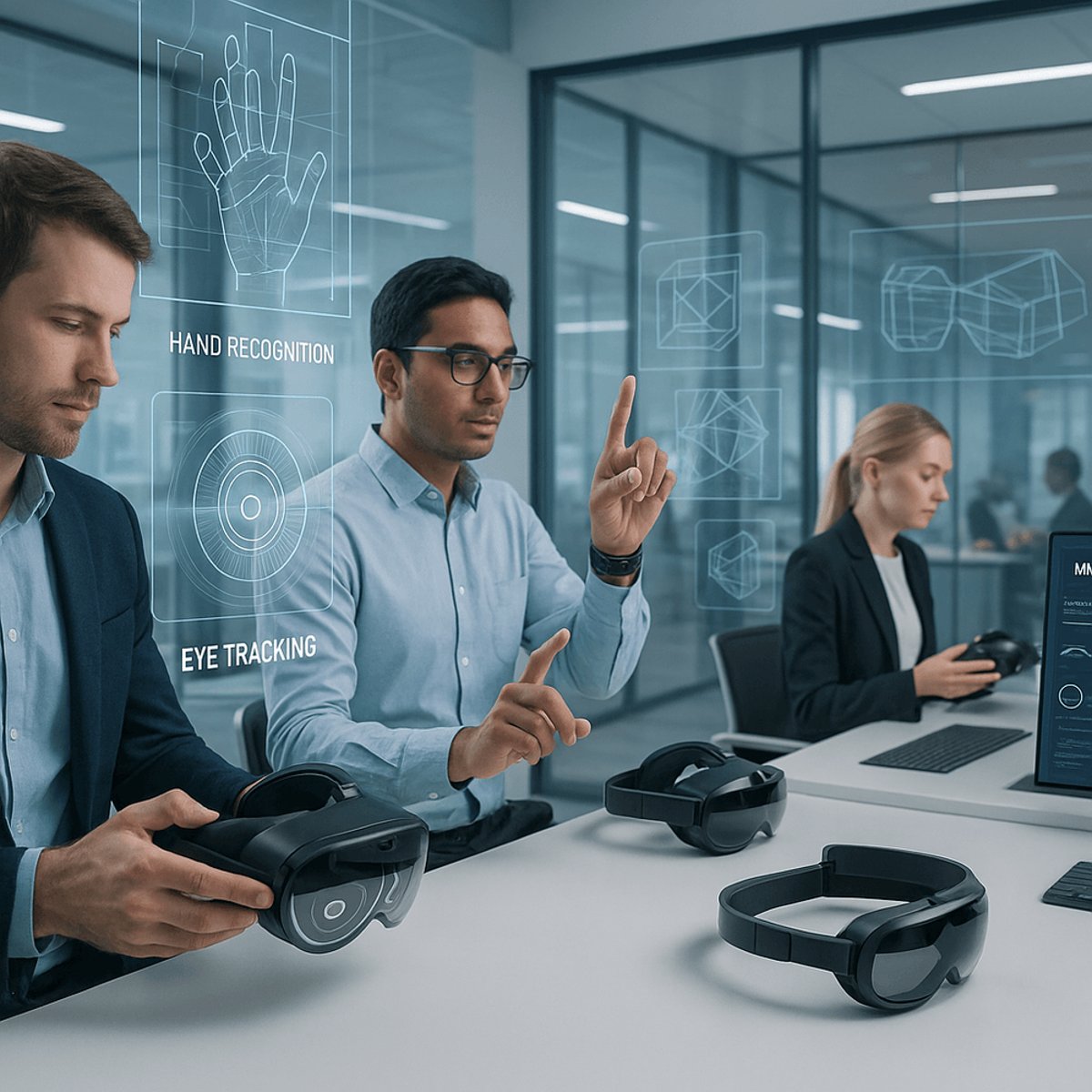
Samsung just pulled back the curtain on Galaxy XR development with an exclusive behind-the-scenes video from their Suwon headquarters. The company's engineers reveal how they built multimodal AI capabilities - eye tracking, hand gestures, and voice recognition - in partnership with Google and Qualcomm for the new Android XR platform. This rare glimpse into Samsung Digital City shows the technical decisions that could reshape extended reality.
Samsung just opened the doors to its most secretive project. The company released an exclusive video today taking viewers inside Samsung Digital City in Suwon, South Korea, where engineers developed Galaxy XR - their answer to Apple's Vision Pro dominance in extended reality.
Hosted by technology journalist Lucy Hedges, the behind-the-scenes footage reveals how Samsung's immersive solution team cracked the code on multimodal AI integration. "We wanted to create something that felt natural," explains Kihwan Kim, EVP and Head of Immersive Solution R&D Team, in the video interview. "Eye tracking, hand gestures, voice - they all had to work together seamlessly."
The Galaxy XR represents a three-way collaboration between Samsung, Google, and Qualcomm that goes far beyond typical hardware partnerships. Together, they're launching Android XR, a platform designed to challenge Apple's tight ecosystem control. Sean Choi from Samsung's Immersive Solution R&D Team describes how the companies "defined the overall Android XR experience" from the ground up.
This matters because it signals Samsung's serious intent to compete in the XR space where Apple currently commands premium pricing and developer attention. The multimodal AI capabilities - allowing users to control the device through eye movements, hand gestures, and voice commands simultaneously - could give Samsung a technical edge over competitors still relying on single input methods.
The timing coincides with growing industry momentum around mixed reality applications. Meta's Quest line continues gaining enterprise traction, while Apple's Vision Pro faces criticism over its $3,500 price point. Samsung's Android XR approach could offer a middle ground - premium features at more accessible pricing through the broader Android ecosystem.
Google's involvement brings crucial software expertise and AI integration capabilities that Samsung has historically sourced from multiple vendors. The partnership streamlines development while leveraging Google's machine learning advances for more intuitive user interactions. Qualcomm's Snapdragon processors provide the computational power needed for real-time AI processing without draining battery life.
The video reveals Samsung's methodical approach to XR development, showing engineers testing gesture recognition algorithms and refining eye tracking accuracy within their Suwon facilities. This contrasts with Apple's secretive development process and suggests Samsung wants to build developer confidence through transparency about their technical capabilities.
Industry analysts are watching how Samsung positions Galaxy XR against existing competitors. The device needs to solve fundamental XR challenges - comfort during extended use, battery life, and compelling software experiences - while justifying its place in a crowded market. Early indications suggest Samsung is betting on AI differentiation rather than pure hardware specifications.
The collaboration model also represents a strategic shift for Samsung, which has often competed directly with Google in mobile while relying on their Android platform. This deeper partnership could signal new dynamics in how major tech companies approach emerging platforms like XR and autonomous vehicles.
Samsung's decision to show their XR development process signals confidence in their technical approach and partnership strategy. The multimodal AI capabilities and Android XR platform could provide the differentiation needed to compete with Apple's Vision Pro, while the transparent development approach may help build developer trust. Success will depend on execution - delivering on the AI promises while solving fundamental XR usability challenges. With Google and Qualcomm as partners, Samsung has the pieces in place for a serious XR challenge.