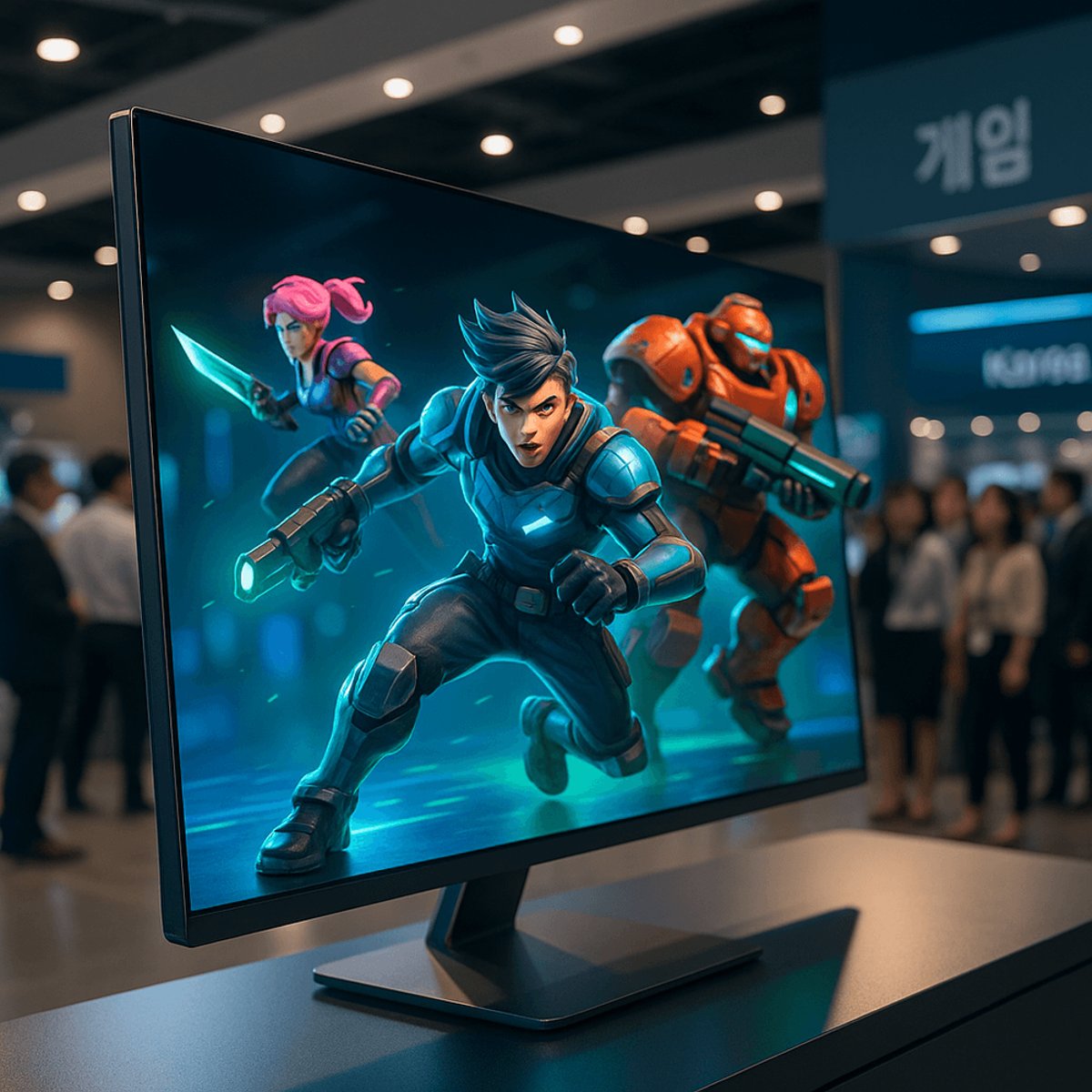
Gaming just got a major visual upgrade at G-Star 2025. Samsung and Netmarble are turning heads with glasses-free 3D displays that make game characters appear to leap off screens, drawing crowds at Korea's biggest gaming exhibition. The technology promises to reshape how we experience entertainment beyond traditional flat displays.
Samsung is rewriting the rules of visual entertainment at G-Star 2025, Korea's premier gaming expo running through November 21 at Busan's BEXCO center. The tech giant's groundbreaking Spatial Signage displays are creating genuine buzz among attendees who can't believe their eyes - literally watching beloved game characters step into the real world without needing any special glasses.
The partnership with Netmarble, one of Korea's gaming powerhouses, builds on months of collaboration across major gaming events. "Since forming our 3D partnership with Samsung, we've worked together at Gamescom, the Tokyo Game Show, and the Brazil Game Show, closely monitoring user reactions," Lee Jung-ho, Game Publishing Director at Netmarble told Samsung Newsroom. "Using those insights, we've prepared a wide range of fresh and exciting content for G-Star 2025."
What makes this different from traditional hologram setups? Samsung's Spatial Signage delivers true 3D visuals in a remarkably slim 52mm profile - no bulky projection boxes, no cumbersome glasses, just pure visual magic. Characters from Netmarble's hottest titles, including Solo Leveling: KARMA and the newly launched EVILBANE, appear to move with genuine depth and presence.
"I usually play games on a monitor, so seeing the characters on such a large screen felt completely different," visitor Lee Sun-jae shared with Samsung's team. "Feeling that 3D depth without wearing glasses was amazing. It really felt like facing the game characters in real life." Another attendee, Kim Gui-hee, described the experience as watching "the character moving inside a box - it really looked like the character was moving right in front of me."
The technical breakthrough centers on Samsung's ability to create convincing 3D effects through advanced display engineering rather than holographic projections. "Traditional hologram devices are usually large, bulky, and old-fashioned in design," Lee Jung-ho noted. "Samsung's Spatial Signage, however, isn't a hologram - it delivers true 3D visuals in an impressively slim form factor."
Beyond the showstopper displays, Samsung's gaming ecosystem at G-Star includes the Odyssey 3D gaming monitor (G90XF), which brings glasses-free 3D directly to gameplay. Using advanced eye-tracking technology, the monitor creates immersive experiences for titles like MONGIL: STAR DIVE, with customizable 3D settings that detect parallax between images to optimize depth for each scene.
The visitor response has been overwhelming. Queues formed quickly around the Odyssey 3D gaming stations, while families gathered around the Spatial Signage displays for photos with life-sized characters. "My kids were thrilled to see Sung Jinwoo from Solo Leveling in such a large, lifelike way," visitor Jang Jae-hyuk shared. "I hope Spatial Signage will be installed in various museums and education centers across the country."
That expansion is exactly what Samsung has in mind. "Spatial Signage will soon expand its reach across a wide range of areas, including exhibitions, art, education, in addition to gaming," Nam Yujin from Samsung's Visual Display Business explained. "This technology marks a pivotal shift from passive viewing to an active, engaging visual experience where immersion and interaction thrive."
The partnership showcases how Samsung is positioning itself beyond traditional display manufacturing into experiential technology. By working closely with content creators like Netmarble, the company is building an ecosystem where hardware and software combine to create entirely new forms of entertainment.
Industry observers are watching closely as this technology could disrupt everything from retail advertising to museum exhibits. The slim form factor and lack of special viewing equipment make Spatial Signage practical for spaces where traditional 3D solutions wouldn't work.
Samsung's G-Star showcase represents more than just flashy demo technology - it's a glimpse into how immersive displays could reshape entertainment, retail, and education. With Spatial Signage moving beyond gaming into museums and retail spaces, and Odyssey 3D monitors bringing glasses-free gaming to consumers, Samsung is betting that the future of visual experiences lies in depth, not just pixels. The enthusiastic response from G-Star visitors suggests they might be right.