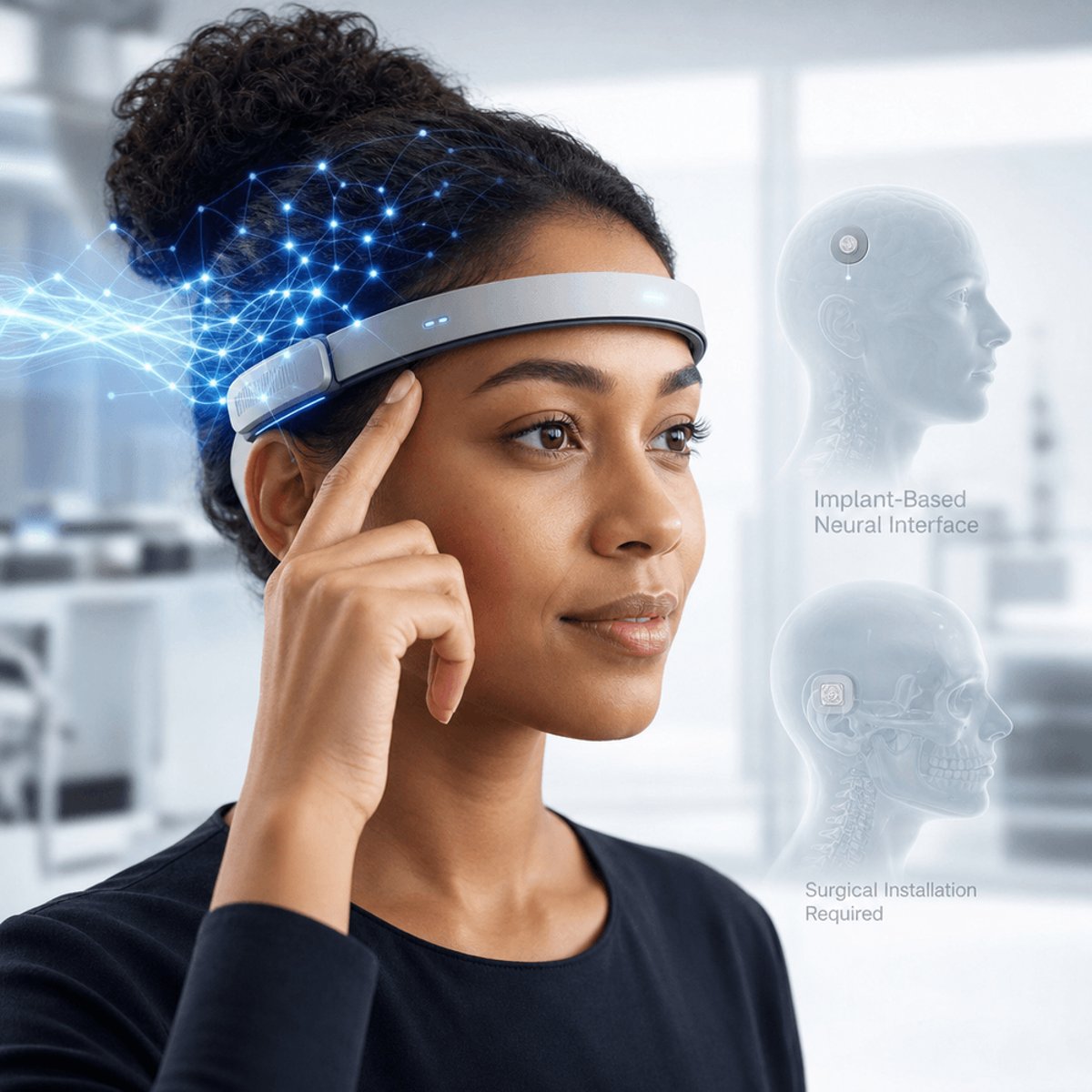
The brain-computer interface race is splitting into two camps. While Neuralink continues refining its surgical implants, China's BrainCo is betting the future belongs to devices you can wear like a headband. The divergence marks a critical inflection point for neurotechnology as companies chase a market projected to help millions with neural disabilities - and the stakes couldn't be higher for defining how humans will interface with machines.
BrainCo just threw down the gauntlet in the brain-computer interface wars. While Elon Musk's Neuralink makes headlines with surgical robots and skull-mounted chips, the Harvard-incubated Chinese startup is quietly building a case that the future of brain tech won't require drilling into anyone's head.
The contrast couldn't be starker. Neuralink has spent years perfecting a coin-sized implant that sits beneath the skull, with thread-like electrodes reading neural signals directly from brain tissue. The company's surgical approach promises unprecedented signal quality and the potential to restore movement and communication for paralyzed patients. But it comes with the risks and complications of any brain surgery.
BrainCo is taking the opposite bet. Their wearable devices use external sensors to detect brain activity through the scalp, similar to how an EEG headset works but with AI-enhanced signal processing. The technology can't match the precision of implanted electrodes, but it sidesteps every surgical risk and regulatory hurdle that comes with invasive procedures.
The timing of this divergence matters. Interest in brain-computer interfaces is accelerating as the technology moves from research labs to real-world applications. The primary driver is assistive technology for people with compromised neural abilities - stroke survivors, amputees, patients with ALS or spinal cord injuries. These are people who need solutions now, not after years of FDA approvals and surgical waitlists.
BrainCo has already deployed prosthetic limbs controlled by their wearable brain sensors, allowing amputees to manipulate robotic hands using thought alone. The devices learn to interpret individual users' brain patterns through machine learning, improving accuracy over time without requiring any physical modifications to the user's body. Users can put the headband on in the morning and take it off at night.
The company's approach mirrors a broader trend in medical technology toward non-invasive solutions. Continuous glucose monitors replaced finger pricks for diabetics. Heart rate monitors moved from chest straps to wrists to fingertips. Now BrainCo is arguing that brain interfaces should follow the same trajectory.
But Neuralink isn't backing down from its surgical path. The company argues that truly transformative applications - like restoring vision to the blind or enabling high-bandwidth communication between brains and computers - will always require direct neural access. Surface sensors, they contend, are fundamentally limited by the skull's interference and can only capture broad brain activity patterns rather than individual neuron firing.
The regulatory landscape favors BrainCo's approach in the near term. Non-invasive devices face lighter scrutiny and faster approval timelines. Neuralink spent years navigating FDA requirements before receiving approval for its first human trials, while wearable brain interfaces can reach consumers through pathways similar to fitness trackers and wellness devices.
China's aggressive push into neurotechnology adds another dimension to the competition. BrainCo benefits from manufacturing scale, AI expertise, and a massive domestic market eager to adopt new health technologies. The company has already expanded beyond medical applications into education and workplace productivity tools that use brain monitoring to optimize learning and focus.
The assistive technology market represents just the opening move. Both companies see brain-computer interfaces eventually enabling anyone to control devices, communicate faster, or augment their cognitive abilities. The question is whether consumers will accept surgery for those enhancements or wait for wearables to catch up.
Market analysts are split on which approach wins long-term. Some believe invasive interfaces will dominate high-value medical applications while non-invasive wearables capture the mass market. Others think breakthrough improvements in sensor technology and AI could make wearables competitive even for precision applications.
What's certain is that the brain-computer interface industry is moving from science fiction to commercial reality. The race between Neuralink's surgical precision and BrainCo's wearable accessibility will shape how millions of people with neural disabilities regain function - and eventually, how all of us might choose to interface with technology.
The brain-computer interface industry is reaching a defining moment. Neuralink's invasive approach promises unmatched precision but carries surgical risks and regulatory complexity. BrainCo's wearable path offers immediate accessibility but may face fundamental technical limitations. For the millions of people with compromised neural abilities waiting for solutions, the winner of this race matters less than the fact that both approaches are finally moving from labs to lives. The real breakthrough might not be choosing between invasive and non-invasive - it could be recognizing that different applications and different patients need different solutions.