Uber is playing a regulatory chess game that could reshape the autonomous vehicle landscape. The ride-hailing giant has quietly pushed policy changes in at least two jurisdictions that would give its platform an edge over companies developing self-driving cars, according to a Wired investigation. While Uber frames the effort as fighting monopolies, the strategy reveals how the company plans to control the transition to driverless transportation on its own terms.
Uber just revealed its real play in the autonomous vehicle wars, and it's not about building the best self-driving car. Instead, the ride-hailing behemoth is betting it can control the future of driverless transportation by writing the rules everyone else has to follow.
In at least two undisclosed jurisdictions, Uber has pushed regulatory frameworks that would require autonomous vehicle operators to work through existing ride-hailing platforms rather than deploying their own competing services. The approach, detailed in a Wired report, represents a dramatic strategic shift for a company that once poured hundreds of millions into developing its own self-driving technology.
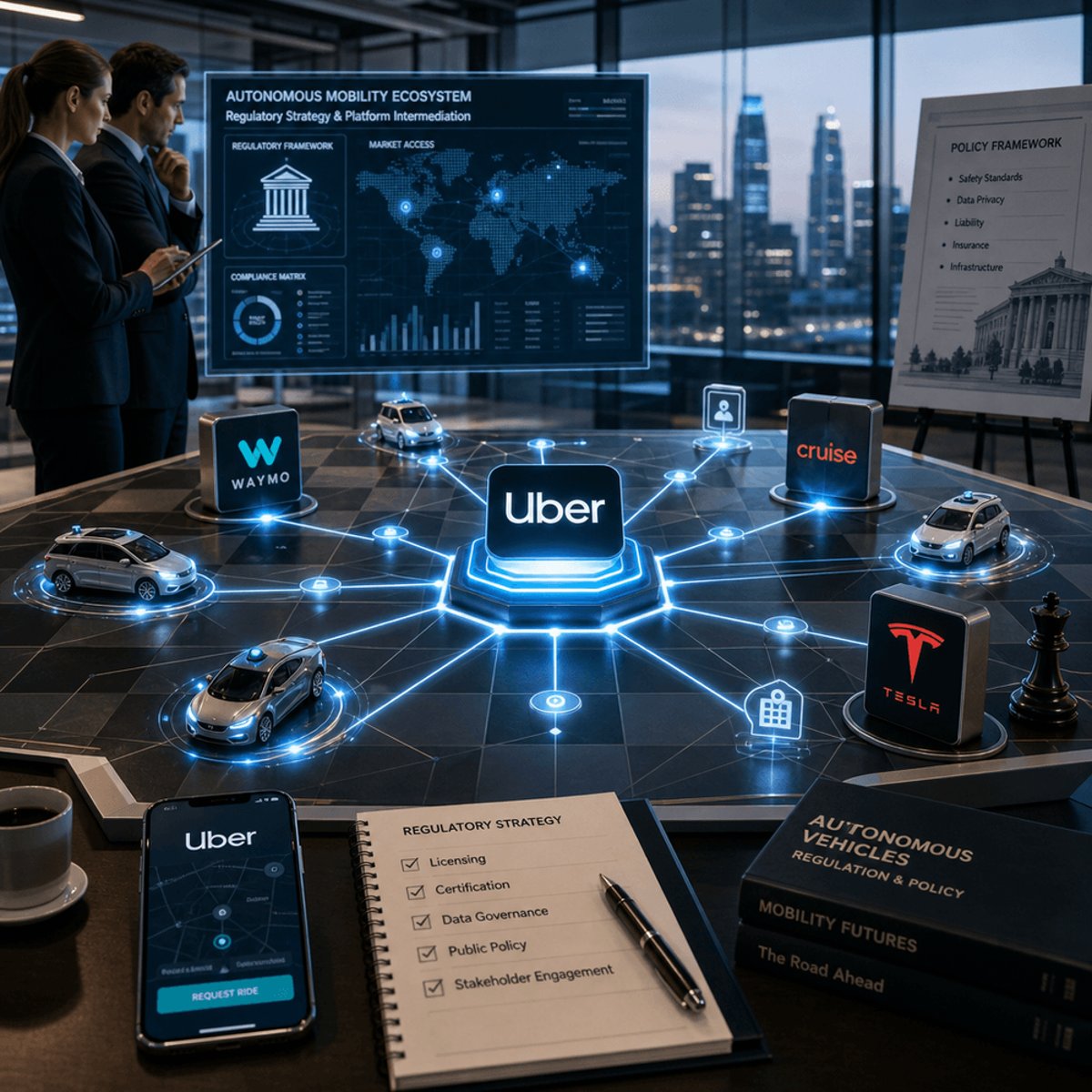
The policy maneuver is deceptively clever. By positioning itself as a neutral platform fighting against potential AV monopolies, Uber can lobby for regulations that essentially force companies like Waymo, Cruise, and Tesla to integrate with its app if they want to offer commercial robotaxi services. It's the platform play taken to its logical regulatory extreme.
Uber's public messaging frames this as consumer protection. The company argues that allowing autonomous vehicle developers to operate their own closed networks would create fragmented services and regional monopolies, forcing riders to download multiple apps and navigate different pricing structures. Better, Uber suggests, to have one unified platform where customers can hail any available vehicle, human-driven or autonomous.
But the competitive implications are stark. If Uber succeeds in these regulatory efforts, it could extract a cut from every autonomous ride its competitors provide, without investing in the expensive sensor arrays, computing systems, and AI development that makes self-driving possible. The company gets to monetize the AV revolution while outsourcing the hardest technical problems to others.
This represents a complete 180 from Uber's earlier strategy. The company famously acquired Otto in 2016 for $680 million and built out its Advanced Technologies Group, burning through cash to develop competitive self-driving technology. That effort imploded spectacularly after a fatal crash in Tempe, Arizona in 2018, followed by Uber selling the entire division to Aurora in 2020.
Now Uber is essentially admitting it can't win the technology race, so it's trying to win the regulatory one instead. It's a strategy that worked brilliantly for the company in its early days, when it aggressively entered markets before regulators could respond, then negotiated from a position of strength once it had established customer loyalty.
The autonomous vehicle developers aren't taking this quietly. While none have commented publicly on Uber's specific regulatory pushes, companies like Waymo have consistently argued they need direct customer relationships to rapidly iterate on their technology and user experience. Forcing them through a third-party platform could slow deployment and create friction in gathering the real-world data that's essential for improving autonomous systems.
The timing matters too. Waymo just expanded its commercial robotaxi service and has provided over 150,000 paid rides, while Cruise is rebuilding after its own regulatory troubles in San Francisco. The autonomous vehicle industry is finally approaching commercial viability after years of hype and delays. That makes this the perfect moment for Uber to push regulatory frameworks before the competitive landscape solidifies.
From Uber's perspective, the strategy makes ruthless business sense. The company's core competitive advantage was never technology, it was network effects and regulatory arbitrage. If it can leverage those strengths to capture value from autonomous vehicles without bearing the R&D costs, shareholders win even if the company never builds a self-driving car.
But there's a broader question about whether this actually serves the public interest. Concentrating autonomous vehicle access through a single platform could provide convenience, but it also creates a chokepoint that might slow innovation and limit competition. The regulatory debates happening now in those two unnamed jurisdictions could set precedents that echo across the industry for years.
Uber's regulatory strategy reveals the real battle for autonomous vehicles isn't just about technology, it's about who controls the customer relationship and captures the economic value. While AV developers race to perfect self-driving systems, Uber is quietly positioning itself as the inevitable middleman. Whether regulators buy the company's monopoly-prevention framing or see it as an attempt to extract rent from others' innovation will shape not just Uber's future, but the entire structure of autonomous transportation. The next chapter of the mobility revolution might be written in legislative chambers and regulatory hearings, not R&D labs.