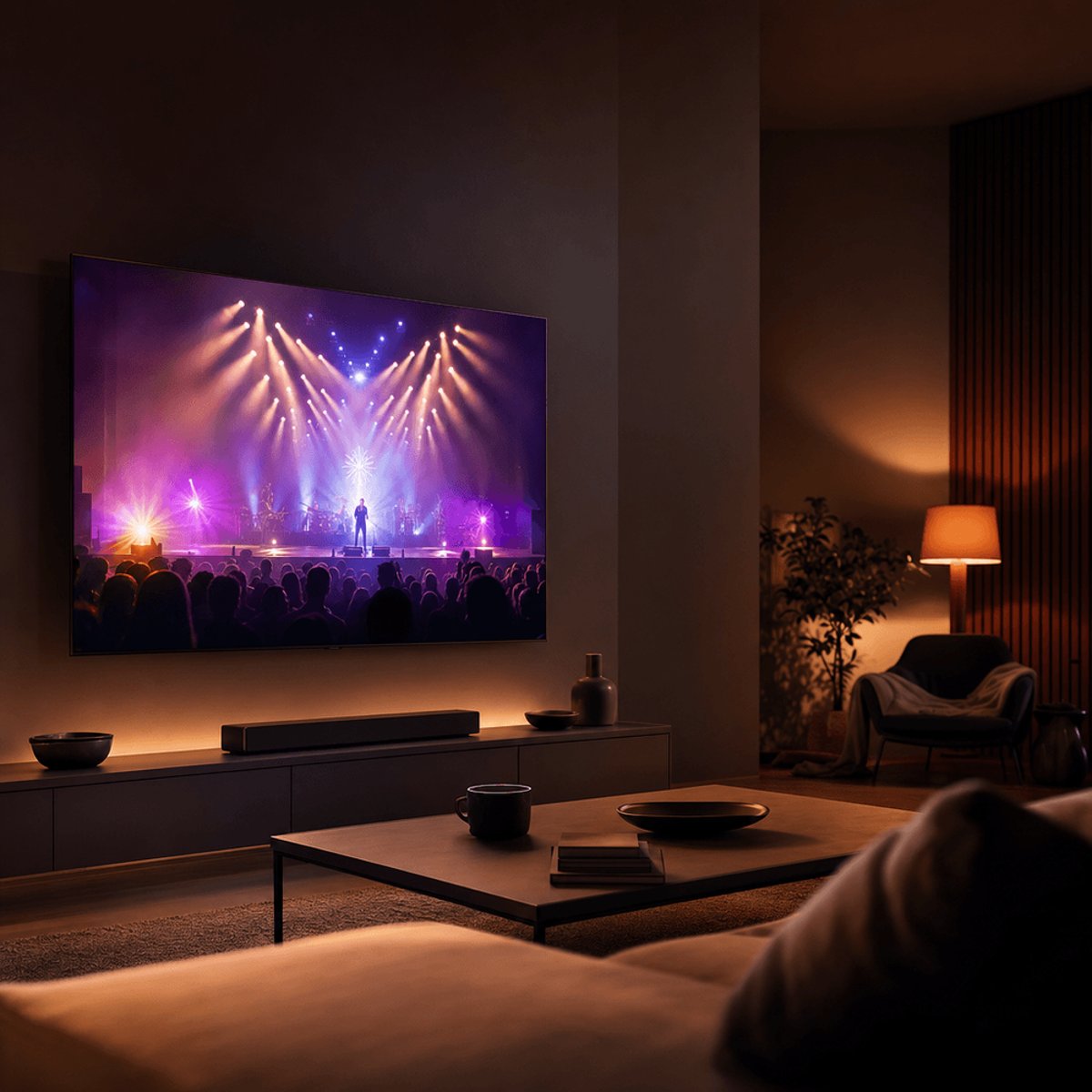
Samsung is betting on K-Pop to differentiate its free streaming service. The company just announced a monthly concert series with SM Entertainment, bringing live performances from artists like NCT WISH to Samsung TV Plus viewers across five countries. The move signals Samsung's strategy to use exclusive entertainment partnerships to drive engagement on its ad-supported platform, which now reaches 30 countries but faces stiff competition from Roku, Pluto TV, and YouTube.
Samsung is carving out a niche in the crowded free streaming landscape with something its hardware rivals can't easily replicate - exclusive K-Pop concerts beamed directly to its TVs. The company announced it's expanding its collaboration with SM Entertainment to bring monthly concert broadcasts to Samsung TV Plus, the ad-supported streaming service baked into every Samsung screen.
The Monthly SM Concert series launches May 30 with NCT WISH's first concert tour, "INTO THE WISH: Our WISH' ENCORE IN SEOUL," streaming live at 7 p.m. local time across five markets. It's a calculated play by Samsung to use its hardware install base - hundreds of millions of TVs globally - to build a content moat that Roku, Amazon's Freevee, and Pluto TV can't match without similar entertainment industry partnerships.
The concerts will stream exclusively on the SMTOWN channel within Samsung TV Plus, available to viewers in Australia, New Zealand, Brazil, Mexico, and South Korea. According to Samsung's announcement, fans can tune in every Saturday at 7 p.m. for encore programming and future monthly streams, creating what the company calls "an easy weekend rhythm" for watching SM performances.
This builds on Samsung's February livestream of SMTOWN LIVE 2025 in Los Angeles, which the company used to test demand for live K-Pop events on its platform. The positive response apparently convinced both Samsung and SM Entertainment that monthly programming made business sense - Samsung gets sticky content that keeps viewers on its platform longer, while SM Entertainment reaches global audiences without the logistics of physical tours.
The strategic importance becomes clearer when you look at Samsung TV Plus's positioning. The service now offers over 4,300 channels globally across 30 countries, all subscription-free and ad-supported. Samsung claims it has 4,000+ hours of Korean content alone, spanning dramas, thrillers, crime series, and music programming. But in the FAST (free ad-supported streaming TV) wars, differentiation is everything.
Roku's channel dominates in the U.S. with broader content and better discovery. Amazon's Freevee has Prime Video's recommendation engine behind it. YouTube's free tier has, well, YouTube's infinite content library. Samsung needed an edge, and exclusive live events from one of K-Pop's biggest labels provides exactly that - appointment viewing that drives habitual platform usage.
The concerts will integrate with Samsung's SmartThings ecosystem, letting viewers set reminders and adjust connected home devices to create what Samsung calls "a richer viewing environment." It's classic Samsung - using its hardware ecosystem to create experiences that theoretically work better than competitors' software-only approaches. Whether adjusting Phillips Hue lights actually makes a K-Pop concert more enjoyable is debatable, but the integration showcases Samsung's cross-product strategy.
Samsung TV Plus works across the company's entire device lineup, including Galaxy phones, XR headsets, Galaxy Tab tablets, Smart Monitors, and Family Hub refrigerators, plus the 2026 TV series announced at CES spanning Micro LED, Neo QLED, OLED, The Frame, and The Frame Pro models. That reach is Samsung's trump card - every device becomes a potential concert venue.
For SM Entertainment, the partnership offers direct-to-consumer reach in key growth markets. Brazil and Mexico represent huge opportunities for K-Pop expansion, while Australia and New Zealand provide English-speaking markets with growing K-Pop fanbases. Korea, of course, is the home market where SM can test concepts before global rollout.
The monthly format is smart. Weekly would be unsustainable for live concert production. Quarterly wouldn't build viewer habits. Monthly strikes a balance - frequent enough to keep fans checking back, spaced enough to make each event feel special and give SM Entertainment time to rotate through its artist roster.
What's not clear is Samsung's monetization strategy beyond standard ad inventory. Live events typically command premium ad rates, but Samsung hasn't disclosed if it's using dynamic ad insertion, how many ad breaks concerts include, or whether future streams might offer paid upgrades for ad-free viewing or bonus content. Those details matter as FAST services increasingly look for revenue beyond basic banner ads.
Samsung's betting that exclusive K-Pop content can be its differentiation in the FAST wars, using its hardware install base to secure partnerships software-only competitors can't match. If the Monthly SM Concert series drives meaningful engagement, expect Samsung to pursue similar deals with other entertainment labels and live event producers. The real test comes in six months when we see whether these concerts actually keep viewers in Samsung's ecosystem or if they're just nice-to-have features that don't move the needle on daily active users. For now, K-Pop fans with Samsung TVs get front-row seats without the ticket prices.