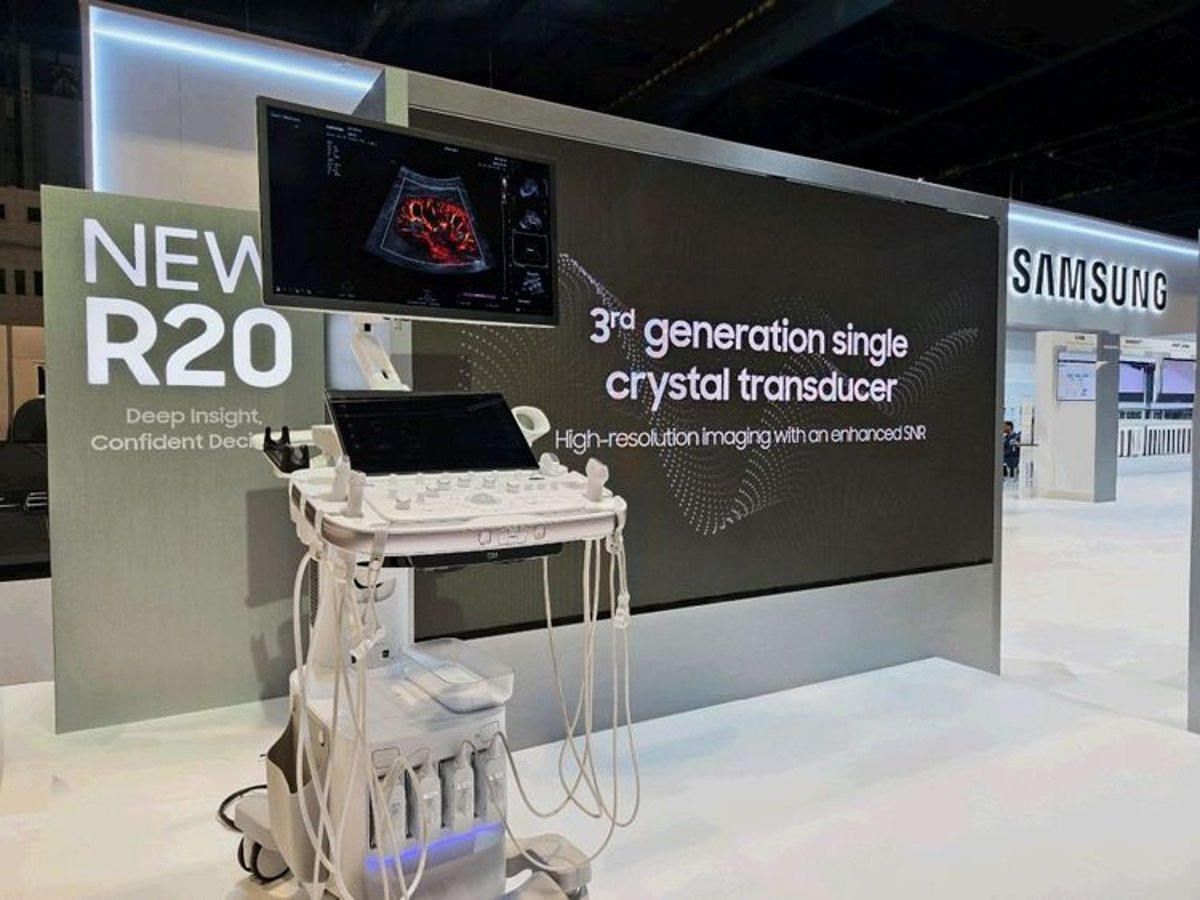
Samsung just dropped its most advanced ultrasound system yet at RSNA 2025, the R20, packing more than a dozen AI-powered diagnostic tools into an ergonomically redesigned platform. The launch signals Samsung's push from healthcare follower to innovation leader, targeting increasingly complex medical imaging demands driven by rising obesity and chronic disease rates.
Samsung is making its boldest move yet into medical AI territory. The Korean tech giant's healthcare arm just unveiled the R20 ultrasound system at the Radiological Society of North America conference in Chicago, and it's loaded with features that could reshape how doctors diagnose patients.
The timing isn't coincidental. Healthcare is getting more complex, and traditional ultrasound systems are struggling to keep up. Rising obesity rates and chronic diseases are making scans harder to read, leading to more inconclusive results that force patients back for additional testing. At the same time, sonographers are burning out from repetitive strain injuries, creating workforce shortages that ripple through hospital systems.
"The R20 embodies our mission to elevate diagnostic imaging through purposeful innovation," Tracy Bury, Chief Commercial Officer of Samsung Healthcare USA, told attendees at Samsung's booth demonstration. "We're moving from a fast follower to a true technology leader, driving innovation at a pace that's reshaping ultrasound."
The R20's standout feature is Samsung's Advanced Imaging Engine, which merges high-end hardware with sophisticated software beamforming. This combo delivers what Samsung claims is "remarkable image clarity and diagnostic accuracy" - crucial when dealing with difficult-to-scan patients. But the real game-changer might be the system's AI capabilities.
More than a dozen AI-powered tools handle everything from real-time exam guidance to automated measurements. These aren't just flashy add-ons - they're designed to help clinicians work faster and more accurately, especially in complex cases where traditional imaging falls short. The system can automate workflow steps, assist with diagnostic decisions, and guide technicians through challenging scans.
Samsung didn't ignore the human element either. The R20 achieved independent validation for meeting 100% of recognized ergonomic guidelines - a direct response to the industry's sonographer shortage crisis. According to ergonomic evaluation data, the system's design promotes healthier scanning practices that could reduce repetitive strain injuries.
This launch puts Samsung in direct competition with established players like GE Healthcare and Philips, who've dominated ultrasound for decades. But Samsung's betting that AI integration and ergonomic innovation will give it an edge in a market increasingly focused on addressing real clinical challenges rather than just improving image quality.
The medical device industry has been slow to adopt AI compared to other sectors, partly due to regulatory hurdles and conservative adoption patterns. Samsung's aggressive push suggests the company sees an opening to capture market share while competitors catch up on AI integration.
For healthcare systems, the R20 represents a potential solution to multiple pressure points - staff shortages, complex patient populations, and the need for faster, more accurate diagnoses. If Samsung can deliver on its performance promises, the R20 could accelerate AI adoption across radiology departments nationwide.
The system debuts at RSNA booth #6122 through December 1st, with broader availability details still to come. Samsung's making this a showcase moment - the first US unveiling happened during a dedicated 15-minute presentation slot, signaling how seriously the company takes this product launch.
Samsung's R20 launch represents more than just another product announcement - it's a strategic play to capture leadership in medical AI while solving real healthcare challenges. By combining advanced imaging technology with ergonomic design and comprehensive AI tools, Samsung is betting it can disrupt established players and accelerate AI adoption in radiology. The success of this approach could determine whether Samsung becomes a major force in medical technology or remains a niche player in healthcare.