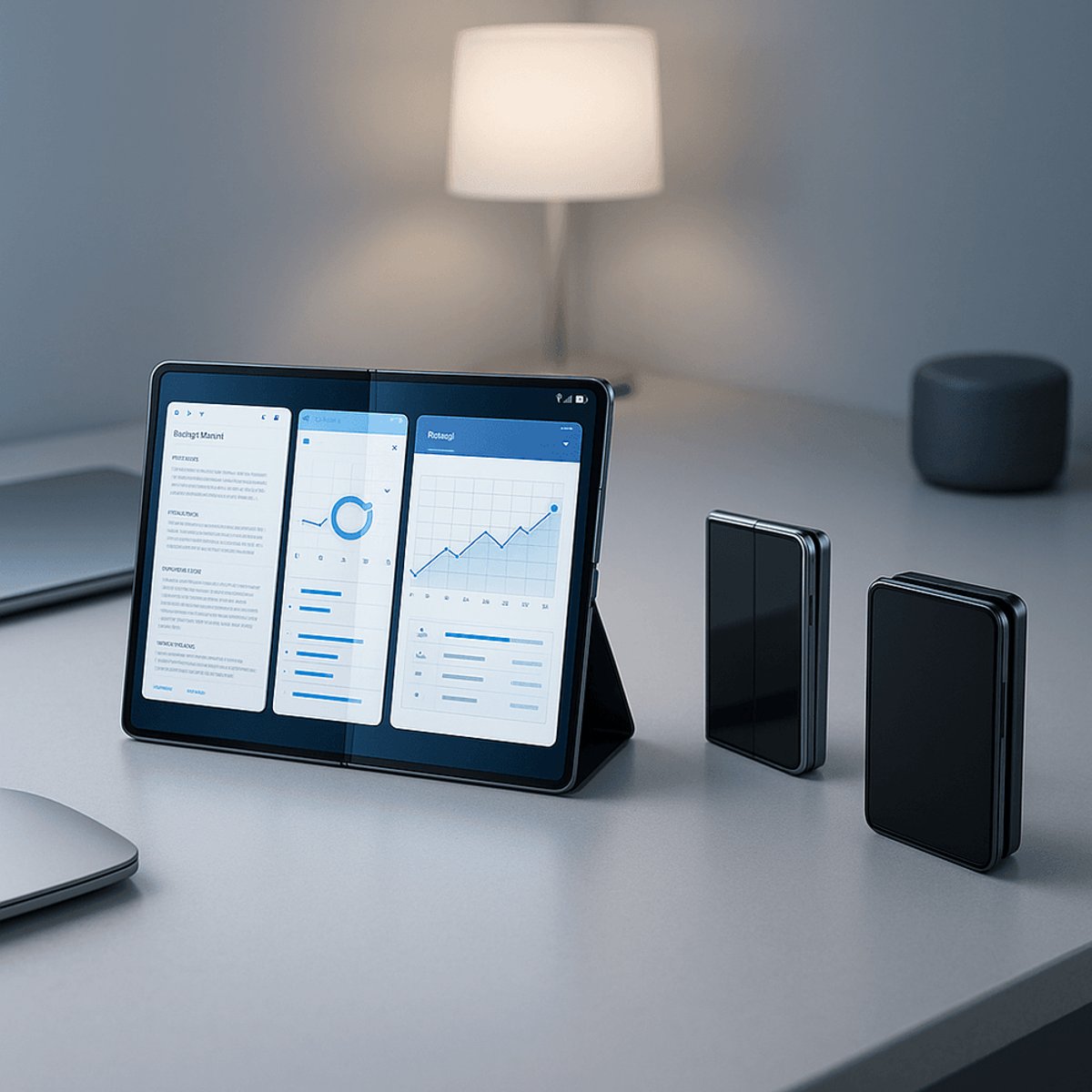
Samsung just dropped a bombshell in the foldable phone race. The company unveiled its Galaxy Z TriFold on December 2nd, introducing a revolutionary three-panel design that opens into a massive 10-inch display - essentially turning your phone into a tablet. This isn't just another incremental upgrade; it's Samsung betting big on the future of mobile computing.
Samsung just redefined what a smartphone can be. The Galaxy Z TriFold, unveiled December 2nd, represents the most ambitious leap in mobile design since the original Galaxy Fold launched in 2019. While competitors like Google stuck with traditional dual-screen foldables, Samsung went full sci-fi with a three-panel design that unfolds into a 10-inch panoramic display.
The numbers tell the story. That 10-inch (253.1mm) main screen puts the Z TriFold squarely in tablet territory when fully expanded, yet it maintains smartphone portability when folded. Samsung's engineering team solved the fundamental challenge plaguing foldables: how to deliver desktop-class productivity without sacrificing mobility.
The real magic happens in software. Samsung DeX transforms the Z TriFold into what the company calls "a full working environment from virtually anywhere." The multi-window feature lets users run three portrait-sized applications side by side - imagine editing documents while monitoring email and video conferencing simultaneously. It's the kind of workflow that previously required multiple devices or awkward split-screening on traditional phones.
This launch couldn't be better timed. The foldable market exploded 73% year-over-year according to recent Counterpoint Research data, with Samsung maintaining its dominant 62% market share. But pressure's mounting from Chinese manufacturers like Honor and Huawei, who've been pushing innovative form factors. The Z TriFold represents Samsung's answer: go bigger, go bolder.
Industry analysts are already drawing comparisons to Apple's rumored foldable iPhone, reportedly still years away from production. "Samsung's essentially created a new product category," noted Counterpoint's Tom Kang in recent interviews. "This isn't just a bigger foldable - it's rethinking mobile computing entirely."
The timing aligns perfectly with Samsung's broader strategy. The company's been quietly building an ecosystem around Samsung DeX, positioning it as the bridge between mobile and desktop computing. With remote work still a major trend, the Z TriFold arrives as professionals seek devices that can genuinely replace laptops for certain tasks.
What's particularly clever is Samsung's marketing approach. Rather than focusing on technical specifications, the company's emphasizing real-world versatility through its unboxing video campaign. The message is clear: this isn't just about having a bigger screen, it's about fundamentally changing how we interact with mobile devices.
The competitive landscape just shifted dramatically. While Google focuses on AI integration in traditional form factors and Apple perfects its existing iPhone lineup, Samsung's betting that the future belongs to devices that can morph between use cases. The Z TriFold isn't just a phone that becomes a tablet - it's a glimpse at post-smartphone computing.
Pricing details remain under wraps, though industry sources suggest the Z TriFold will command a significant premium over Samsung's existing Z Fold line. That's expected for first-generation technology, but Samsung's banking on early adopters and business users justifying the cost through productivity gains.
The question now is execution. Samsung's learned hard lessons from earlier foldable missteps, particularly around durability and software optimization. The Z TriFold's success will depend on whether Samsung can deliver the seamless experience its promotional materials promise, especially in that crucial hinge mechanism that's now even more complex with three panels.
Samsung's Galaxy Z TriFold isn't just another iterative upgrade - it's a bold declaration that the smartphone era might be ending. By cramming tablet-sized productivity into a pocketable device, Samsung's essentially created a new product category that could reshape mobile computing. The success of this gamble will determine whether foldables become mainstream or remain a premium niche, but one thing's certain: Samsung just raised the stakes for everyone else in mobile tech.