Autonomous naval defense startup Saronic just closed one of the largest funding rounds in defense tech history, raising $1.75 billion at a $9.25 billion valuation. The round more than doubles the company's worth from its previous raise early last year, signaling massive investor appetite for AI-powered military modernization as Pentagon spending on autonomous systems accelerates. It's a watershed moment for a sector where software-driven defense platforms are increasingly competing with traditional contractors.
Saronic just pulled off one of the most eye-popping raises in defense tech, securing $1.75 billion in new funding that vaults the autonomous boat maker to a $9.25 billion valuation. According to CNBC, the round more than doubles what the company was worth during its previous fundraising early last year, marking one of the fastest valuation accelerations in the defense sector.
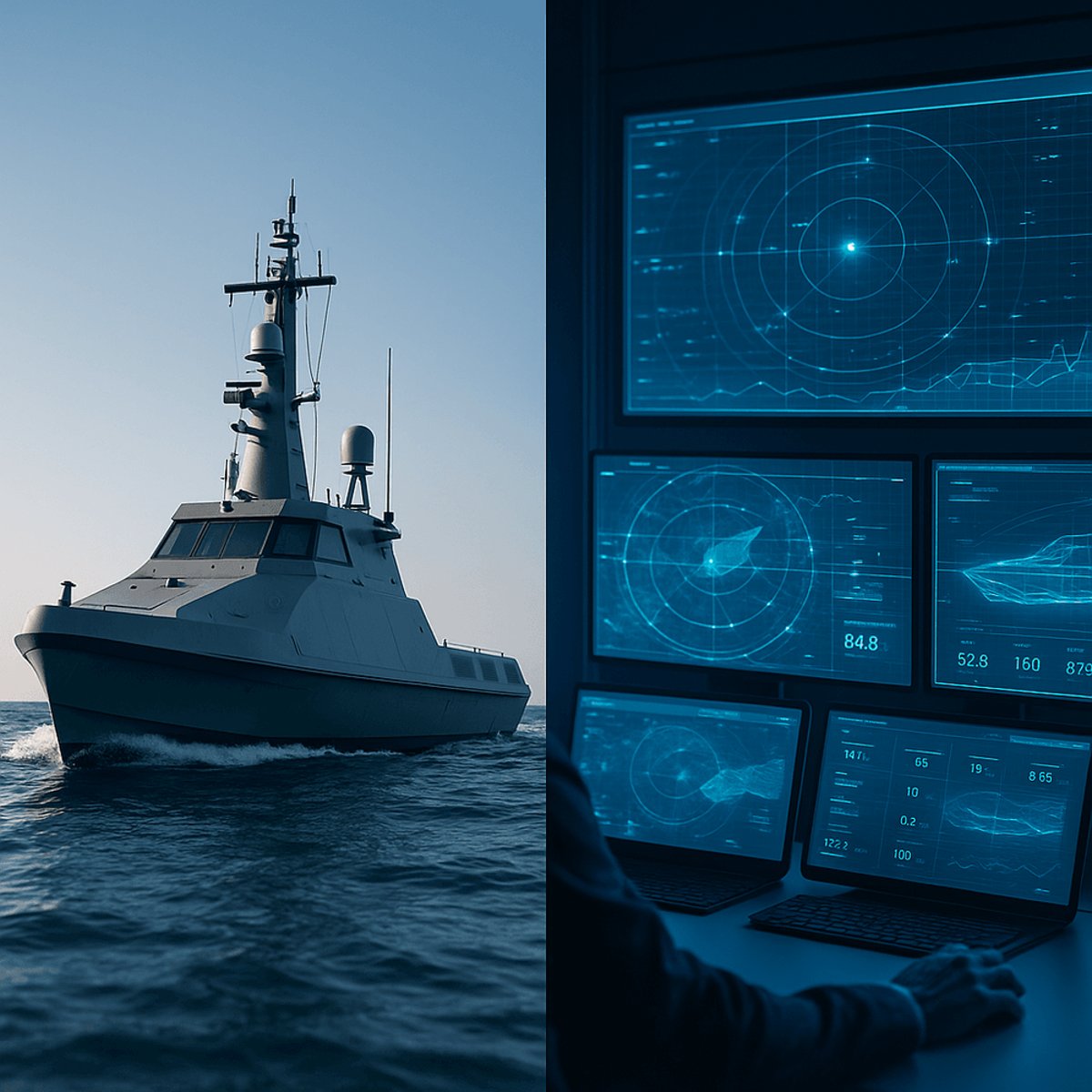
The timing isn't coincidental. Pentagon procurement officials have been publicly pivoting toward autonomous systems for two years now, with naval platforms emerging as a critical gap in U.S. defense capabilities. Saronic's AI-powered vessels promise to do what traditional shipbuilders can't: deploy rapidly, operate without crew risk, and iterate on software rather than decade-long hull designs.
While Saronic hasn't disclosed the investor lineup, the sheer size of the round suggests participation from both traditional venture firms and defense-focused funds that have been circling the autonomous warfare space. The company joins a tight cohort of billion-dollar defense tech unicorns including Anduril, which builds AI-powered surveillance systems, and Shield AI, focused on autonomous aircraft.
What's driving the valuation surge? Contract momentum. Though Saronic hasn't published a full client roster, defense tech insiders point to likely Navy and Coast Guard pilot programs that would explain investor confidence at this scale. The Pentagon has been increasingly willing to award contracts to non-traditional vendors, particularly for autonomous systems where legacy contractors lack software expertise.
The technology itself centers on AI-driven autonomy stacks that let vessels navigate, surveil, and coordinate without human pilots. Unlike traditional warships that cost hundreds of millions and require years to build, Saronic's platforms can be manufactured faster and updated via software - more like Tesla's approach to vehicles than Lockheed Martin's approach to fighter jets.
But the company faces real challenges. Regulatory approval for autonomous military vessels remains complex, with Navy acquisition processes still favoring established contractors. There's also the question of battlefield reliability - software-driven platforms need to prove they can perform under actual combat conditions, not just controlled tests.
The competitive landscape is getting crowded too. Anduril recently expanded into maritime autonomy, while traditional players like Huntington Ingalls are rushing to add AI capabilities to existing platforms. Saronic's advantage lies in being purpose-built for autonomy rather than retrofitting legacy systems, but that's a race against companies with deeper Pentagon relationships.
Financially, the $1.75 billion war chest gives Saronic serious runway to scale manufacturing and R&D. Defense contracts notoriously involve long sales cycles and delayed payments, so having capital to weather procurement timelines is crucial. The valuation jump also suggests the company is likely already revenue-generating, not just burning through venture funding on prototypes.
What's fascinating is how quickly defense tech has become a venture-backable category. Five years ago, investors largely avoided the sector due to regulatory complexity and slow sales cycles. Now, with geopolitical tensions rising and Pentagon modernization budgets expanding, autonomous defense platforms are suddenly founder-friendly. Saronic's raise proves that software-first approaches to military hardware can command consumer tech-level valuations.
The broader implications reach beyond one company's cap table. If Saronic can execute on this capital, it validates the thesis that autonomy will reshape naval warfare the same way drones transformed air combat. Traditional shipbuilders suddenly face competition from startups that can iterate faster and leverage commercial AI advances rather than defense-specific R&D.
For the Pentagon, this represents a strategic bet. Backing companies like Saronic means accepting more risk on unproven platforms in exchange for potential technological leaps. It's a departure from the risk-averse procurement culture that's dominated military spending for decades, driven by urgent need to counter adversaries investing heavily in autonomous systems.
Saronic's $1.75 billion raise at a $9.25 billion valuation isn't just a funding milestone - it's a signal that autonomous defense platforms have moved from experimental to essential in Pentagon planning. The company now has the capital to prove whether software-driven naval systems can actually deliver on their promise of faster, cheaper, and more adaptable military capabilities. If they succeed, expect a wave of similar raises as investors pile into the autonomous warfare stack. If integration challenges or regulatory hurdles slow progress, this could mark the peak of defense tech's venture moment. Either way, traditional shipbuilders just got put on notice that their decades-long procurement dominance faces a serious software-powered challenge.