The AI agent wars just got personal - literally. Simular closed a $21.5 million Series A led by Felicis to fund its desktop automation agent that doesn't just browse the web but actually controls your entire Mac or Windows PC. The startup claims it's cracked the code on AI hallucinations with a hybrid approach that lets agents learn tasks, then locks successful workflows into reliable, repeatable code.
Simular just positioned itself at the center of the AI agent revolution with a $21.5 million Series A that could reshape how we think about desktop automation. The startup, led by ex-Google DeepMind scientists, isn't content with browser-based agents - they want to control your entire computer.
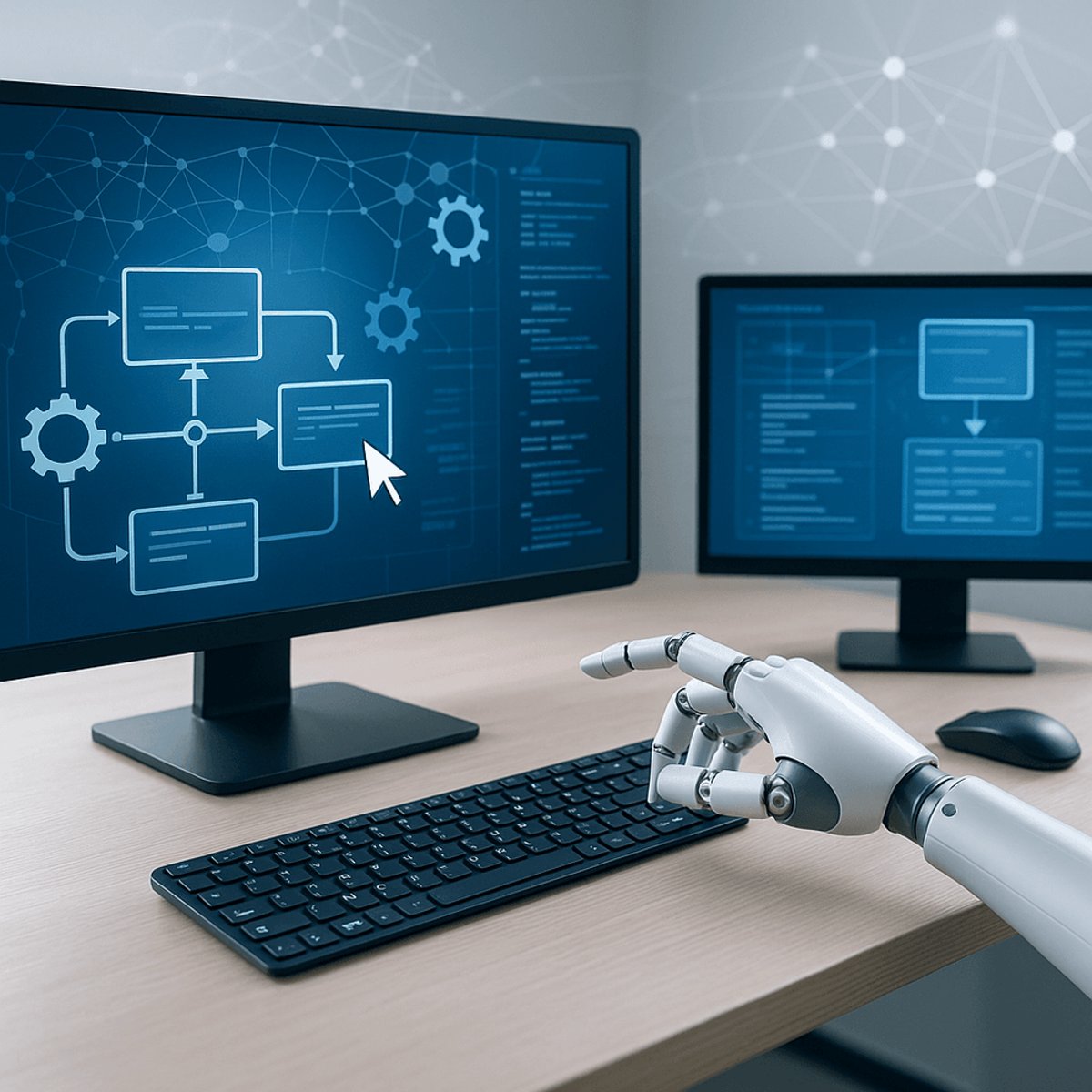
The funding round, led by Felicis, brings Simular's total raised to $27 million and validates a radically different approach to AI agents. While competitors focus on web automation, Simular's agent literally moves your mouse cursor and clicks buttons across any application on your desktop. "We can literally move the mouse on the screen and do the click. So it's more capable of doing, repeating whatever human activities in the digital world," CEO Ang Li told TechCrunch.
The timing couldn't be better. Microsoft just selected Simular as one of five companies for its Windows 365 for Agents program, alongside Manus AI, Fellou, Genspark, and TinyFish. The partnership signals Microsoft's serious push into agentic computing, with Simular's Windows version expected to match or exceed the popularity of its Mac release.
But Simular's real breakthrough isn't just desktop control - it's solving the hallucination problem that's plagued AI agents since day one. Current large language models hallucinate unpredictably, and when agents need to execute thousands of steps, even small errors cascade into complete failures. Traditional solutions force deterministic behavior that kills creativity, or accept unreliable performance.
Li and co-founder Jiachen Yang, both reinforcement learning specialists from DeepMind's product teams (including Waymo development), engineered a hybrid solution they call "neuro symbolic computer use agents." The system lets AI agents explore and iterate freely on tasks with human feedback, but once a successful workflow emerges, it converts that process into deterministic code.
"Our solution is, let agents keep exploring the successful trajectory. Once you found a successful trajectory, that becomes deterministic code," Li explained. This approach puts the final workflow code directly in users' hands, letting them inspect, audit, and trust the automation they're running.
The practical applications are already emerging. Early beta customers include a car dealership automating VIN number lookups across multiple systems and HOAs extracting contract details from PDF documents. Simular's open source project has spawned automations ranging from content creation pipelines to complex sales workflows.
The investment landscape validates Simular's approach. NVentures (NVIDIA's venture arm) doubled down from the $5 million seed round, joined by South Park Commons, Basis Set Ventures, Flying Fish Partners, Samsung NEXT, Xoogler Ventures, and angel investor Lenny Rachitsky. The backing from NVIDIA's venture arm is particularly telling, given the chipmaker's focus on AI infrastructure companies with technical moats.
Simular's competitive advantage runs deeper than just better technology. The founders' DeepMind pedigree gives them insight into Google's internal AI agent development, while their product-focused background (versus pure research) keeps them grounded in real-world applications. "The work wasn't strictly academic," Li noted. "It was intended to improve Google products."
The desktop automation market is heating up fast, with Microsoft's agent push, Google's rumored desktop AI integration, and Apple's ongoing AI development. But Simular's deterministic workflow approach could give it first-mover advantage in the enterprise segment, where reliability trumps creativity.
What makes this funding particularly significant is the validation of desktop-level AI control. While browser automation dominated the first wave of AI agents, Simular's success suggests the real value lies in replacing repetitive tasks across all applications - from spreadsheet manipulation to complex multi-system workflows.
Simular's $21.5 million Series A represents more than just another AI agent funding round - it's validation that the future of workplace automation lies beyond browsers and into full desktop control. The startup's breakthrough in solving AI hallucinations through deterministic workflow conversion could finally make AI agents reliable enough for enterprise deployment. With Microsoft's partnership backing and enterprise customers already automating complex tasks, Simular is positioning itself as the infrastructure layer for the post-browser computing era.