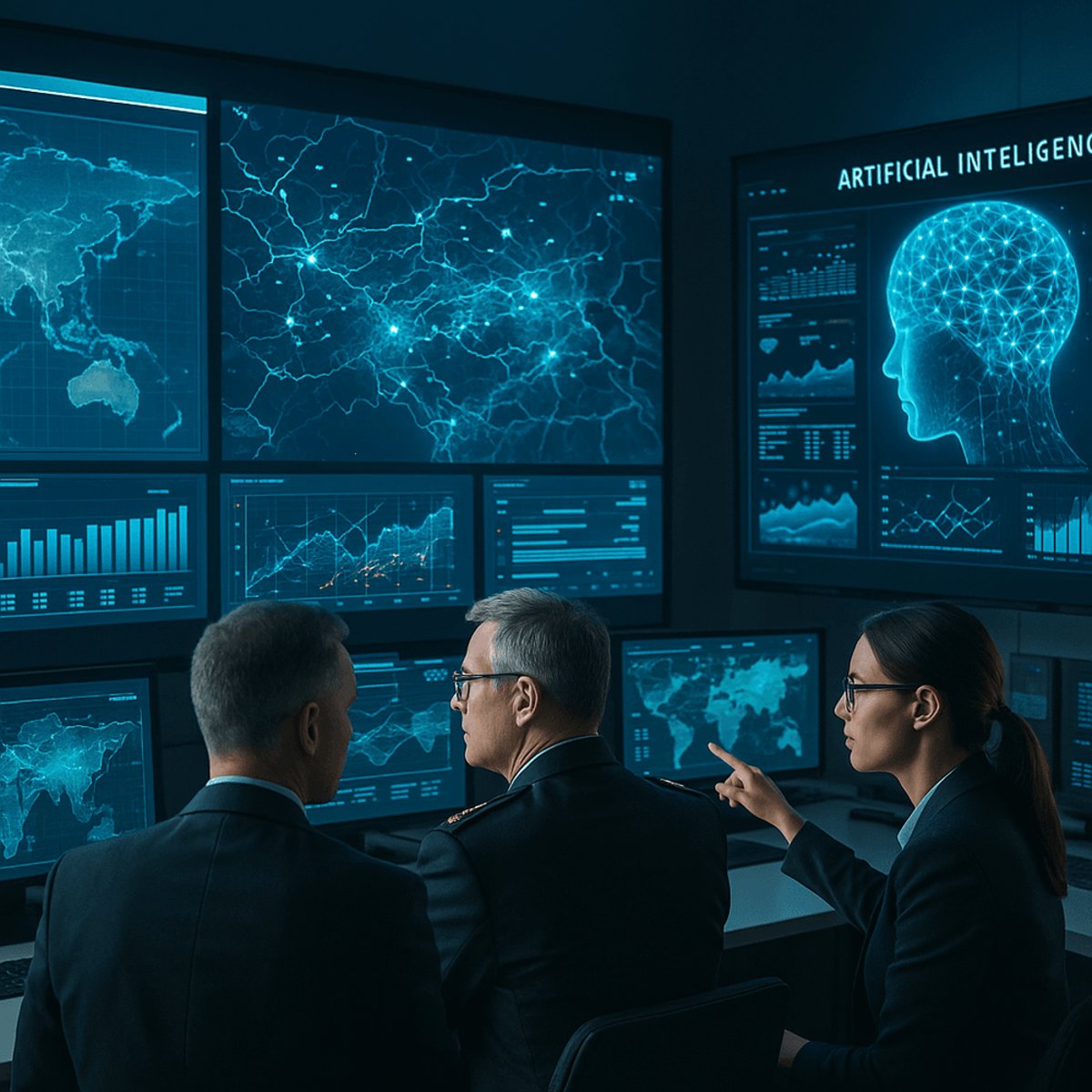
Palantir is showing the Pentagon how AI chatbots could revolutionize military decision-making. New software demos and Pentagon records obtained by Wired reveal that Anthropic's Claude AI is being integrated into defense systems to analyze battlefield intelligence and suggest tactical responses. The revelations come as the defense industry races to embed large language models into critical military infrastructure, raising questions about AI autonomy in warfare.
Palantir just gave the Pentagon a glimpse of warfare's AI-powered future. Software demonstrations and internal Pentagon documents show how the defense contractor is integrating Anthropic's Claude chatbot into military planning systems, creating AI assistants that can parse intelligence reports and recommend tactical actions in real time.
The demos, detailed in reporting by Wired, represent a significant escalation in how the military plans to use commercial AI. Rather than simple data analysis, these systems are being positioned to suggest operational next steps - the kind of strategic decisions that have traditionally required human judgment and years of military experience.
Palantir's approach leverages the same large language model technology powering consumer chatbots, but redirects it toward parsing classified intelligence feeds, satellite imagery analysis, and battlefield communications. The system can theoretically digest vast amounts of military data and surface actionable recommendations faster than human analysts working through traditional channels.
The revelations are particularly striking given Anthropic's public positioning as a safety-focused AI company. While the startup has emphasized responsible AI development and securing its models against misuse, Pentagon records now show its flagship product analyzing military intelligence and contributing to war planning scenarios. It's unclear whether Anthropic directly authorized this integration or if Palantir accessed Claude through commercial API channels.
This isn't Palantir's first foray into AI-powered defense. The company has spent years building its Gotham and Foundry platforms for intelligence agencies and military commands worldwide. But integrating cutting-edge LLMs marks a new frontier - one where conversational AI interfaces could eventually shape battlefield decisions with minimal human oversight.
The timing puts Anthropic in an awkward position. The company raised over $7 billion from investors including Google and Salesforce while marketing itself as a counterweight to more aggressive AI development. Co-founders Dario and Daniela Amodei have repeatedly stressed the importance of AI safety research and constitutional AI principles designed to keep models aligned with human values.
But commercial AI models don't stay in controlled environments. Once released through APIs or cloud services, companies have limited visibility into downstream applications. Palantir's integration suggests that even safety-conscious AI labs can find their technology repurposed for military applications through third-party contractors with Pentagon relationships.
The defense industry has been racing to incorporate generative AI since ChatGPT's breakthrough. Microsoft provides AI tools to defense customers through its Azure Government cloud. Google faced employee backlash over Project Maven before scaling back direct military AI work. Amazon Web Services powers classified intelligence systems. Now Palantir is demonstrating how these commercial models could directly influence combat decisions.
Pentagon interest in AI decision support isn't surprising. Modern warfare generates overwhelming data volumes from drones, satellites, signals intelligence, and ground sensors. Human analysts struggle to process everything in time to act on fast-moving threats. AI systems promise to compress that decision cycle, identifying patterns and recommending responses before adversaries can react.
But that speed comes with risks. AI models can hallucinate false information, misinterpret context, or reflect biases in training data. In consumer applications, these errors cause annoyance. In military settings, they could trigger unintended escalations or target misidentification. The demos don't reveal what safeguards Palantir built around Claude's recommendations or whether human commanders retain meaningful oversight.
The revelations also highlight the blurring line between commercial AI development and defense applications. Anthropic built Claude for broad commercial use, not battlefield deployment. Yet the same capabilities that make it useful for customer service or coding assistance - natural language understanding, reasoning, rapid synthesis - translate directly to military intelligence analysis.
This dual-use dilemma will only intensify as AI models grow more capable. Every advancement in reasoning, multimodal understanding, or autonomous task completion has both civilian and military applications. AI labs face mounting pressure to control downstream use while maintaining the open commercial access that funds their research.
The Pentagon's exploration of AI-powered war planning through Palantir and Anthropic's Claude marks a turning point in military AI adoption. What started as commercial chatbot technology is now being tested for some of the highest-stakes decisions humans make. As defense contractors rush to integrate LLMs into battlefield systems, the industry faces urgent questions about autonomy, accountability, and whether safety guardrails built for consumer applications can hold up in combat zones. The demos might impress Pentagon planners, but they also illuminate how quickly commercial AI escapes its intended boundaries - and how unprepared we are for the consequences.