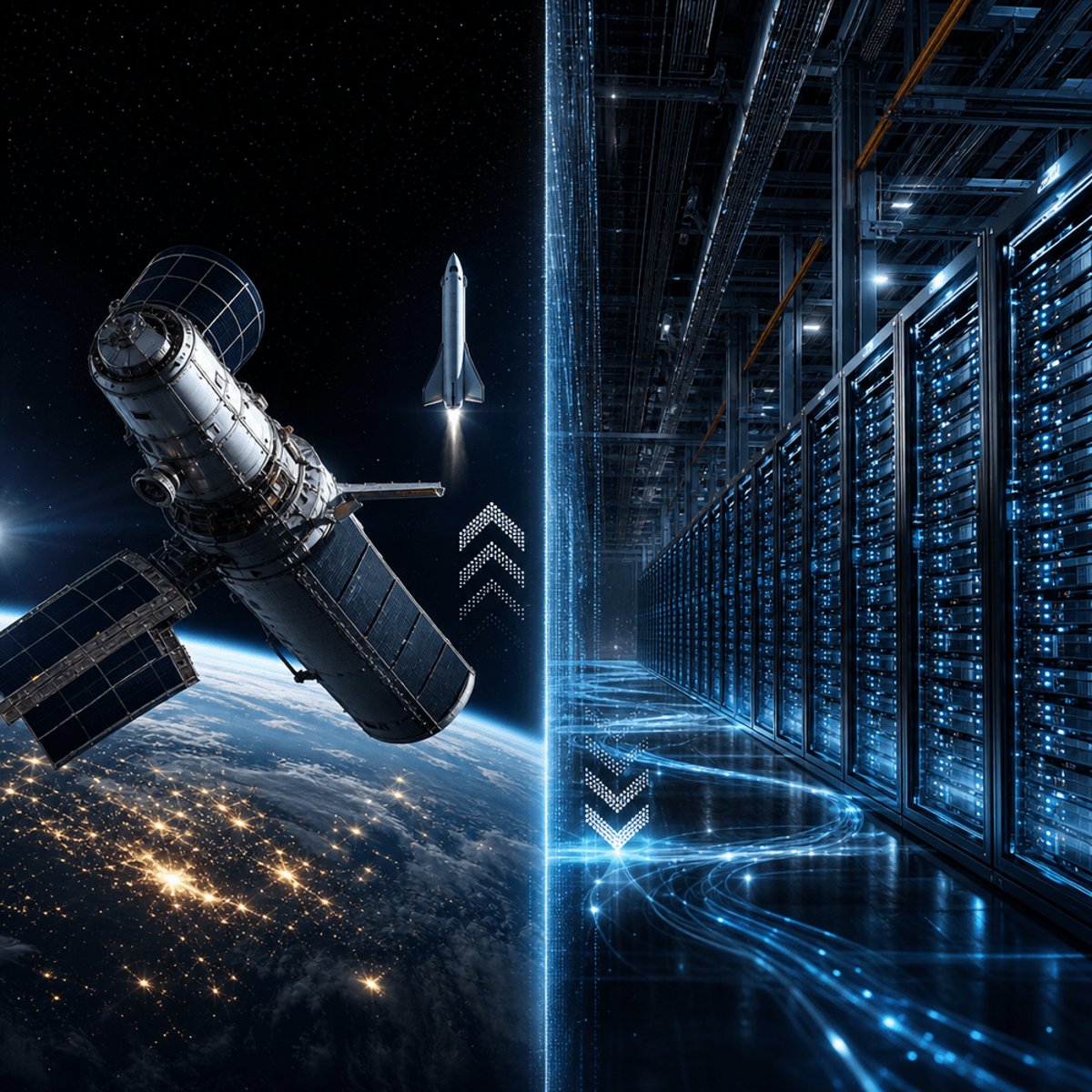
Elon Musk's latest moonshot - orbital data centers for AI workloads - is facing pushback from an unexpected corner. SoftBank CEO Masayoshi Son has emerged as a prominent skeptic of the concept, joining a growing chorus of industry voices questioning the technical and economic viability of processing data in space. The clash highlights the widening divide between Musk's infrastructure ambitions and investors betting billions on terrestrial AI computing.
Elon Musk is pitching a future where AI computations happen not in sprawling warehouse facilities, but in orbit - and SoftBank CEO Masayoshi Son isn't buying it.
The clash surfaced publicly as Musk has been promoting the concept of orbital data centers, presumably leveraging SpaceX's Starship launch system to deploy computing infrastructure in space. Son's skepticism represents a significant counterpoint from one of tech's most aggressive investors, someone who's deployed billions backing AI infrastructure plays.
The orbital data center concept isn't entirely new. Advocates argue that space offers unique advantages - unlimited solar power, natural cooling in the vacuum of space, and freedom from earthbound real estate constraints. Musk's pitch likely envisions SpaceX making launches cheap enough to justify hauling servers into orbit.
But the economics remain murky. Traditional hyperscale data centers benefit from proximity to power grids, fiber optic networks, and maintenance crews. Moving that infrastructure to orbit introduces staggering complexity. How do you repair failed hardware? What happens when components need upgrades? The latency of beaming data to and from orbit could negate performance gains, especially for real-time AI applications.
Son's public questioning carries particular weight given SoftBank's extensive portfolio in AI and cloud infrastructure. The firm's Vision Fund has backed numerous data center and semiconductor plays, giving Son a front-row seat to the brutal capital requirements of modern computing infrastructure. His skepticism suggests he's run the numbers and they don't add up.
The timing is revealing. Just as Microsoft, Google, and Amazon announce multi-billion dollar expansions of terrestrial data centers to support AI training and inference, Musk is proposing a fundamentally different architecture. The hyperscalers are betting that proximity to users and existing infrastructure wins. Musk is wagering that launch costs can fall far enough to make orbit competitive.
Industry experts point to massive technical hurdles beyond economics. Radiation in space degrades electronics faster than on Earth. Power delivery remains challenging despite abundant solar energy. And the regulatory framework for orbital data processing barely exists. Who has jurisdiction over a server farm circling the planet at 17,000 mph?
The debate also exposes competing visions for AI infrastructure's future. Traditional cloud providers are doubling down on geographic distribution - building data centers closer to where users and data reside. Musk's orbital approach would centralize processing in space, potentially creating new bottlenecks even as it solves old ones.
What's driving Musk's interest likely extends beyond pure computing economics. An orbital data center network would create anchor tenancy for SpaceX launches, justifying continued Starship development. It could also tie into Starlink's satellite internet constellation, creating an integrated space-based computing and communications network.
But Son's pushback suggests that even if the vision is technically achievable, the business case remains unconvincing to those writing checks for AI infrastructure today. The capital pouring into AI is chasing near-term returns from models that need computing power now, not experimental platforms that might work in five or ten years.
The orbital data center debate crystallizes a fundamental tension in tech - the gap between visionary concepts and investor pragmatism. While Musk has repeatedly defied skeptics with SpaceX and Tesla, data centers operate under different physics than rockets or cars. Son's public questioning suggests that even the industry's biggest risk-takers see limits to space-based computing economics. As AI demand strains terrestrial infrastructure, the industry appears ready to build bigger on the ground rather than reach for orbit. For now, the cloud is staying firmly on Earth.