SoftBank's Vision Fund just posted a $2.4 billion quarterly gain, riding a surge in OpenAI's valuation that helped mask weakness across its broader portfolio. The win marks a dramatic turnaround for the fund that's struggled with declining valuations in its tech holdings, and signals that AI investments are becoming the new anchor for venture portfolios navigating a challenging market.
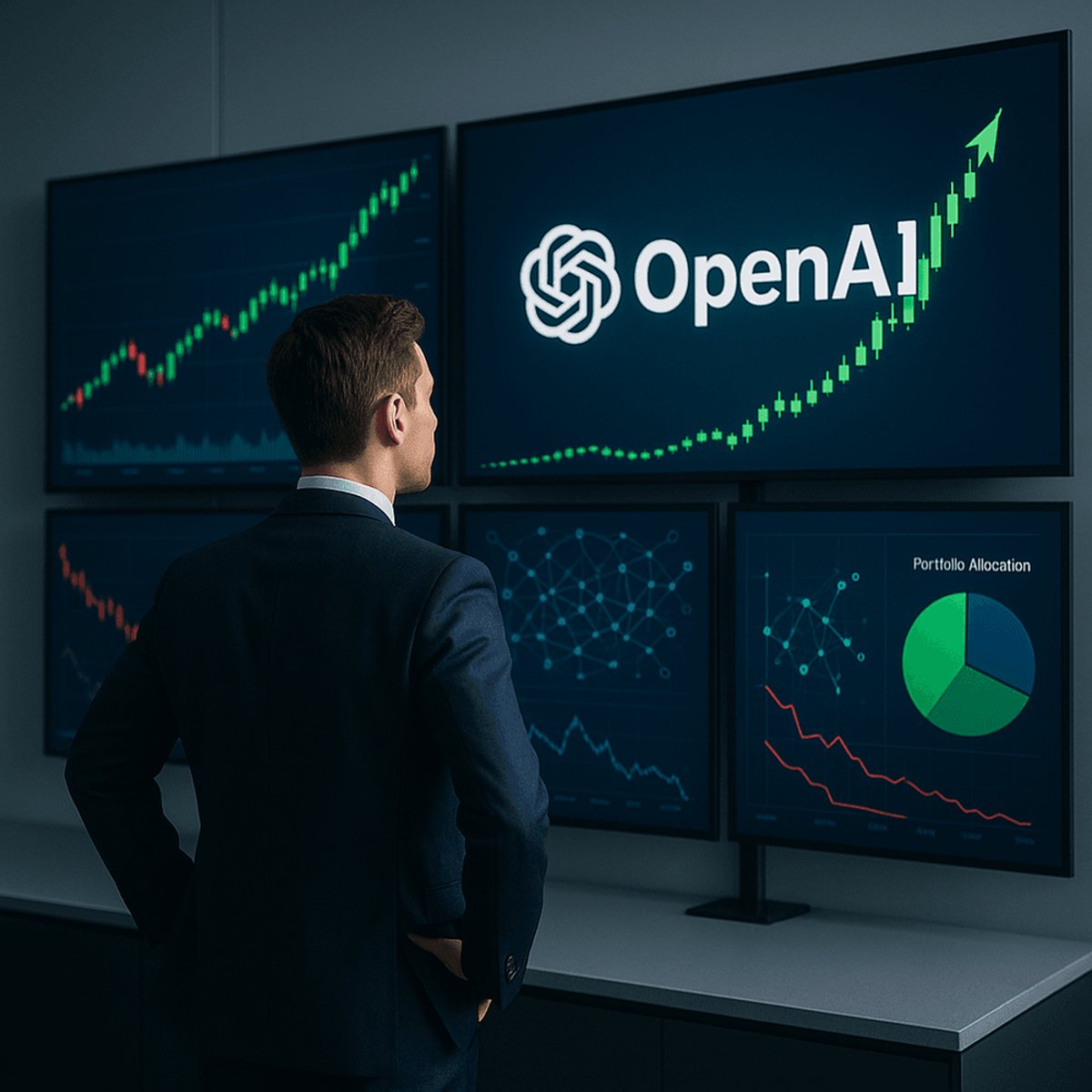
SoftBank Group just delivered a rare piece of good news for its beleaguered Vision Fund. The investment vehicle posted a $2.4 billion gain in its latest quarter, driven almost entirely by a jump in OpenAI's valuation that papered over continued struggles in other parts of the portfolio.
The results highlight how dramatically the AI boom is reshaping venture economics. While SoftBank's broader portfolio grapples with down rounds and declining valuations, its OpenAI stake has become an outsized winner that's single-handedly turning red ink to black.
According to CNBC reporting, the Vision Fund logged the substantial quarterly gain as OpenAI's private market valuation continued climbing. The timing couldn't be better for SoftBank founder Masayoshi Son, who's faced mounting criticism over the fund's performance since its 2017 launch.
But the headline number masks a more complicated story. The $2.4 billion gain came as OpenAI's valuation increase "helped offset losses in some of its other bets," revealing that without the AI champion, the fund would still be posting declines. That dynamic underscores how concentrated SoftBank's recent success has become, with one or two mega-winners carrying an entire portfolio of underperformers.
The OpenAI investment has proven to be one of Son's most prescient bets. SoftBank participated in OpenAI's funding rounds as the company transitioned from research lab to commercial powerhouse, and those early stakes have multiplied in value as ChatGPT and enterprise AI products drove explosive revenue growth. Industry observers estimate OpenAI's current valuation has surged past $150 billion in secondary markets, though the company hasn't confirmed recent pricing.
For context, the Vision Fund has historically struggled with valuation write-downs across its portfolio. High-profile investments in companies like WeWork, Greensill Capital, and various logistics startups have cratered, forcing SoftBank to book billions in losses. The fund posted cumulative losses exceeding $30 billion between 2021 and 2023 as tech valuations collapsed.
The latest results suggest AI is becoming the great divider in venture portfolios. Funds with meaningful exposure to leading AI companies are posting strong returns, while those without are still working through the wreckage of 2021-era overvaluations. OpenAI has emerged as a particular prize, with early investors seeing returns that dwarf most other positions.
SoftBank's renewed focus on AI aligns with Son's public statements about betting heavily on artificial general intelligence. The company has also invested in other AI infrastructure plays and announced plans to deploy billions more into the sector. The Vision Fund's quarterly performance validates that strategic shift, even as questions linger about portfolio concentration risk.
The gain also arrives as SoftBank navigates a complex relationship with its Vision Fund limited partners. Some LPs have grown frustrated with the fund's volatility and Son's aggressive investment style. A strong quarter driven by OpenAI could ease some tensions, but it also raises questions about what happens if AI valuations cool.
Market watchers note that OpenAI's valuation gains remain paper profits until SoftBank can find liquidity. With IPO markets still uncertain and secondary transactions limited for late-stage AI companies, the fund may need to hold its position for years before realizing actual returns. That creates duration risk if AI sentiment shifts.
Still, for now, SoftBank can claim vindication. Its OpenAI bet is doing exactly what venture capitalists hope for - generating returns large enough to make up for a portfolio full of misses. That's the classic VC model, but it's rarely executed at the scale SoftBank operates.
The results also send a signal to other institutional investors piling into AI. Getting access to companies like OpenAI at reasonable valuations has become nearly impossible, with each funding round oversubscribed and secondary shares trading at massive premiums. SoftBank's early positioning gives it an advantage that newer AI investors can't replicate.
SoftBank's $2.4 billion Vision Fund gain proves what every VC already knows - in this market, you live or die by your AI exposure. The OpenAI stake has transformed from a speculative bet into a portfolio savior, masking continued weakness across SoftBank's broader holdings. For Son and the Vision Fund, it's validation of the concentrated bet strategy, but it also reveals a dangerous dependency on a single company's continued ascent. As AI valuations climb into stratospheric territory, the question isn't whether SoftBank made a good bet - it's what happens when the music stops.