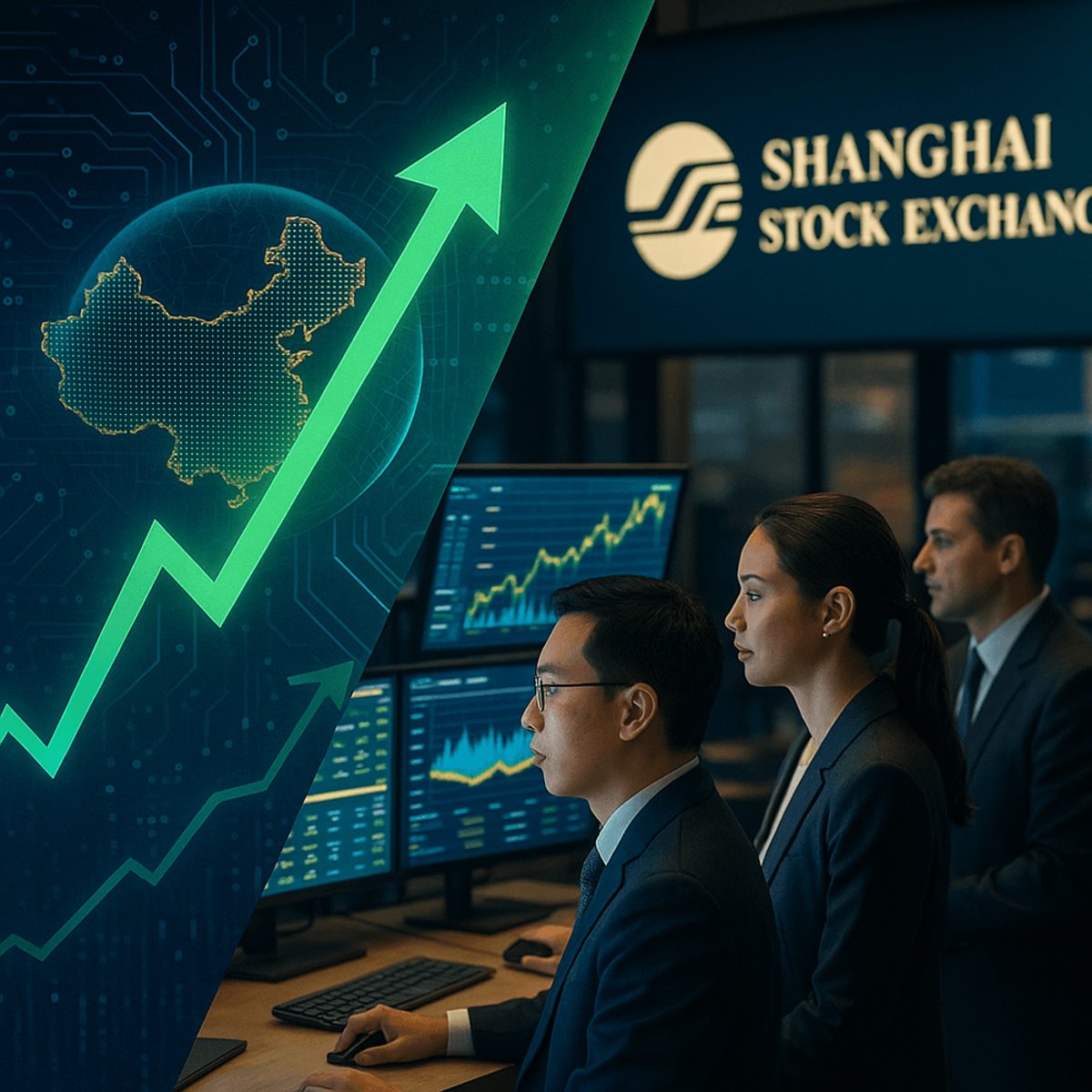
Chinese AI stocks are rallying hard this morning, with Zhipu AI jumping 30% and dragging the broader Shanghai STAR AI Industry Index up 1.7% before settling back. The surge comes as a cluster of Chinese AI companies unleashed new model and agent releases in what's shaping up to be the country's most aggressive push yet to close the gap with U.S. rivals. It's a sharp reversal for a sector that's spent months in the shadow of OpenAI and Google.
Zhipu AI, one of China's most prominent large language model developers, exploded 30% higher in Thursday trading as Chinese AI stocks staged their sharpest rally in months. The move came as multiple Chinese AI companies rolled out new models and AI agents in rapid succession, according to CNBC.
The Shanghai STAR AI Industry Index, which tracks the country's emerging tech giants, climbed 1.7% before pulling back slightly. But the damage was done - Zhipu's explosive gain sent a clear signal that investors see Chinese AI companies finally mounting a credible challenge to their American counterparts.
Zhipu, backed by Tsinghua University and known for its GLM series of models, has been racing to match capabilities from OpenAI, Google, and Meta. The company's latest releases apparently struck a chord with traders who've been waiting for China to show it can compete despite facing severe restrictions on advanced chip imports from the U.S.
MiniMax, another key player in China's AI scene, also dropped new products as part of what looks like a coordinated market push. The timing isn't accidental - Chinese AI firms have been building toward this moment for months, working around chip constraints and developing indigenous alternatives to Western foundation models.
The rally comes at a critical moment for Chinese AI. U.S. export controls have forced companies like Zhipu and MiniMax to get creative, optimizing models to run on less advanced hardware and focusing on efficiency over raw parameter counts. That strategy appears to be paying off, at least in terms of market confidence.
China's AI sector has been under immense pressure to prove it can keep pace despite the semiconductor blockade. Beijing has poured billions into domestic chip production and AI research, but progress has been uneven. Today's stock surge suggests investors believe the gap is narrowing faster than expected.
The Shanghai STAR market, China's answer to Nasdaq, has become ground zero for AI stock trading. The index includes everything from chip designers to cloud infrastructure providers to pure-play AI model companies. Its 1.7% jump, even with some pullback, represents significant capital flowing into the sector.
What's driving the sudden optimism? The wave of product releases signals Chinese companies are moving from research phase to deployment. That's the inflection point where AI investments start generating revenue rather than just burning cash. Zhipu's 30% pop suggests traders see a path to profitability that didn't exist before.
The competitive dynamics are shifting too. While OpenAI and Google dominate Western markets, Chinese companies have a massive domestic market largely insulated from foreign competition. If Zhipu and rivals can achieve feature parity, they've got 1.4 billion potential users and a government eager to reduce dependence on American AI.
Still, skepticism remains warranted. Chinese AI stocks are notoriously volatile, prone to regulatory crackdowns and geopolitical tensions. The sector has rallied before only to crash when Beijing tightens controls or U.S. restrictions deepen. Today's gains could evaporate if the new models don't deliver on their promises or if chip shortages worsen.
But for now, Zhipu's surge and the broader index gains mark a notable shift in sentiment. Chinese AI companies are betting they can compete on innovation rather than just copying Western models. Whether that bet pays off will determine if today's rally was the start of something bigger or just another false dawn for China's AI ambitions.
Zhipu's 30% surge and the broader Chinese AI rally signal a potential turning point for a sector that's spent years playing catch-up. The coordinated wave of model releases shows Chinese companies are done being also-rans - they're making a serious run at Western AI dominance, chip restrictions be damned. Whether this rally holds depends on whether the new products can actually compete with ChatGPT and Gemini, but investor sentiment just shifted hard. For the first time in months, traders are betting China's AI sector can win on merit, not just market protection. That alone makes today's move worth watching as a potential inflection point in the global AI race.