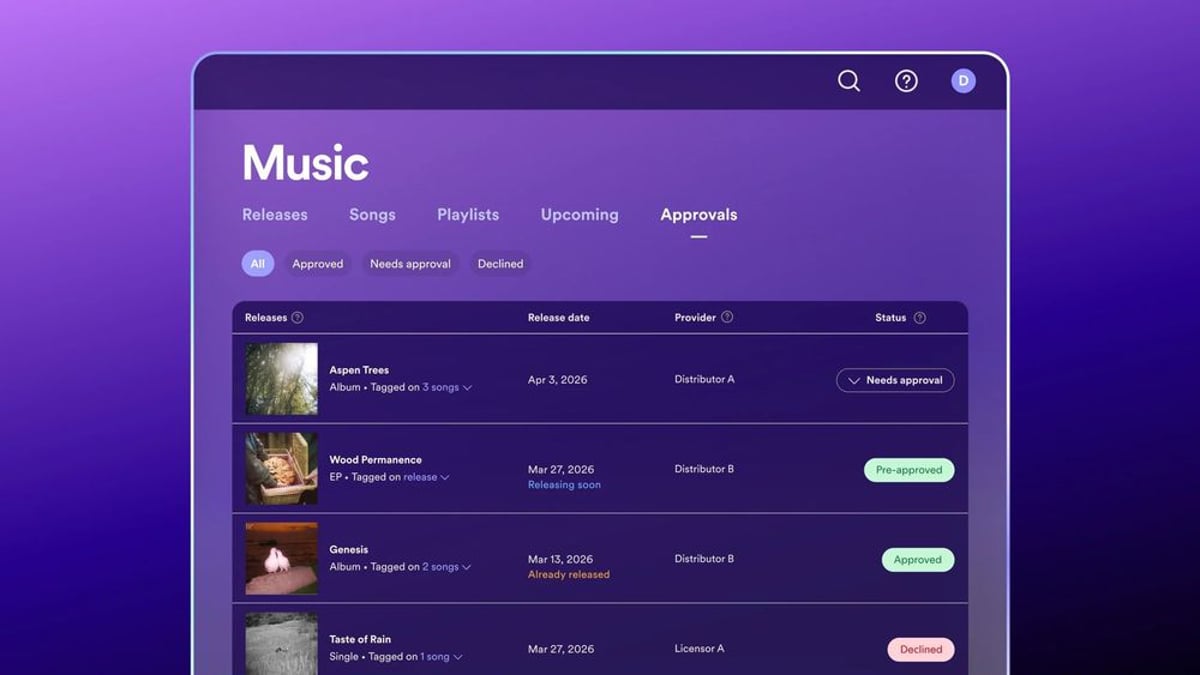
Spotify is rolling out Artist Profile Protection, a new beta feature that lets musicians manually approve tracks before they appear on their profiles. The move comes as AI-generated impersonations and metadata mistakes have plagued everyone from Drake to indie acts, turning artist pages into potential minefields of fake content. It's Spotify's most direct answer yet to a problem that's been escalating for months across streaming platforms.
Spotify just handed artists something they've been demanding for months - actual control over their own profiles. The company's new Artist Profile Protection feature, now in beta testing, lets musicians review and approve any release before it appears under their name. It's a direct response to the surge of AI-generated fakes and impostor tracks that have turned artist pages into potential liability zones.
The announcement comes via Spotify's artist blog, where the company frames it as a solution to both innocent metadata mixups and deliberate bad actors. But the timing tells the real story - AI voice cloning has evolved from novelty to nuisance to genuine threat over the past year.
Everyone from Drake and Beyonce to experimental composer William Basinski and psych-rock outfit King Gizzard and the Lizard Wizard have found fake tracks appearing under their names. Some are obvious metadata errors - two artists with the same name getting their catalogs crossed. But increasingly, the fakes are AI-generated voice clones designed to siphon streams and royalties from legitimate artists.
The new system works like a gatekeeper. When a distributor submits a release to an artist's profile, the artist gets a notification through Spotify for Artists. They can review the track details, listen if they want, then approve or decline it. Declined releases get bounced back to the distributor to sort out. It's manual, it's time-consuming, and for artists dealing with impostor problems, it's probably a relief.
What makes this particularly significant is how it shifts responsibility. Previously, artists had to play whack-a-mole with fake uploads, reporting them after they'd already gone live and potentially racked up thousands of streams. Now they can stop the fakes before they ever reach listeners. It's the difference between damage control and actual prevention.
The feature also addresses a more mundane but equally frustrating issue - artists who share names. There are multiple John Smiths making music, and metadata errors have long meant tracks ending up on the wrong John Smith's page. Artist Profile Protection gives each John Smith the ability to say "nope, not mine" before confusion spreads.
But the AI angle is what's driving urgency. Voice cloning technology has gotten scary good and disturbingly cheap. A determined bad actor can scrape vocal samples from YouTube interviews, feed them into a generator, and produce a passable fake in hours. Some of these tracks have stayed live for days or weeks before artists even noticed, accumulating streams that translate to real money - money that doesn't go to the actual artist.
Spotify hasn't said how many artists are in the beta or when it'll roll out widely. The company also hasn't addressed the elephant in the room - what happens when an artist gets overwhelmed with approval requests? High-volume artists might find themselves drowning in notifications, especially if bad actors try to flood the system with fake submissions.
There's also the question of false positives. What if a legitimate collaborator submits a track and the artist misses the notification? Or what if an artist's team isn't properly coordinated and someone declines a real release by mistake? Spotify says declined tracks go back to distributors, but that could create release-day chaos for time-sensitive drops.
Still, the move signals that streaming platforms are finally taking artist impersonation seriously. For too long, the burden fell entirely on musicians to police their own presence across platforms. Artist Profile Protection flips that script, giving creators a tool that actually prevents problems instead of just cleaning up after them.
The feature also puts pressure on competitors. Apple Music, YouTube Music, and others will face questions about why they don't offer similar protections. In an industry where artist relations matter and catalog retention is competitive, being the platform that lets fakes run wild could become a liability.
For now, Spotify's approach is cautious - a limited beta that'll presumably expand based on feedback. But the fact that it exists at all marks a shift in how platforms think about content authenticity in the age of generative AI. The days of "upload first, ask questions later" are starting to crack.
Artist Profile Protection represents a meaningful evolution in how streaming platforms handle authenticity - shifting from reactive policing to proactive prevention. It won't solve every impostor problem, and it might create new headaches around workflow and false positives. But for artists who've spent months battling AI clones and metadata nightmares, having veto power over their own profiles is a win. The real test comes when this exits beta and scales to millions of artists, each potentially juggling dozens of approval requests. If Spotify can make that experience manageable, other platforms will have to follow.