Starcloud just became the fastest Y Combinator startup to reach unicorn status, hitting a $1 billion valuation just 17 months after demo day with a $170 million Series A round. The space tech startup is building data centers in orbit, capitalizing on the explosive demand for AI infrastructure while promising to solve earthbound computing's biggest headaches - power consumption and cooling costs. It's a bold bet that the future of cloud computing might literally be in the clouds.
Starcloud just shattered Y Combinator's speed record, reaching unicorn status in 17 months with a $170 million Series A that values the space data center startup at $1 billion. The milestone makes it the fastest YC company ever to hit the ten-figure mark, according to TechCrunch.
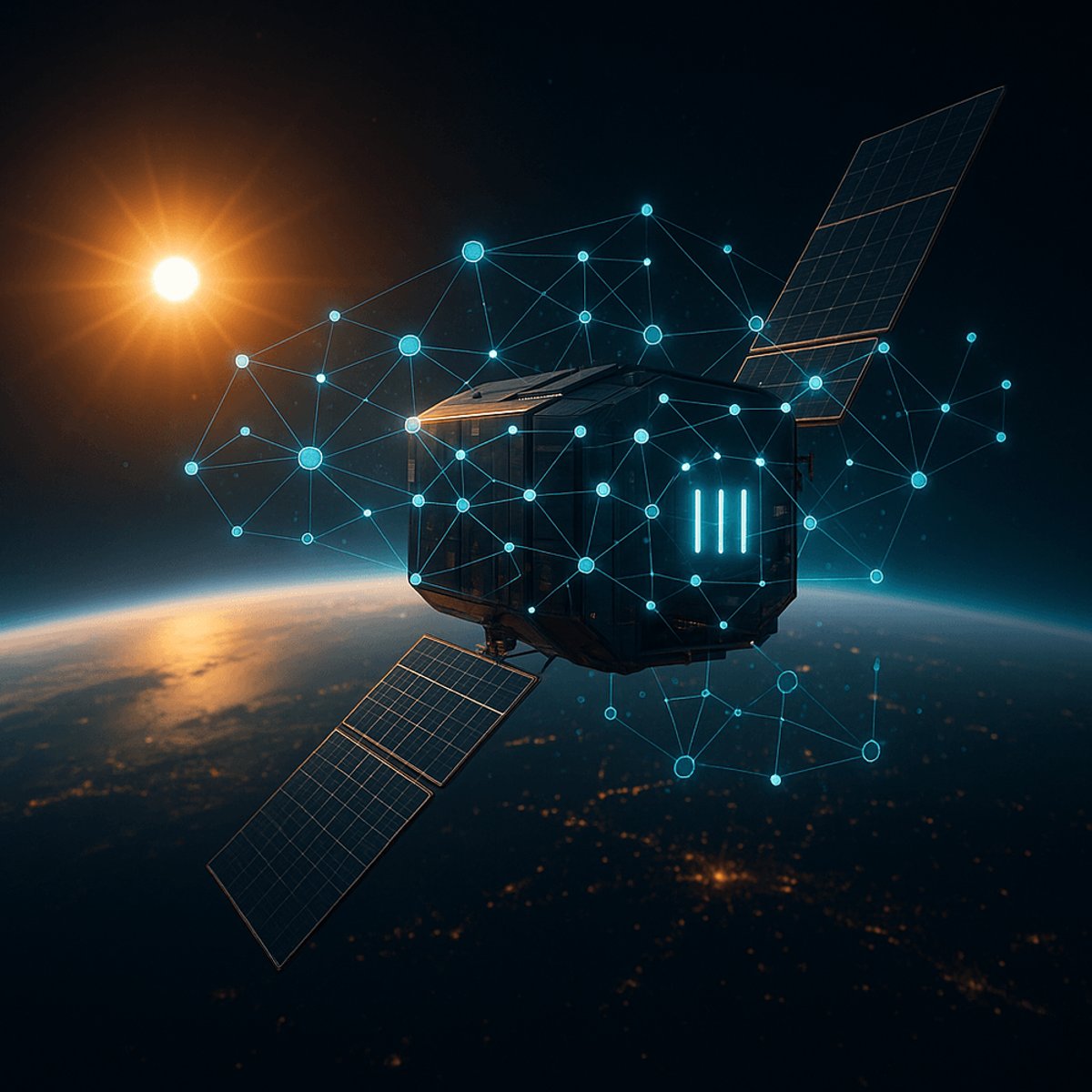
The timing couldn't be better. As AI workloads push terrestrial data centers to their breaking point, Starcloud is pitching a radical alternative: put the servers in space. The company plans to launch modular computing facilities into low Earth orbit, where the vacuum of space provides natural cooling and solar arrays deliver unlimited clean energy. It's the kind of moonshot idea that would've seemed laughable five years ago, but the convergence of plummeting launch costs and skyrocketing AI compute demand has turned science fiction into a fundable business plan.
The round's size and speed reflect just how seriously investors are taking the orbital computing thesis. While Starcloud hasn't disclosed its lead investor, sources familiar with the deal say multiple top-tier venture firms competed aggressively for allocation. That's a dramatic shift from the company's early days, when founders reportedly struggled to convince skeptical VCs that launching data centers into space made economic sense.
What changed? The math. SpaceX and other launch providers have driven the cost of reaching orbit down by roughly 90% over the past decade. Meanwhile, hyperscale data center operators are hitting hard limits on power availability and cooling capacity, especially as AI training runs demand ever-more-dense chip configurations. Starcloud's pitch is that space solves both problems simultaneously - infinite cooling via radiation to the void, and abundant solar power without weather, nighttime, or NIMBY opposition.
The company's trajectory through Y Combinator reads like a greatest hits of startup acceleration. Starcloud emerged from the Winter 2024 batch with a working prototype and letters of intent from unnamed cloud providers. By mid-2025, it had secured launch contracts and begun detailed engineering on its first orbital facility. Now, barely past its first birthday as a funded company, it's sitting on a war chest that rivals what some space startups raise over entire lifecycles.
But the real validation isn't the valuation - it's the customer pipeline. Industry insiders say Starcloud is in advanced discussions with major AI companies desperate for computing capacity that doesn't compete with residential power grids or require building massive cooling plants. The appeal is particularly strong for training large language models, where jobs can run for weeks and latency to end users matters less than raw throughput and cost efficiency.
The space infrastructure play also taps into broader anxiety about AI's environmental footprint. Data centers already consume roughly 1-2% of global electricity, and that share is projected to triple by 2030 as AI adoption accelerates. Starcloud's orbital approach promises carbon-free computing at scale, though critics note the environmental impact of rocket launches themselves. The company says its facilities will remain operational for 10-15 years, amortizing launch emissions across millions of compute hours.
Of course, building functioning data centers in the harsh radiation environment of low Earth orbit presents engineering challenges that ground-based operators never face. Starcloud will need to prove its hardware can survive years of thermal cycling, micrometeorite impacts, and cosmic radiation while maintaining reliability that enterprise customers demand. The first orbital facility, slated for launch in late 2026, will be the real test of whether the company's technology works as advertised.
Competitors are already emerging. Several stealth-mode startups are reportedly pursuing similar orbital computing concepts, and traditional cloud providers have begun exploring space-based infrastructure through internal R&D teams. Amazon Web Services operates ground stations for satellite data processing but hasn't publicly discussed hosting compute workloads in orbit. Microsoft has partnered with satellite operators on connectivity but similarly hasn't ventured into space-based cloud infrastructure.
The $170 million round positions Starcloud to move fast before that competition matures. The company plans to use the capital for its first commercial launches, expanded engineering teams, and sales operations targeting AI infrastructure buyers. If the initial orbital facility performs as planned, follow-on funding to scale the constellation seems likely given investor appetite for AI infrastructure plays.
For Y Combinator, Starcloud represents vindication of the accelerator's thesis that great startups can emerge from any sector, not just traditional software. The batch that produced Starcloud also included several other space tech companies, suggesting YC's growing comfort with capital-intensive, long-development-cycle businesses that looked too risky for early-stage investors just a few years ago.
Starcloud's record-breaking path to unicorn status signals a broader shift in how the tech industry thinks about infrastructure limits. Whether orbital data centers become mainstream or remain a niche solution for specific workloads, the company's rapid ascent proves that investors believe the current ground-based computing model can't sustain AI's explosive growth trajectory. The $170 million bet is that the final frontier for cloud computing is, quite literally, space itself. Now Starcloud just needs to prove the technology works as well in orbit as it does in pitch decks.