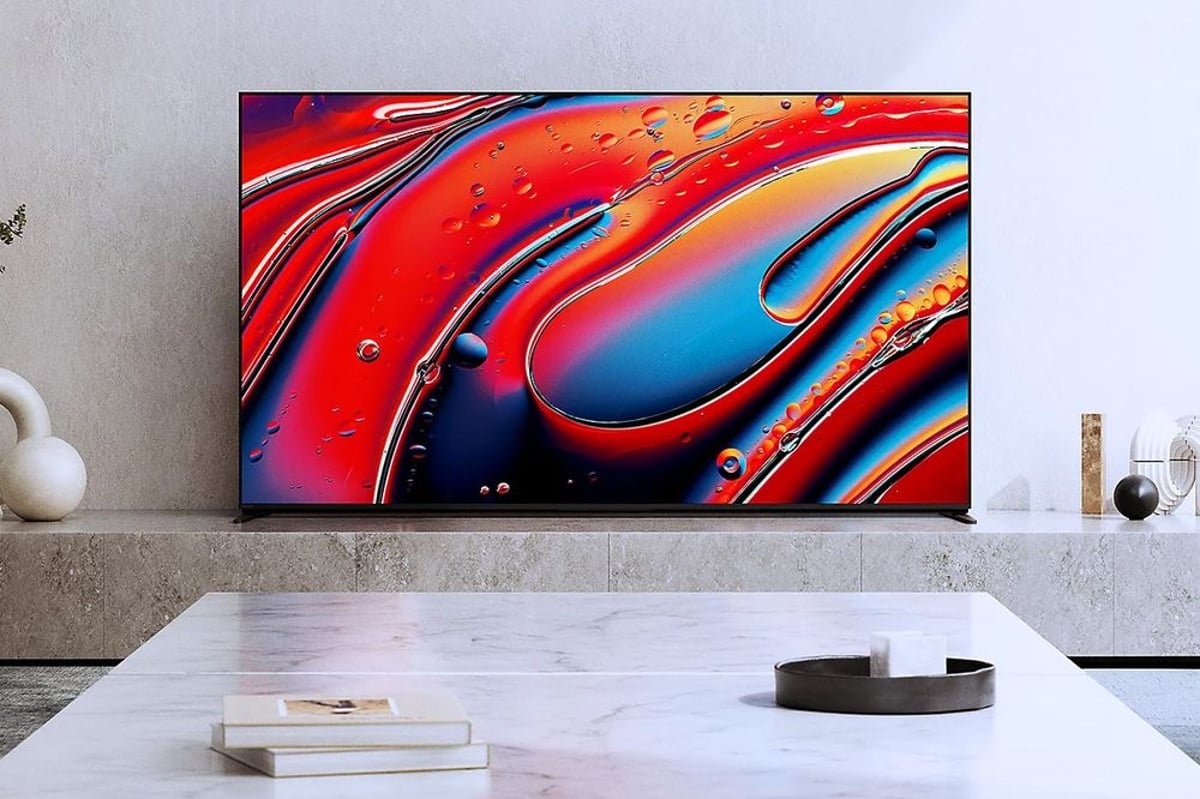
Sony just handed over the keys to its iconic TV business. The Japanese electronics giant officially confirmed that TCL will pay 75.4 billion yen (over $473 million) for a 51 percent controlling stake in a newly formed joint venture called Bravia Inc., with Sony retaining 49 percent. The deal, first floated as a nonbinding agreement back in January, marks a stunning retreat from the television market for a company whose Trinitron CRTs once defined premium home entertainment.
Sony just made official what industry watchers have been anticipating since January - the company is effectively exiting the TV manufacturing business it once dominated. TCL, the Chinese electronics manufacturer that's been quietly climbing the global TV market rankings, is paying approximately 75.4 billion yen (over $473 million) for a 51 percent controlling stake in a new joint venture called Bravia Inc., according to Sony's official announcement.
The transaction converts what was initially a nonbinding agreement announced in January into a done deal that fundamentally reshapes the consumer electronics landscape. Sony retains 49 percent ownership but cedes operational control to TCL, a company that's built its business on volume manufacturing and aggressive pricing - the polar opposite of Sony's premium positioning.
Bravia Inc. will absorb Sony's entire home entertainment portfolio, spanning research and development, design, manufacturing, and customer support for Bravia televisions, flat panel displays, projectors, home audio equipment, and home theater systems. The new entity will be headquartered in Sony's Osaki office, maintaining some semblance of continuity even as the power dynamics shift dramatically.
For Sony, this represents the latest chapter in a decade-long strategic retreat from consumer hardware categories where margins have evaporated. The company that invented the Walkman and defined premium television with its Trinitron technology has been steadily shedding commodity electronics businesses to focus on higher-margin segments like gaming (PlayStation), imaging sensors, and entertainment content. Sony's TV division has struggled with profitability for years, squeezed between Korean giants Samsung and LG at the premium end and Chinese manufacturers like TCL and Hisense at the value segment.
TCL's perspective looks entirely different. The Guangdong-based manufacturer has spent two decades climbing from budget-tier obscurity to become the world's second-largest TV maker by volume, behind only Samsung. But the company has struggled to break into the premium market where Sony, LG, and Samsung command loyalty and pricing power. Acquiring majority control of the Bravia brand - still revered by home theater enthusiasts for picture quality and processing - gives TCL instant credibility it could never build organically.
The $473 million price tag reveals just how much the TV business has been devalued. Sony's television division, which once drove the company's consumer electronics empire, is being valued at roughly $928 million total (based on TCL's 51 percent stake). That's a fraction of what comparable consumer hardware businesses commanded even five years ago, reflecting both shrinking margins and the commoditization of display technology.
What remains unclear is how TCL will balance Sony's premium brand heritage with its own cost-focused manufacturing DNA. Future Bravia TVs will presumably blend Sony's image processing algorithms and industrial design with TCL's display panel expertise and supply chain efficiencies. Whether that combination elevates TCL's premium ambitions or dilutes Sony's brand equity will determine if this joint venture succeeds or becomes another cautionary tale of mismatched corporate cultures.
The deal also signals broader industry consolidation as the television market matures. With smartphone and PC sales plateauing, consumer electronics giants are either doubling down on specific categories where they can maintain differentiation (like LG's OLED leadership) or exiting altogether. Sony is clearly choosing the latter path for TVs, betting that its brand strength in gaming and cameras offers better long-term returns than grinding out razor-thin margins on display panels.
For consumers, the immediate impact should be minimal. Bravia TVs will continue shipping with Sony branding, and the company has indicated no plans to discontinue current product lines. But over the next product cycle, expect to see TCL's influence emerge - potentially through more aggressive pricing, faster adoption of new display technologies where TCL has supply chain advantages, and possibly reduced R&D investment in boutique features that don't scale globally.
The timing also coincides with major shifts in display technology, with micro-LED and QD-OLED panels starting to challenge traditional LCD and OLED. TCL has been investing heavily in mini-LED and micro-LED development, technologies where Sony has lagged. The joint venture could accelerate Bravia's adoption of these next-generation displays while giving TCL access to Sony's color science and motion processing expertise.
This deal marks the end of an era for Sony and the beginning of TCL's premium aspirations. Whether the Bravia brand thrives under TCL's operational control or gradually fades into another badge-engineered commodity will depend on how well the two companies navigate vastly different corporate philosophies. For the broader TV industry, it's another data point confirming that scale and supply chain efficiency now matter more than heritage and brand legacy. Sony is betting its future on games and cameras, not living room screens - and that says everything about where the consumer electronics money is flowing.