Silicon Valley's most powerful CEOs descended on the White House Thursday night for an unprecedented display of corporate diplomacy, lavishing praise on President Trump's AI policies while pledging hundreds of billions in U.S. investments. The high-stakes dinner signals a dramatic shift in tech-government relations as industry leaders navigate Trump's regulatory agenda.
Silicon Valley's power brokers orchestrated a carefully choreographed charm offensive Thursday night, transforming the White House State Dining Room into what appeared more like a corporate boardroom than a government summit. Microsoft CEO Satya Nadella led the parade of praise with his declaration that "you and your policies are really helping a lot," setting the tone for an evening of strategic flattery that underscored the tech industry's precarious position under Trump's second administration.
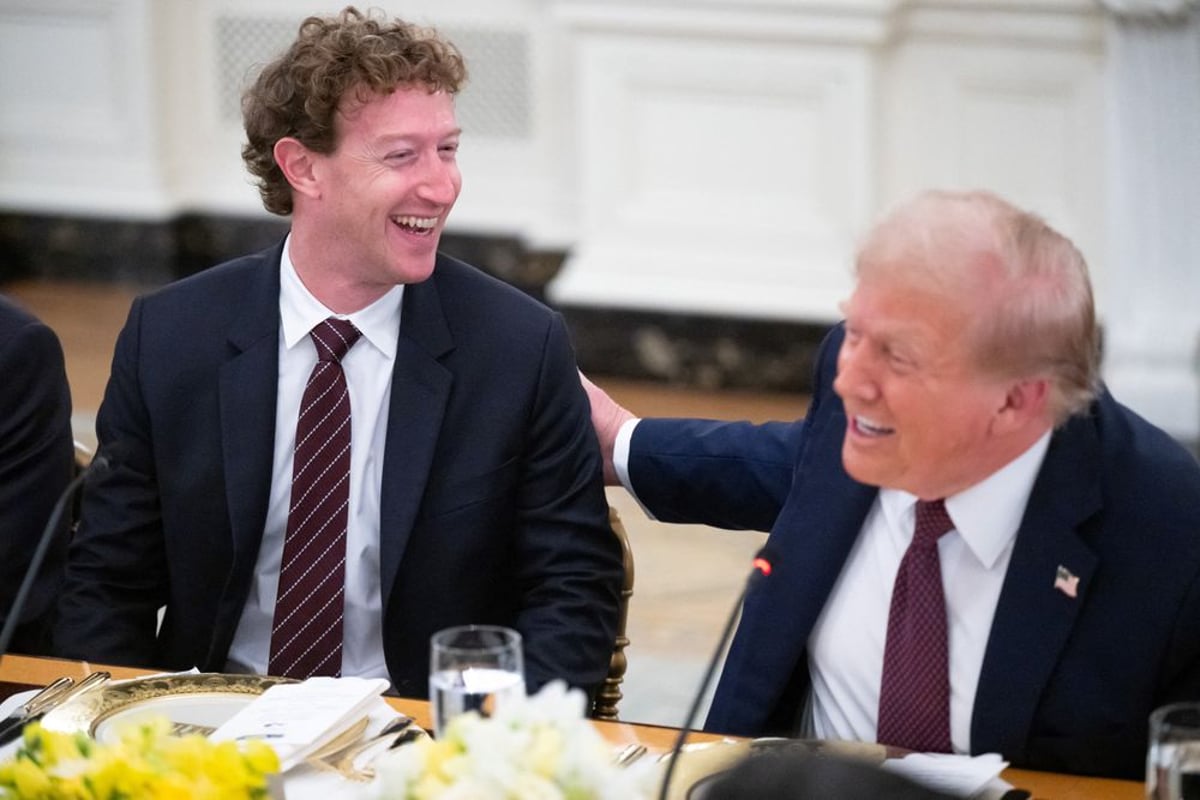
The most striking visual came courtesy of Meta CEO Mark Zuckerberg, seated directly to Trump's right despite their turbulent history. Just months ago, Trump had threatened to jail Zuckerberg, according to Newsweek reporting. Thursday's seating arrangement sent an unmistakable message about the new power dynamics—and perhaps Zuckerberg's successful lobbying efforts after their recent West Wing meeting ahead of Meta's antitrust trial.
The corporate supplication reached theatrical heights when Oracle CEO Safra Catz gushed about "the fact that you are our president," telling Trump he had "unleashed American innovation and creativity." OpenAI CEO Sam Altman chimed in with gratitude for being "such a pro-business and pro-innovation president," promising his company would "invest a ton in the United States."
But beneath the pleasantries lies a high-stakes chess game worth hundreds of billions. Trump methodically questioned each CEO about their U.S. spending plans, clearly savoring their responses as they threw out investment figures reaching into the hundreds of billions. The numbers weren't just corporate braggadocio—they represent a direct response to Trump's tariff threats and regulatory leverage.
Apple CEO Tim Cook, whose supply chain remains heavily dependent on Chinese manufacturing, appeared especially eager to maintain his historically successful relationship with Trump. "It's incredible to be among everyone here," Cook told the president, specifically thanking him for "setting the tone such that we could make a major investment in the United States." Trump's later comment that "Tim Cook would be in pretty good shape" regarding semiconductor tariffs suggests Cook's diplomatic investments are paying dividends.
The timing of Google CEO Sundar Pichai's attendance proved particularly fortuitous. Trump acknowledged Google's "very good day" Wednesday when a federal judge denied the DOJ's most aggressive antitrust remedies in the company's monopoly case. "Biden was the one that prosecuted that lawsuit," Trump claimed, conveniently omitting that his first administration initiated the case. Pichai diplomatically praised the "constructive dialogue" with Trump's administration.
The evening represented a stark evolution from Trump's first term, when tech leaders largely kept their distance. Now, these same CEOs who attended Trump's inauguration and contributed to his inaugural fund are making regular White House pilgrimages. The shift reflects the industry's recognition that Trump's policies—from AI energy permits to semiconductor tariffs—could make or break their growth strategies.
AMD CEO Lisa Su praised "the amount of acceleration that we've seen just in the few short months that the administration has been in place," highlighting how quickly the industry has pivoted to embrace Trump's agenda. The dinner followed a daytime AI education task force meeting hosted by First Lady Melania Trump, where companies pledged investments in workforce training.
The conspicuous absence of Elon Musk, who holds significant sway in Trump's inner circle through his government efficiency role, added another layer of intrigue. While other tech titans courted Trump through formal channels, Musk's influence operates through different—arguably more powerful—avenues.
Trump's semiconductor tariff comments during the dinner revealed his transactional approach to policy. He reiterated plans for a "fairly substantial tariff" while dangling exemptions for companies building U.S. facilities. This carrot-and-stick strategy explains the evening's investment pledges and corporate enthusiasm.
Thursday's White House dinner crystallized the new reality of tech-government relations under Trump's second administration. What appeared as corporate flattery actually represented strategic positioning in the face of regulatory uncertainty and tariff threats. As these CEOs pledge hundreds of billions in U.S. investments while navigating ongoing antitrust cases, their success will depend on maintaining the delicate balance between public cooperation and private interests—a game where the stakes couldn't be higher for both Silicon Valley's future and America's technological competitiveness.