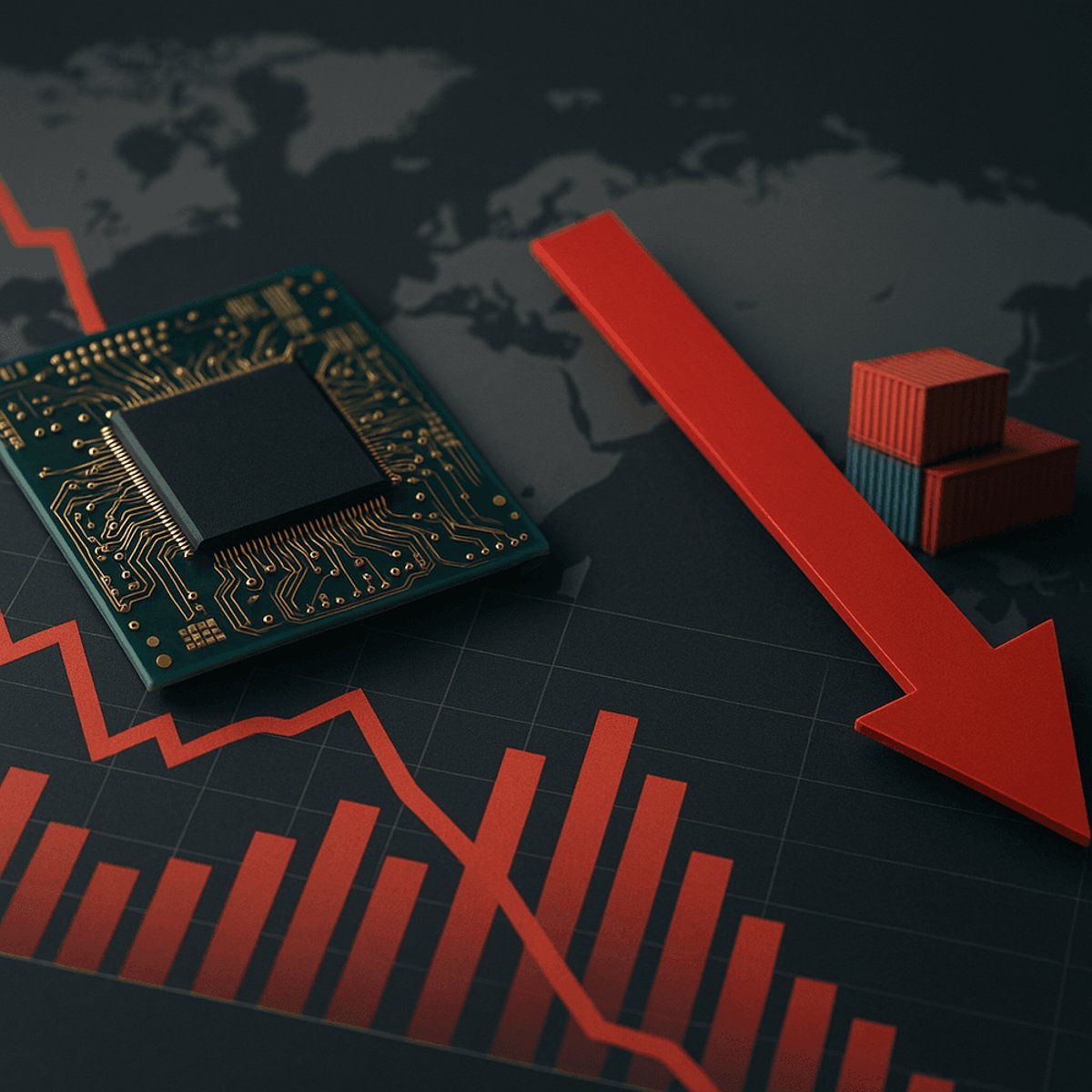
Tech's biggest names just suffered their worst day since April, wiping out $770 billion in market value as President Trump's fresh tariff threats sent Nvidia tumbling nearly 5%. The chip giant alone lost $229 billion in market cap, while the Nasdaq posted its steepest 3.6% drop in six months on fears that escalating trade tensions could derail the AI infrastructure boom.
The market's AI darlings just got a brutal reality check. Nvidia led a massive tech selloff Friday, dropping nearly 5% and erasing $229 billion in market value after President Trump announced plans for sweeping new tariffs on Chinese goods. The chip giant's decline alone exceeded the entire market cap of most Fortune 500 companies.
The carnage spread across Silicon Valley's biggest names. Amazon plunged 5%, wiping out all its 2025 gains and losing $121 billion in value. Tesla shed $71 billion, while Microsoft dropped $85 billion. Even after-hours trading couldn't escape the damage - all three companies slipped another 2% following Trump's evening social media declaration of a 100% tariff on China.
"There continues to be a lot of noise about the impact that tariffs will have on retail prices and consumption," Amazon CEO Andy Jassy told analysts in July, according to CNBC transcripts. "Much of it thus far has been wrong and misreported. As we said before, it's impossible to know what will happen."
The timing couldn't be worse for the AI infrastructure boom. Nvidia just became the first company to hit $4.5 trillion in market cap last month, riding a wave of massive spending on artificial intelligence data centers. The company's graphics processing units have become the backbone of the AI revolution, powering everything from OpenAI's ChatGPT to corporate training models.
But Trump's threat to impose export controls "on any and all critical software" starting November 1st has investors spooked about potential supply chain disruptions. OpenAI relies heavily on Nvidia's GPUs through cloud suppliers like Microsoft, and demand keeps surging - the company just announced ChatGPT now serves over 800 million weekly users.
The selloff pushed both the Nasdaq down 3.6% and the S&P 500 down 2.7%, marking their worst sessions since April when Trump first floated "reciprocal" trade duties. With tech megacaps now representing an outsized portion of major indexes, their declines have amplified market volatility.
Meta fell almost 4% while Google parent Alphabet dropped 2%, showing how Trump's trade rhetoric is hitting the entire tech ecosystem. The president's latest threats are disrupting what had been a sustained rally built on hundreds of billions in planned AI infrastructure spending.
The market carnage comes at a particularly sensitive time for earnings season. Tesla reports third-quarter results October 22nd, fresh off introducing lower-priced vehicle models this week. Microsoft follows the next week, with investors eager to hear how Azure cloud growth is holding up amid the AI spending boom. Nvidia reports in November, when CEO Jensen Huang will face tough questions about China exposure.
Friday's rout also highlights how dependent the current market rally has become on AI infrastructure spending. Singapore police are already investigating potential export control violations involving Nvidia customer Megaspeed, while Tesla faces a new federal safety probe over its Full Self-Driving software.
The extended trading reaction suggests investors aren't buying this as just political posturing. Trump's 100% tariff threat represents a dramatic escalation from previous trade tensions, potentially disrupting the complex global supply chains that keep tech giants running.
The $770 billion tech wipeout shows how quickly geopolitical tensions can derail even the strongest market narratives. With AI infrastructure spending driving much of 2025's gains, Trump's tariff threats represent a direct challenge to the sector's growth story. Investors now face the uncomfortable reality that the companies powering the AI revolution remain deeply vulnerable to trade policy shifts, making the coming earnings season a critical test of whether fundamentals can overcome political uncertainty.