Teradyne just proved that the AI infrastructure boom extends way beyond chip makers. The robotics and testing equipment company smashed fourth-quarter expectations on Tuesday, posting a 44% year-over-year revenue jump driven by what it calls "strong AI-related demand in compute and memory." Shares popped as the company guided aggressively higher for Q1, signaling that the frenzy around AI hardware shows no signs of slowing. For investors tracking the AI supply chain, Teradyne's blowout results confirm that demand for testing equipment - the unsexy but critical infrastructure behind every AI chip - is white-hot.
Teradyne just delivered the kind of earnings beat that makes Wall Street sit up and take notice. The company reported adjusted earnings of $1.80 per share on Tuesday, demolishing analyst expectations of $1.37, while revenue hit $1.08 billion against forecasts of $973 million, according to CNBC's coverage. But it's not just the beat that matters - it's what's driving it.
Teradyne's fourth-quarter revenue jumped 44% compared to the same period last year, and the company made clear in its Monday press release that AI is the rocket fuel behind the surge. "Strong AI-related demand in compute and memory" powered Q4 results, the company stated, confirming what many suspected - the AI infrastructure buildout isn't just benefiting chipmakers like Nvidia and memory giants, but the entire testing and validation ecosystem.
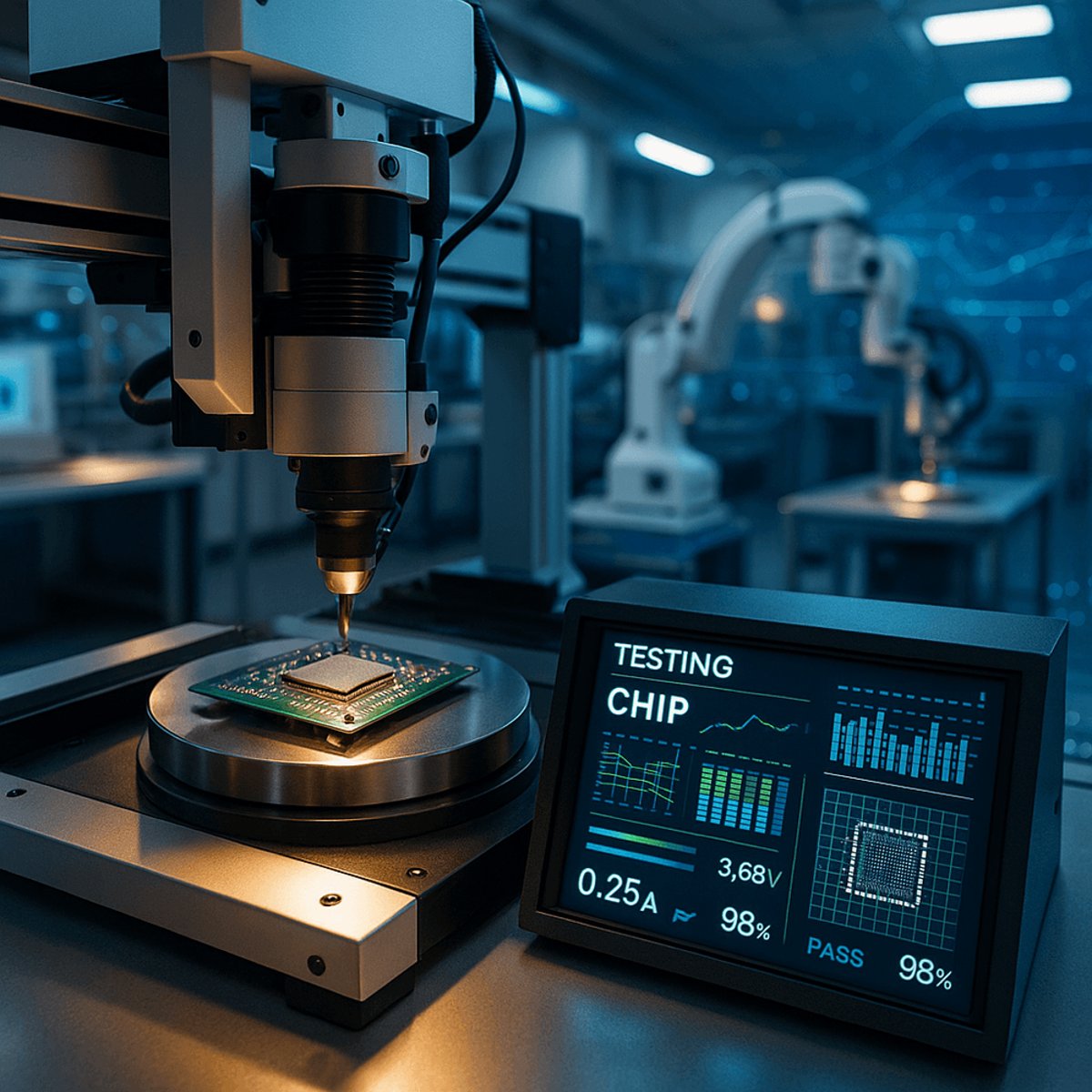
For those unfamiliar with Teradyne's business, the company makes the sophisticated robotics and automated test equipment that semiconductor manufacturers rely on to validate chips before they ship. Every AI accelerator, every high-bandwidth memory module, every compute chip powering data centers gets put through its paces on equipment like Teradyne's. As AI workloads explode and companies race to deploy more powerful hardware, the demand for testing capacity has skyrocketed.
The financial performance speaks for itself. Net income for the quarter came in at $257.2 million, or $1.63 per diluted share, according to investor documents. That's a massive leap from the $146.3 million, or 90 cents per share, the company reported a year earlier. Revenue growth of 44% in a single quarter doesn't happen by accident - it reflects a fundamental shift in the semiconductor testing market driven by AI's insatiable appetite for silicon.
But here's where things get really interesting. Teradyne isn't just celebrating past success - it's projecting explosive growth ahead. The company guided first-quarter earnings per share to land between $1.89 and $2.26, obliterating analyst expectations of $1.26. First-quarter revenue is expected to hit $1.15 billion to $1.25 billion, again crushing the Street's $935 million consensus estimate.
"In 2026, we expect year-over-year growth across all of our businesses, with strong momentum in compute driven by AI," Teradyne announced in its earnings release. That's not hedged corporate speak - that's a company telling investors it sees sustained, broad-based demand across its entire portfolio, with AI compute testing leading the charge.
The timing couldn't be better. As hyperscalers like Amazon, Microsoft, and Google pour hundreds of billions into AI infrastructure, every custom chip, GPU, and memory module needs rigorous testing. Teradyne sits at a critical chokepoint in that supply chain. Without adequate testing capacity, chips can't ship. Without chips, AI deployments stall.
Investors are taking notice. Teradyne's stock popped on the earnings news as traders recognized the company's unique exposure to the AI theme. While much attention has focused on chip designers and foundries, the picks-and-shovels companies like Teradyne that enable the entire ecosystem are starting to get their due. The 44% revenue growth and aggressive forward guidance suggest this isn't a one-quarter wonder - it's a structural shift in demand.
What makes Teradyne's position particularly compelling is the dual tailwind from both compute and memory testing. AI workloads don't just need faster processors - they need massive amounts of high-bandwidth memory to feed data to those processors. Companies are racing to deploy HBM (high-bandwidth memory) and other advanced memory architectures, all of which require sophisticated testing. Teradyne's equipment handles both sides of the equation, giving it exposure to multiple high-growth segments.
The broader context matters too. Semiconductor industry analysts have been watching for signs that AI infrastructure spending might moderate after the explosive growth of 2024 and 2025. Teradyne's results and guidance suggest the opposite - demand is accelerating, not slowing. When a testing equipment company guides 50% above consensus for the next quarter, it's sending a signal about the health of the entire semiconductor supply chain.
For the full year 2025, the company's momentum built steadily, culminating in the Q4 blowout. The year-over-year comparisons show the inflection point clearly - revenue up 44%, net income up 76%, all driven by the AI wave that's reshaping the semiconductor landscape. Teradyne isn't riding AI hype - it's providing essential infrastructure that makes AI deployment possible.
Teradyne's blowout quarter confirms what many suspected but few could quantify - the AI infrastructure boom is creating massive demand across the entire semiconductor supply chain, not just at the headline chip makers. With revenue up 44%, guidance crushing expectations, and management calling for sustained growth through 2026, the company has positioned itself as a critical enabler of AI deployment. For investors looking beyond the obvious AI plays, Teradyne's results demonstrate that the picks-and-shovels companies providing testing infrastructure are seeing just as much momentum as the chip designers grabbing headlines. The question now is whether competitors can scale capacity fast enough to meet the surging demand, or if Teradyne's early positioning gives it a sustained advantage in this AI-driven testing boom.