Terradot, the carbon removal startup backed by Google and Microsoft, just acquired competitor Eion in what could signal the start of consolidation in the carbon capture industry. The deal comes as a pricing gap between what removal companies charge and what buyers will pay continues to squeeze smaller players. Eion CEO Anastasia Pavlovic Hans told The Wall Street Journal that sovereign wealth funds and other large investors increasingly want partners who can handle massive contracts - something her company couldn't deliver at its current scale.
The carbon removal industry just saw its first significant consolidation play. Terradot, a California-based startup spreading crushed rocks across Brazilian farmland to capture CO2, is acquiring Eion, its U.S.-based competitor doing essentially the same thing with different minerals.
The deal didn't happen because either company was failing. Instead, it's a story about market dynamics forcing smaller players to bulk up or get out. "We were simply too small," Eion CEO Anastasia Pavlovic Hans told The Wall Street Journal, pointing to sovereign wealth funds and institutional investors who want to write big checks to partners capable of removing carbon at massive scale.
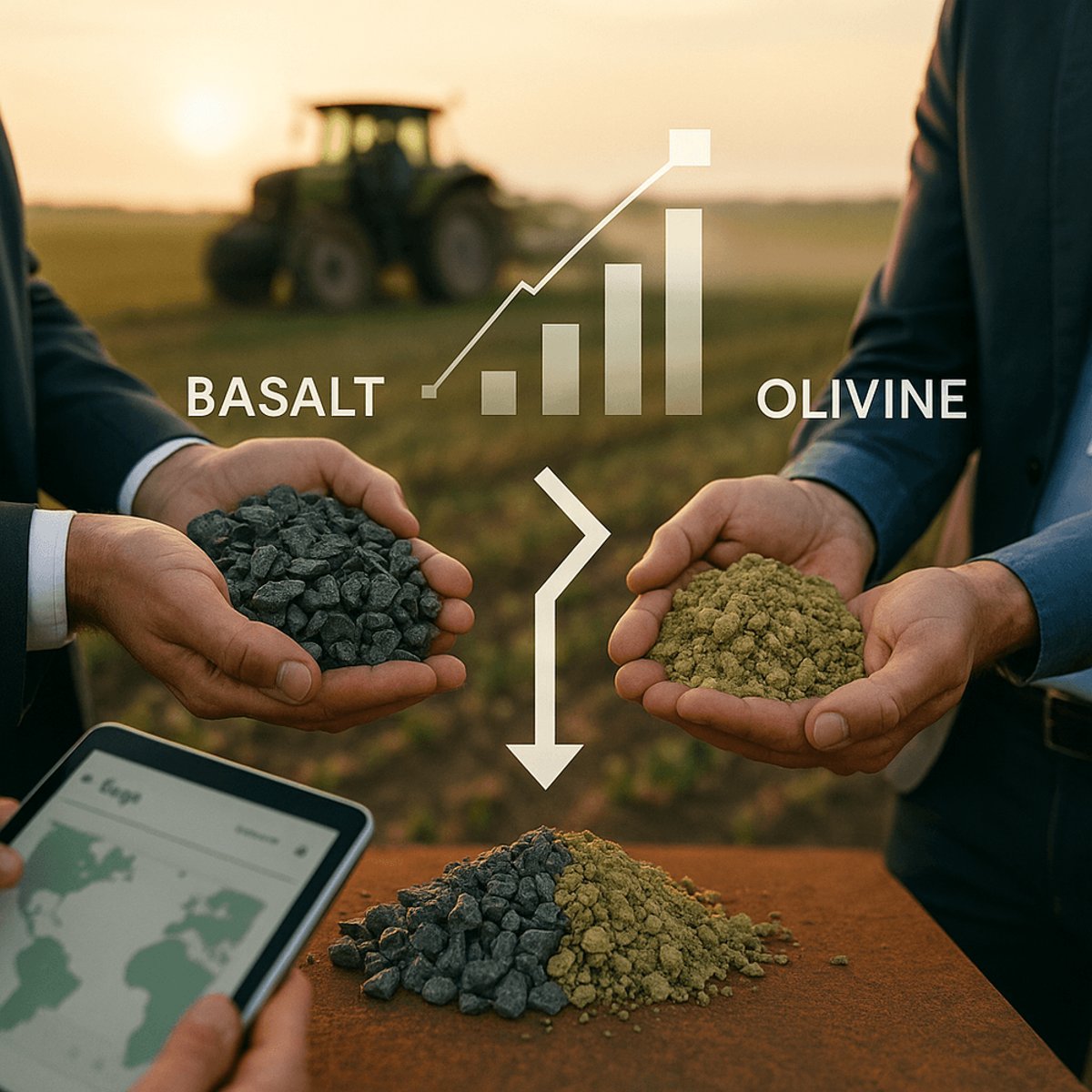
Both companies use enhanced rock weathering (EWR), a technique that accelerates a natural process where pulverized minerals absorb atmospheric carbon dioxide when spread on agricultural fields. Terradot focuses on basalt in Brazil, while Eion has been working with olivine across U.S. farms. The science is sound - Yale research suggests EWR could become one of the lowest-cost carbon removal methods available.
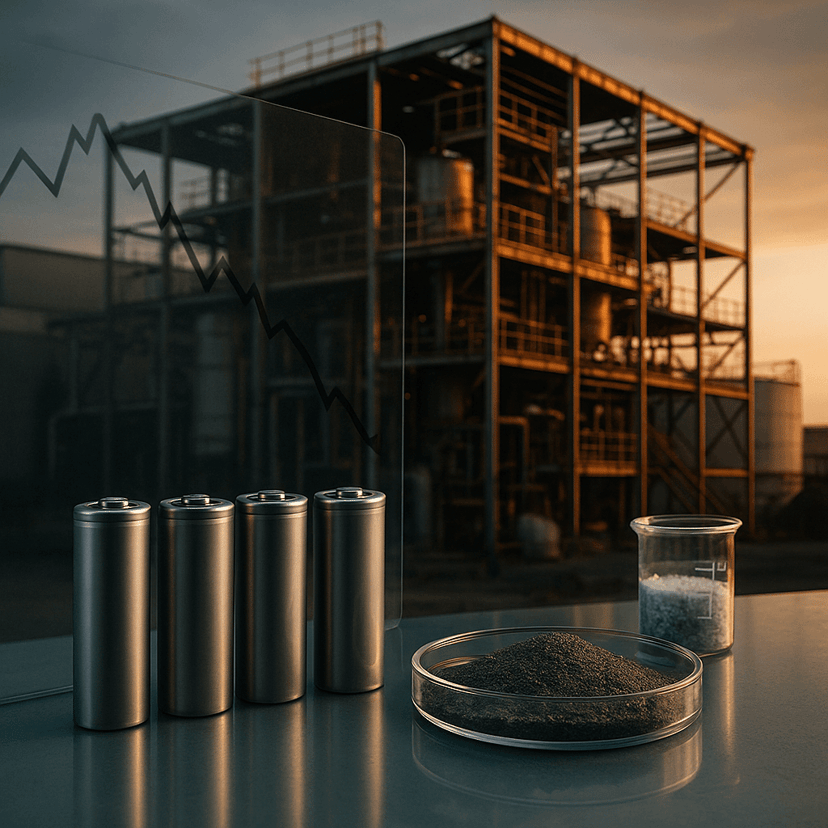
But there's a gap between theory and market reality. The spread between what EWR companies need to charge and what corporate buyers will actually pay remains stubbornly wide, according to a January 2025 survey by CDR.fyi. That pricing pressure is now forcing the kind of industry consolidation typical of maturing markets.
Terradot comes to the deal with heavyweight backing - its investor roster includes Gigascale Capital, Google, Kleiner Perkins, and Microsoft. Eion, which raised a $12 million Series A in 2022, brought in AgFunder, Mercator Partners, and Overture as backers.
The combined entity now controls operations spanning two continents and two different mineral approaches. That geographic and technical diversification is exactly what large institutional buyers have been demanding. Sovereign wealth funds don't want to negotiate dozens of small contracts with boutique carbon removal startups - they want one-stop shops that can handle gigatonne-scale commitments.
For Microsoft and Google, both of which have committed to aggressive carbon removal targets, the consolidation makes sense. Fewer, larger partners mean simplified procurement and better odds that contracted carbon removal actually gets delivered at the promised scale. Both tech giants have been among the most active corporate buyers in the carbon removal market, often serving as anchor customers for emerging technologies.
The acquisition also highlights a fundamental challenge for climate tech: the gap between what venture-scale startups can deliver and what meaningful climate impact actually requires. Carbon removal needs to happen at billions-of-tonnes scale to make a dent in atmospheric CO2. But scaling that quickly while remaining economically viable has proven brutal.
EWR companies face particularly acute scaling challenges since the approach requires massive logistics operations - sourcing minerals, pulverizing them, distributing across thousands of farms, then monitoring and verifying the carbon capture over years. It's not a software business that can scale with servers and code.
The deal terms weren't disclosed, but the strategic rationale is clear: combine operations, eliminate redundant overhead, present unified scale to buyers. Whether that's enough to close the pricing gap remains to be seen. If removal costs stay above what the market will bear, even a combined Terradot-Eion might struggle.
What's certain is that more consolidation is coming. The carbon removal industry is littered with startups pursuing different technical approaches - direct air capture, ocean alkalinity enhancement, biochar, mineralization. Many raised capital in the 2021-2022 climate tech boom but now face the harsh reality of trying to sell an expensive product in a market with limited willing buyers.
Expect more acquisitions, shutdowns, and pivots in the next 12-18 months as pricing pressure separates winners from the walking dead.
The Terradot-Eion merger is a warning shot for the carbon removal industry. As pricing pressures mount and large buyers demand scale, smaller players face a simple choice: consolidate or disappear. For climate tech investors who poured billions into the sector expecting venture-style returns, this is the awkward reality check - meaningful carbon removal requires infrastructure-scale operations with infrastructure-level economics. The next wave of deals will separate the companies with real technology advantages from those simply hoping the market catches up to their burn rate.