Elon Musk just tore up the Silicon Valley playbook. The billionaire has merged SpaceX and xAI into a single entity, creating what could become the template for a new breed of tech power structure - the personal conglomerate. With his $800 billion net worth already matching the peak market cap of industrial giant GE, Musk isn't just building companies anymore. He's building an empire under his own name, and the move raises urgent questions about whether other mega-founders like Sam Altman will follow suit.
Elon Musk just rewrote the rules on founder power, and Silicon Valley is scrambling to figure out what it means. The merger of SpaceX and xAI isn't just another corporate restructuring - it's the emergence of something entirely new. A personal conglomerate built around a single founder's vision, bankrolled by an $800 billion fortune that rivals the peak market cap of General Electric, the industrial behemoth that once defined American corporate power.
The deal consolidates Musk's AI ambitions under the same roof as his space exploration empire, creating synergies that would've been impossible in the traditional venture capital model. According to TechCrunch's reporting, the merger brings xAI's data centers and AI infrastructure directly into SpaceX's operational framework. But the implications go way beyond operational efficiency.
Musk has been vocal about his belief that "tech victory is decided by velocity of innovation." That philosophy now has a corporate structure to match it. By merging the companies, he's eliminated the friction that comes with separate boards, conflicting investor priorities, and the endless coordination that multi-company founders usually face. It's a model that lets him move faster than competitors bound by traditional structures.
The timing matters. Waymo just raised $16 billion at a $126 billion valuation, proving that massive capital continues flowing into ambitious tech plays. But Waymo still operates within Alphabet's corporate umbrella, answerable to public market shareholders and subject to the typical checks and balances. Musk's setup? He answers to himself.
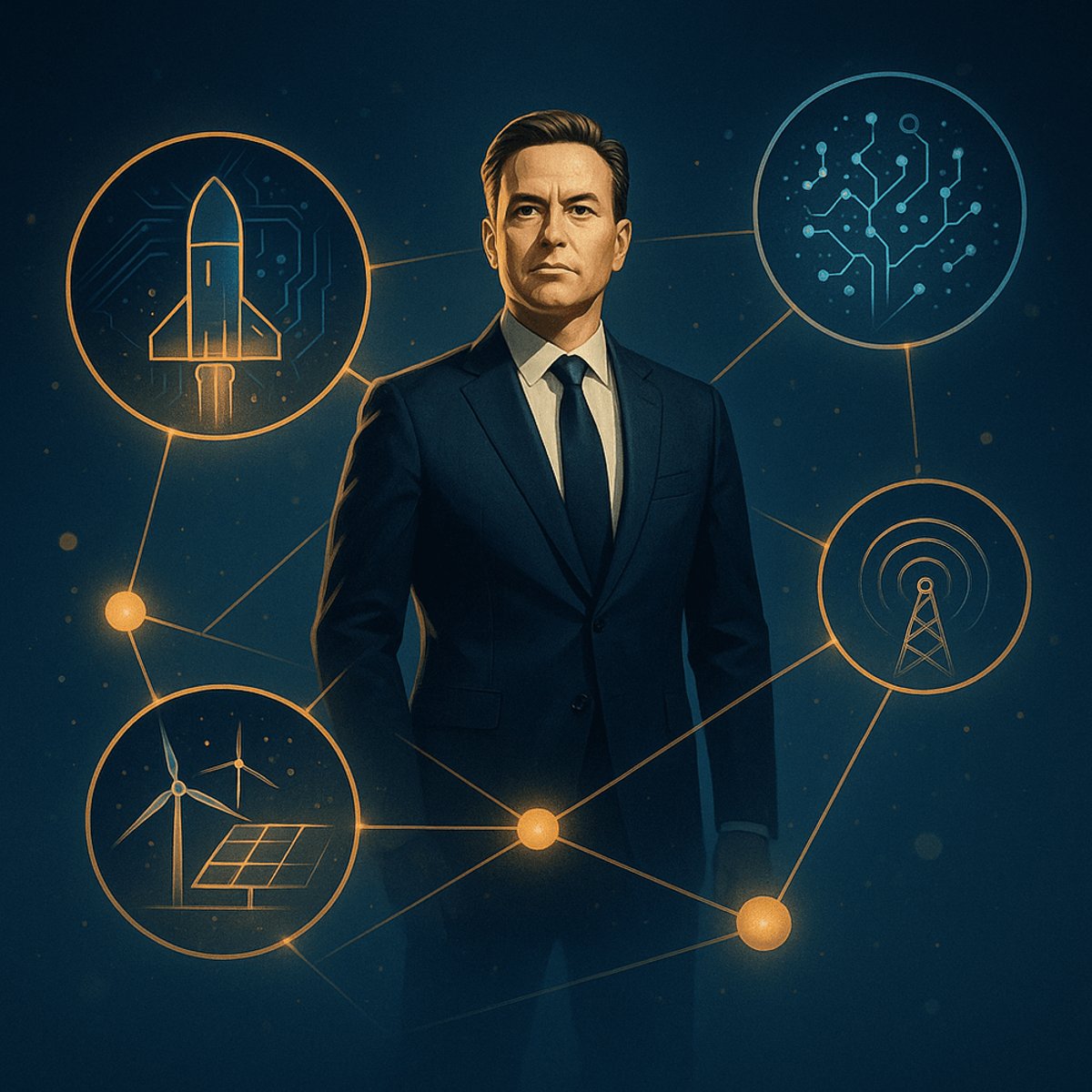
This isn't Musk's first rodeo building interconnected companies. Tesla shares technology and manufacturing expertise with SpaceX. His acquisition of Twitter (now X) gave him a platform to shape public discourse while building what he calls an "everything app." The Boring Company tackles infrastructure. Neuralink pursues brain-computer interfaces. What looked like a scattered portfolio now reads like a deliberate strategy to build a vertically integrated empire spanning transportation, energy, AI, space, and communications.
The question now bouncing around venture capital circles: will others follow? Sam Altman's investment portfolio already spans dozens of companies from nuclear energy to biotech to real estate. He's got the personal wealth and the network. The OpenAI CEO has been relatively quiet on whether he'd pursue a Musk-style consolidation, but the blueprint is now visible.
There are obvious risks to this model. Concentrated power means concentrated failure points. If one part of Musk's empire stumbles, it could drag others down. Traditional conglomerates like GE eventually collapsed under their own complexity, with investors demanding the "conglomerate discount" be eliminated through spin-offs. But Musk's version comes with a crucial difference - he's not answerable to public shareholders demanding quarterly returns. His companies remain largely private, giving him the runway to play a longer game.
The regulatory implications are still murky. Antitrust authorities have spent years figuring out how to handle Big Tech's dominance in specific markets. A personal conglomerate that spans entirely different industries - rockets, AI, electric vehicles, social media - doesn't fit neatly into existing frameworks. There's no monopoly in any single market, but there's unprecedented concentration of technological capability under one person's control.
For founders watching this unfold, the message is clear: the old model of building one company, maybe starting a venture fund, then angel investing is looking quaint. The new playbook involves using success in one domain to fund moonshots in others, building a portfolio of companies that can share resources, talent, and technology in ways that standalone startups can't match.
ElevenLabs just raised $500 million at an $11 billion valuation, joining the ranks of mega-valued AI startups. But even at that scale, it's still playing by traditional rules - raise capital, build product, find exit. Musk's model suggests a different path: build enough personal wealth through early wins, then fund your own conglomerate without dilution or outside interference.
The SpaceX-xAI merger also raises questions about future IPO plans. SpaceX has long been rumored as a potential public offering candidate, but merging with xAI complicates that path. Does Musk even need public markets anymore? With $800 billion in personal wealth and the ability to secure debt financing against his holdings, traditional capital raising might be obsolete for founders at his level.
Industry insiders speaking on TechCrunch's Equity podcast noted that this marks a potential shift from "corporate conglomerates" to "personal conglomerates." The distinction matters. Corporate conglomerates answer to shareholders and boards. Personal conglomerates answer to the founder's vision alone. It's a return to the robber baron era of Rockefeller and Carnegie, but with AI and rockets instead of oil and steel.
The velocity of innovation argument is compelling. Positron just raised $230 million to challenge Nvidia in AI chips, but it's still operating as a standalone company dependent on venture funding rounds. Musk's merged entity can redirect resources from profitable SpaceX operations to fund xAI development without asking permission from investors. That's a competitive advantage that's hard to quantify but potentially decisive.
What this means for the startup ecosystem is still unfolding. If the personal conglomerate model proves successful, expect a new tier to emerge above traditional unicorns - founder-led empires that span multiple industries and operate on timescales measured in decades, not exit windows. The next generation of founders won't be asking "how do I build a billion-dollar company?" They'll be asking "how do I build a personal GE?"
The SpaceX-xAI merger isn't just a deal - it's a declaration that the rules of Silicon Valley are being rewritten in real time. Musk has shown that founders with enough resources and conviction can bypass traditional structures entirely, building personal empires that would've been impossible a generation ago. Whether this marks the beginning of a new era or proves to be an unsustainable concentration of power remains to be seen. But one thing's certain: every ambitious founder with a successful exit is now asking themselves whether they should be thinking bigger than just their next startup. The personal conglomerate era has arrived, and the race to build the next one is already underway.