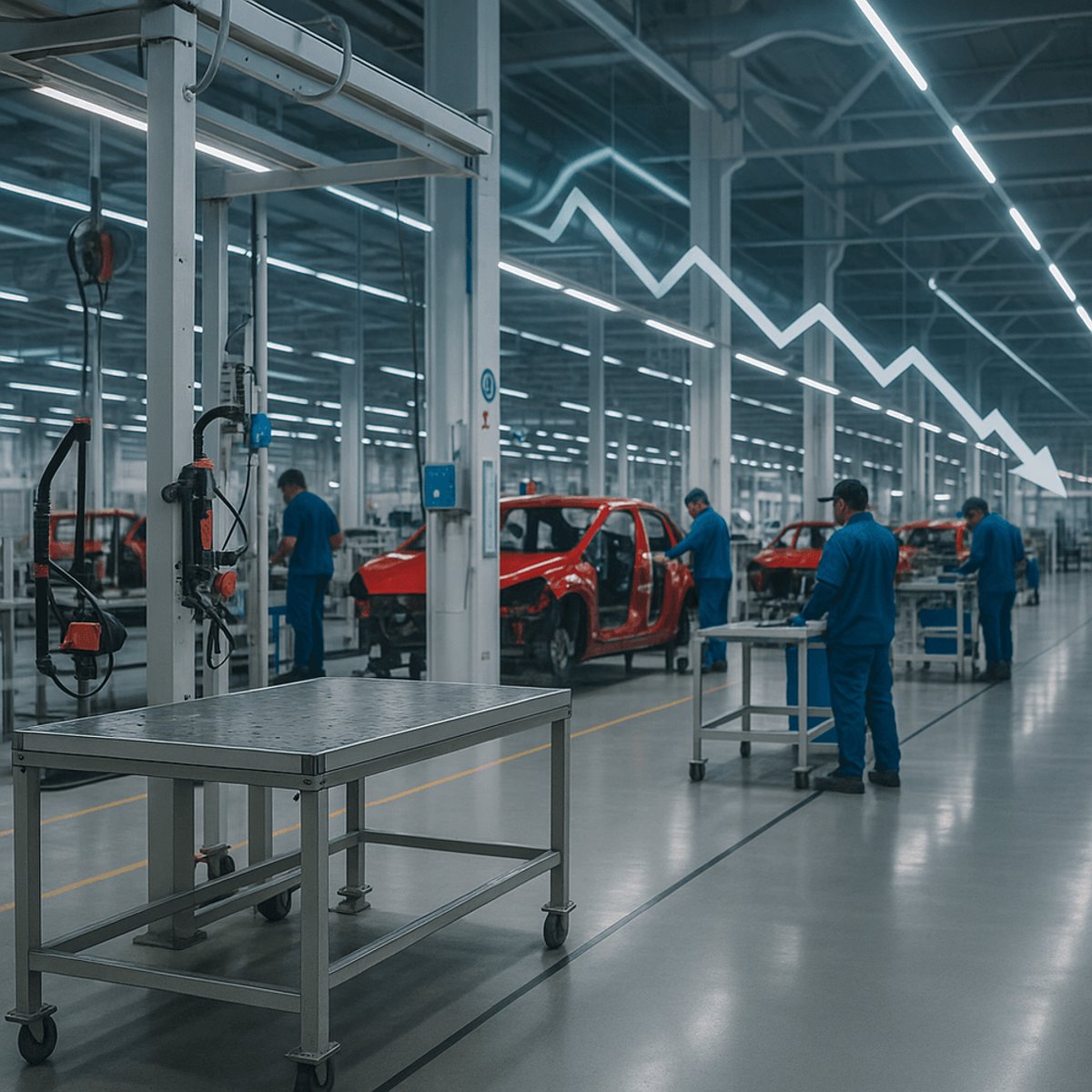
Tesla just confirmed what many in the auto industry feared - the electric vehicle giant is downsizing fast. The company's Texas Gigafactory headcount dropped from 21,191 workers to 16,506 in 2025, a sharp 22% reduction, according to a TechCrunch report. The move comes as Tesla grapples with its second consecutive year of declining sales, signaling deeper troubles for the once-unstoppable EV leader.
Tesla is pulling back hard at its Texas manufacturing hub, and the numbers tell a stark story. The Austin-area Gigafactory shed nearly 5,000 workers throughout 2025, dropping from 21,191 employees to just 16,506 by year's end. That's a 22% workforce reduction at what was supposed to be the company's crown jewel - its largest US production facility and North American headquarters.
The timing couldn't be more revealing. Tesla is now two years into a sales decline that's forcing CEO Elon Musk to make tough calls about manufacturing capacity. When you're building fewer cars, you need fewer hands on the factory floor. It's simple math, but it represents a major shift for a company that spent the past decade in hypergrowth mode.
What's particularly striking is where these cuts are happening. The Texas Gigafactory produces the Cybertruck, Model Y, and is supposed to be ramping up production of Tesla's next-generation vehicles. Cutting staff here suggests either production delays on new models or significantly lower demand for current ones - neither scenario inspires confidence.
The broader context makes this even more concerning for Tesla. Legacy automakers like Ford and General Motors have flooded the market with competitive EV offerings, while upstarts like Rivian continue gaining ground. Tesla's once-dominant position in the US EV market has eroded from over 60% market share in 2022 to around 48% by late 2025, according to industry tracking data.
Musk hasn't directly addressed the Texas workforce reduction, but the company has signaled strategic shifts. Tesla recently announced it would discontinue production of the Model S and Model X to focus resources on the Cybercab robotaxi project - a bet that autonomous vehicles will matter more than traditional car sales. That's a massive pivot, and one that requires different staffing than conventional manufacturing.
The workforce cuts also come amid broader cost-cutting measures across Tesla. The company implemented hiring freezes in multiple departments throughout 2025 and reduced overtime opportunities for remaining factory workers. Former employees have reported tighter production quotas and reduced benefits, suggesting Tesla is squeezing efficiency wherever possible.
Industry analysts point to another factor: Tesla's aging product lineup. The Model 3 and Model Y, which make up the bulk of sales, haven't seen major refreshes in years. Meanwhile, competitors are launching newer, flashier EVs with better tech and comparable range. Without fresh products to drive demand, Tesla's stuck managing decline rather than growth.
The Texas factory reduction mirrors broader challenges in the EV market. High interest rates throughout 2025 made financing expensive vehicles tougher for consumers, while the phase-out of federal EV tax credits removed another purchase incentive. Tesla, which relies heavily on direct sales without dealer networks to absorb inventory, feels these market shifts more acutely than traditional automakers.
What happens next likely depends on how Q1 2026 delivery numbers shake out. If Tesla can stabilize sales and prove the Cybercab strategy has legs, the Texas factory might stabilize at this new, smaller footprint. But if sales continue sliding, further workforce reductions could be coming. For now, nearly 5,000 workers are looking for new jobs, and Tesla is betting it can do more with less in an increasingly competitive market.
Tesla's 22% workforce cut at its Texas factory is more than just cost-cutting - it's a signal that the EV giant is confronting a new reality. After years of breakneck growth, the company is adjusting to a market where it's no longer the default choice for electric vehicle buyers. The question now is whether Musk's bet on robotaxis and next-gen vehicles can reverse the slide, or if Tesla will need to make even deeper cuts as competition intensifies. For the nearly 5,000 workers who lost their jobs, the answer came too late.