Tesla just reported its fourth consecutive quarter of declining sales, delivering 418,227 vehicles in Q4 2025 - a 15.6% drop from last year and a significant miss against Wall Street's 422,850 vehicle forecast. For a company that's spent years promising acceleration in AI-powered robotaxis and humanoid robots, the numbers reveal a company increasingly struggling with an aging lineup, rising competition from legacy automakers, and the loss of the federal EV tax credit that once fueled demand.
Tesla's earnings bombshell arrived on Friday morning, and it's everything Wall Street feared. The company missed its Q4 delivery target by roughly 4,600 vehicles, but the story is way bigger than one bad quarter. We're watching a company stuck in a sales spiral while its CEO places massive bets on technology that's still years away from mattering.
The numbers tell a grim story. Tesla produced 434,358 vehicles in Q4 2025, a 5.8% decline year-over-year. For the full year, the company churned out 1,654,667 vehicles across all models, down 6.7% compared to 2024. That means two straight years of declining production at a company that's supposed to be a growth juggernaut. Most of those deliveries were Model 3s and Model Ys - the company's bread and butter. Everything else is struggling.
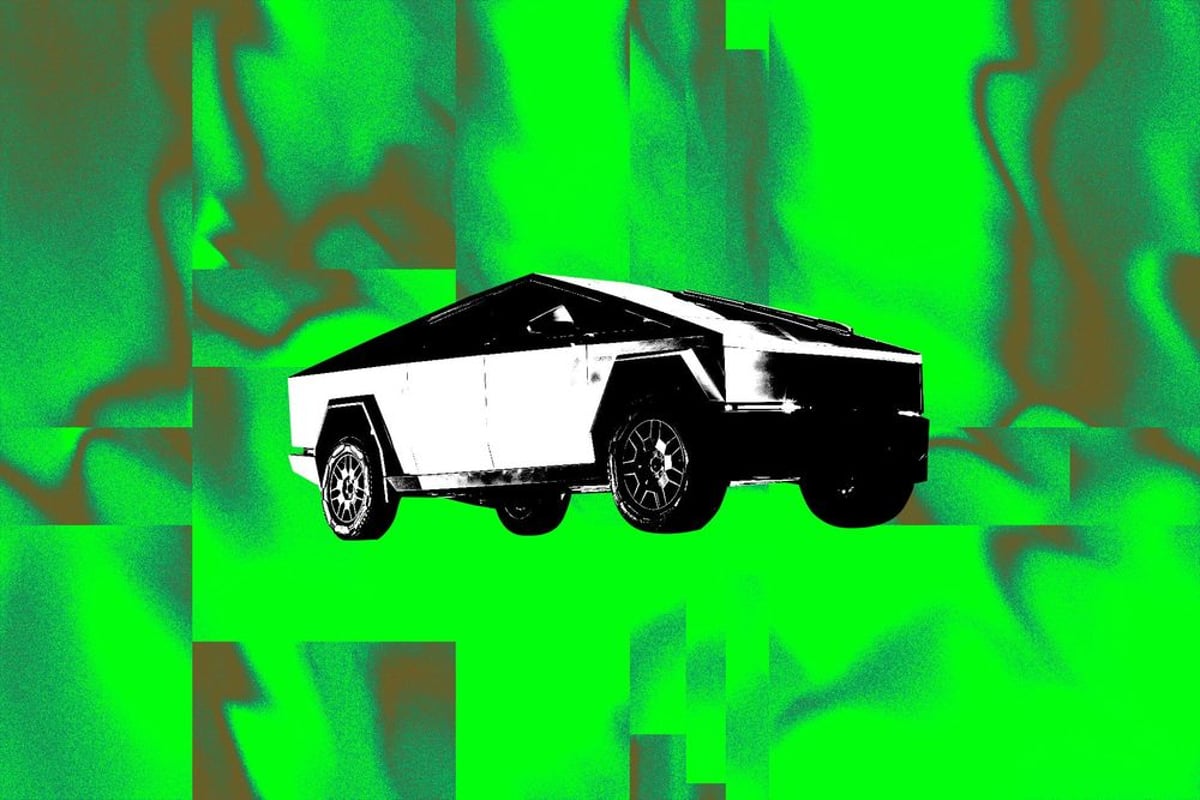
Take the Cybertruck. When Tesla started delivering the polarizing electric pickup in late 2023, it was supposed to be a revolution. Instead, sales have completely flatlined. The company reported delivering only 11,642 vehicles in the "other" category - which includes the Model S, Model X, and Cybertruck combined - down a staggering 50.7% from Q4 2024. Tesla doesn't break out exact Cybertruck figures, so we can't know the exact damage, but the math suggests the truck that Elon Musk championed as a next-generation vehicle is basically dead on arrival.
What happened? The culprit is a perfect storm. Rising competition from legacy automakers like Ford, General Motors, and Chinese EV makers has flooded the market with cheaper alternatives just as Tesla's tax incentives disappeared. The federal EV tax credit that once subsidized purchases expired, removing a major reason for consumers to choose Tesla over competitors. And then there's the Elon factor. Musk's emergence as a divisive political figure - pushing conspiracy theories on his social media platform X and heading the DOGE project in the Trump administration - has alienated many of Tesla's traditionally liberal customer base, the core constituency that built the brand into what it is today.
Musk himself has acknowledged the pain. He's said the company is in for "a few rough quarters" thanks to the expiring incentive and broader macroeconomic factors. But his solution is patience. He believes Tesla will rebound once its AI plans materialize - specifically robotaxis and humanoid robots. The problem? Those plans are vaporware at this point.
Musk predicted back in 2024 that 50% of the US population would have access to Tesla's robotaxis by the end of 2025. We're in early 2026 now, and the reality is a handful of vehicles available in Austin and San Francisco to a limited number of customers. The Cybertruck was supposed to change everything. The cheaper Model 3 and Model Y variants the company rolled out recently were supposed to spark a demand renaissance. None of it has worked.
What makes this moment particularly striking is the optics. Just weeks before these disappointing numbers, Tesla's board approved a massive new pay package for Musk that could make him the world's first trillionaire. The deal includes milestones like producing over a million robots, a million robotaxis, and creating $7.5 trillion in shareholder value. Those are almost comically ambitious targets for a company that can't even keep its core vehicle sales from collapsing.
The company's response? Cheaper vehicles that haven't reversed the slide. Tesla is caught between a rock and a hard place. It can't compete on price with legacy automakers that have massive scale and supply chains. It can't compete on new products because everything it's got is getting long in the tooth. And it's burned through much of the goodwill that once made it a cultural phenomenon.
Tesla is at a crossroads. The company built its valuation on the promise that it would dominate EVs and eventually transition to robotaxis and autonomous humanoid robots. But those promises have been repeatedly delayed while the fundamentals of its actual business - selling cars - are deteriorating. Investors are banking on AI and robotics panning out, but with two consecutive years of declining sales and a leadership team stretched thin between carmaking, social media, and government projects, the clock is ticking for Tesla to prove it can execute on anything beyond the core vehicle business.