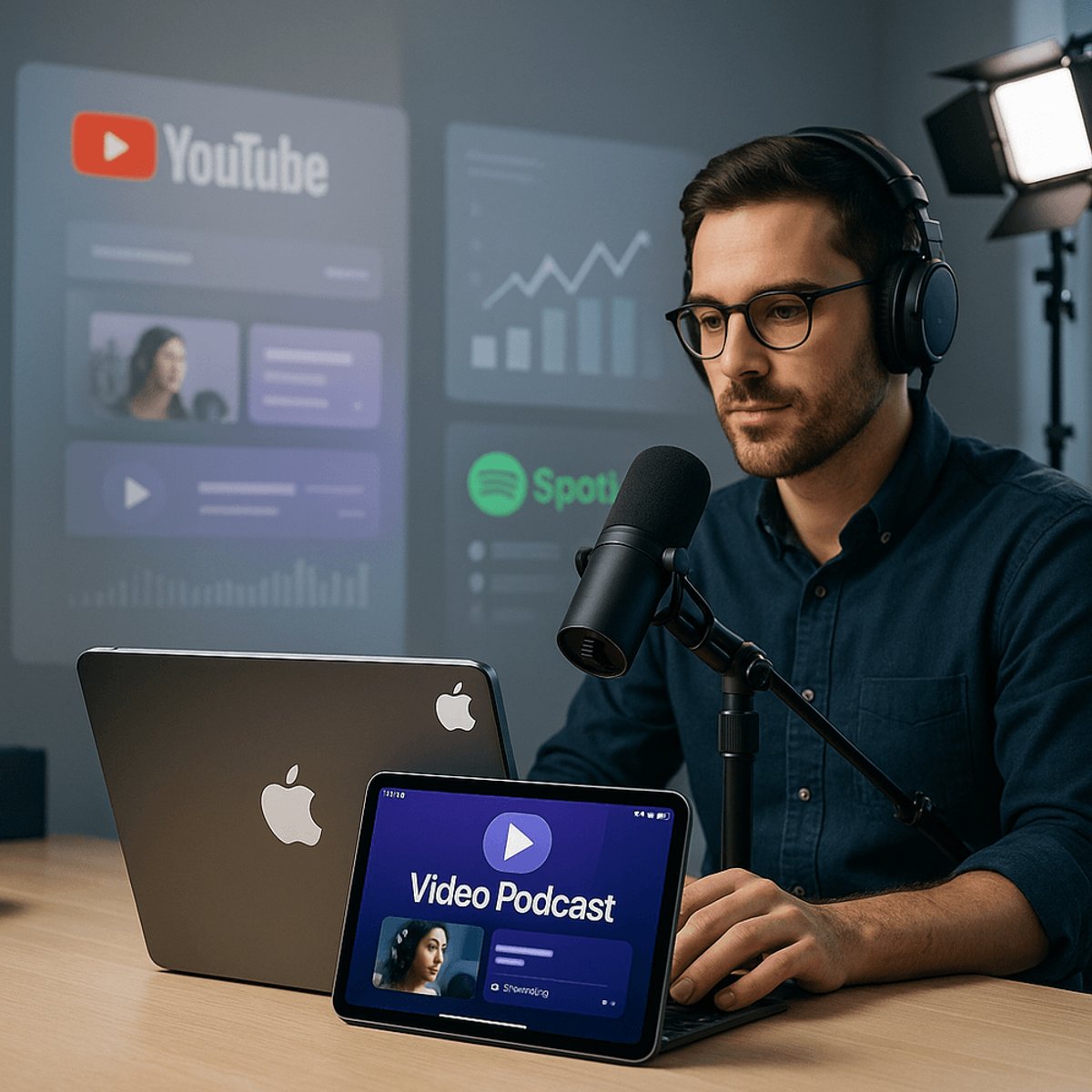
Apple is making its biggest play yet for podcast dominance. The company just announced it's bringing integrated video podcasting to Apple Podcasts this spring, directly challenging YouTube and Spotify in a market that's rapidly shifted to video-first content. The move could reshape where creators publish and how millions consume podcast content, especially as video podcasts now account for over 40% of all podcast consumption according to industry data.
Apple is finally entering the video podcast wars. The company confirmed it's rolling out integrated video podcast capabilities to Apple Podcasts this spring, ending years of watching competitors eat into its once-dominant podcast platform. The announcement comes as the podcasting landscape has fundamentally transformed, with video becoming the default format for top shows and creators increasingly treating audio as an afterthought.
The timing couldn't be more critical for Apple. YouTube has emerged as the dominant podcast platform, with creators like Joe Rogan clips and tech reviewers racking up millions of views per episode. Meanwhile, Spotify has aggressively courted creators with video tools and exclusive deals, spending billions to build a podcast empire that now includes video integration across mobile and desktop. Apple's podcast app, despite being pre-installed on over 2 billion devices, has felt increasingly dated as it remained stubbornly audio-only.
The shift to video represents an existential challenge Apple couldn't ignore. Industry data shows video podcasts now account for more than 40% of all podcast consumption, and that number keeps climbing. Creators consistently report higher engagement, better sponsorship rates, and stronger audience retention when they publish video versions. Many top podcasters now record video first and treat audio as a secondary output, a complete reversal from just three years ago.
Apple's approach to video podcasting remains unclear from the initial announcement, but the stakes are enormous. The company needs to answer key questions - will creators get analytics on par with YouTube? Can they monetize through ads or subscriptions? Will Apple take a cut of creator revenue like it does with App Store purchases? These details will determine whether Apple can actually compete or if this is just catching up to table stakes.
The competitive dynamics are brutal. YouTube offers creators robust analytics, multiple revenue streams including Super Chat and memberships, and algorithmic discovery that can make unknown shows explode overnight. Spotify has invested heavily in creator tools, video infrastructure, and exclusive content deals that keep premium shows locked to its platform. Apple's historic advantage was simplicity and reach, but that's not enough anymore when creators can earn significantly more elsewhere.
For podcast creators, this creates a fascinating dilemma. Many have avoided Apple Podcasts for video distribution because the platform couldn't support it, instead uploading to YouTube as their primary platform and Spotify as secondary. If Apple delivers competitive video tools, creators could potentially reach the massive iOS installed base more effectively. But switching platforms or managing another distribution channel requires resources many independent creators don't have.
The move also signals Apple's broader services strategy under pressure. The company's services segment, which includes Apple Music, iCloud, and the App Store, has been a critical growth driver as iPhone sales plateau. Podcasting fits into that narrative, but only if Apple can generate revenue from it. The company could introduce premium video podcast subscriptions, take a cut of creator earnings, or use podcasts to drive engagement with other services like Apple TV+ or Apple Music.
Industry watchers have been predicting this move for months. Apple's podcast platform has steadily lost relevance as consumption habits changed, and the company needed to respond before the gap became insurmountable. The spring timeline suggests Apple wants this ready before the annual WWDC conference in June, where it typically showcases major software updates. Integrating video podcasts into iOS, iPadOS, and macOS will require significant engineering work, especially if Apple wants features like picture-in-picture, offline downloads, and seamless switching between audio and video modes.
The announcement also puts pressure on other players. Amazon's podcast ambitions through Audible and Music have been modest, but Apple's video push could force Amazon to respond. Smaller platforms like Pocket Casts and Overcast will need to decide if they can afford to build video infrastructure or accept being audio-only alternatives for purists. The entire podcast ecosystem is consolidating around a few major platforms, and this move accelerates that trend.
Apple's video podcast push is a necessary but late response to a market that's already moved on. The company that essentially created modern podcasting through iTunes is now playing catch-up to YouTube and Spotify, both of which have spent years building creator tools and audiences around video content. Whether Apple can leverage its massive installed base and ecosystem lock-in to win back creators remains the big question. The spring launch timeline is aggressive, and execution will matter more than the announcement. For creators, this means one more platform to consider and potentially more revenue opportunities, but also more complexity in an already fragmented landscape. The podcast wars just got more expensive for everyone involved.