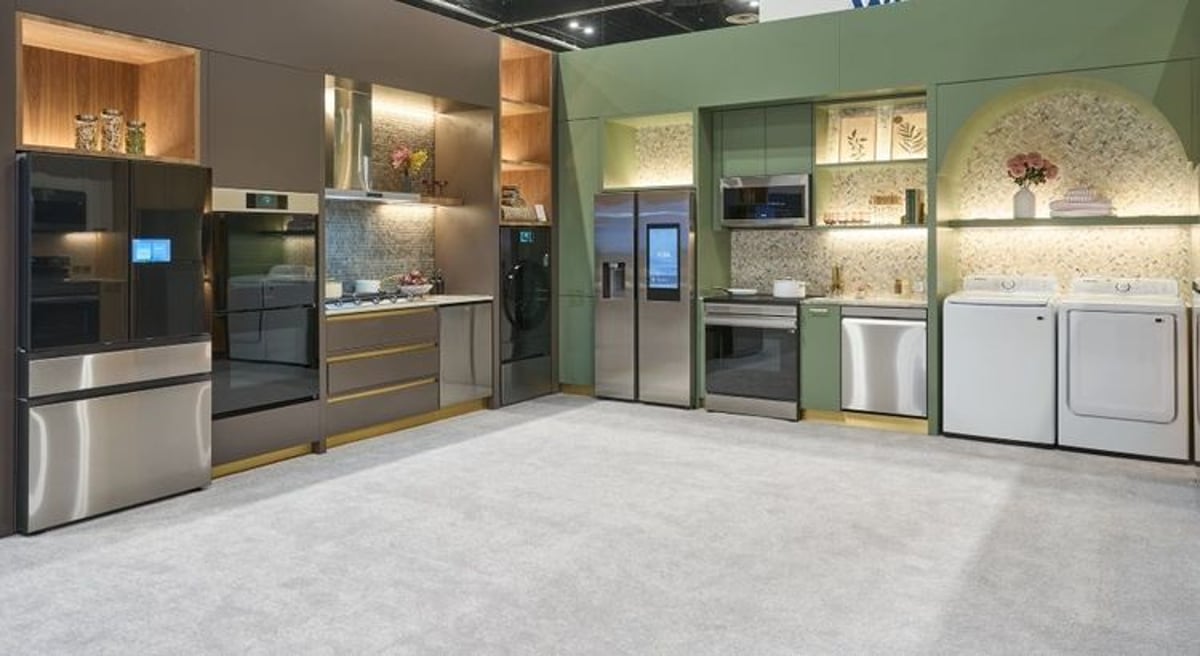
Samsung is rolling out its vision for AI-powered kitchens at the Kitchen & Bath Industry Show (KBIS) 2026 in Orlando, Florida this week. The tech giant is showcasing its Bespoke AI lineup alongside Dacor, its premium built-in kitchen brand, featuring smart refrigerators with enhanced food recognition, voice-controlled appliances, and a new "hidden kitchen" design concept that blends high-end wine storage with connected home technology.
Samsung is making its case for AI-controlled kitchens this week at KBIS 2026, and the company's betting big on camera-equipped refrigerators that actually know what's inside them. The Bespoke AI Refrigerator Family Hub takes center stage with its upgraded AI Vision feature, which Samsung says will soon recognize more food types than its current 37 fresh items and 50 pre-registered packaged goods.
"The kitchen is evolving into the center of home life, and Samsung continues to introduce intelligent solutions that organically connect appliances, services and everyday experiences," Sang Jik Lee, Executive Vice President and Head of the Sales and Marketing Team for Samsung's Digital Appliances Business, told attendees according to Samsung's announcement. The show runs through February 19 at Orlando's Orange County Convention Center.
But Samsung's play goes beyond smart fridges. The company's showcasing its Dacor premium brand with what it calls a "hidden kitchen" concept - appliances concealed within curved columns or furniture that disappear when not in use. It's a design philosophy aimed at luxury homeowners who want functionality without the visual clutter of traditional kitchen setups.
The Dacor lineup includes a 24-Inch Undercounter Wine Cellar, Wine Column, and a Built-in Wine Dispenser that stores four bottles with dual temperature zones for reds and whites. Touch controls let users select and pour specific amounts, which Samsung positions as part of a "premium wine culture" for modern homes. The company's pairing its 2025 LUXE RED Design Award-winning 24-Inch Dishwasher with refrigerators and cooktops in these concealed configurations.
Everything connects back to SmartThings, Samsung's IoT platform that's become the backbone of its connected home strategy. Users can monitor and control Bespoke AI dishwashers, ovens, and laundry appliances from their smartphones, while Bixby voice commands handle hands-free operation. Stand in front of the fridge, ask "Hi Bixby, can you recommend a recipe based on my food list?" and it'll pull up cooking instructions.
Samsung's also pushing reliability as a differentiator in the crowded smart home market. The company's dedicating part of its KBIS exhibit to what it calls Home Appliance Remote Management (HRM), a service that monitors device operation status and offers remote diagnostics and support. It's available on SmartThings-enabled models released after 2019, though Samsung notes it only tracks device performance data, not personal information.
The AI Vision technology uses camera-based recognition powered by deep learning models that Samsung says it updates periodically to improve accuracy. Right now, the system can't identify items in fridge door bins or freezers, and unrecognizable foods get listed as unknown items. But Samsung's promising to "overcome existing limitations" and expand recognition capabilities, though it hasn't specified a timeline.
What's interesting here is how Samsung's tying together consumer appliances, AI functionality, and premium design in a single ecosystem play. While Google focuses on Nest and Amazon pushes Alexa-enabled devices, Samsung's leveraging its manufacturing scale to embed connectivity across entire kitchen suites. The Dacor integration brings the company into higher-end markets where brands like Sub-Zero and Wolf have traditionally dominated.
The timing aligns with broader trends in connected home technology, where voice assistants and smartphone controls have moved from novelty to expectation. Samsung's betting that food recognition and automated inventory management will be the next must-have features, even as privacy concerns around in-home cameras continue to simmer in the background.
For Samsung, KBIS 2026 represents another step in its long-game strategy to own the connected kitchen. The company's not just selling individual appliances anymore - it's selling an integrated system where the refrigerator talks to the oven, the dishwasher syncs with your phone, and everything runs through Samsung's cloud infrastructure. Whether consumers bite on AI-powered food recognition and hidden wine dispensers remains to be seen, but Samsung's clearly placing its chips on the smart kitchen revolution.
Samsung's KBIS showcase reveals how the company's thinking about the future of connected homes - not as isolated smart devices, but as fully integrated ecosystems where AI handles inventory, voice controls everything, and premium design hides the technology when you don't need it. The real test will be whether consumers see enough value in camera-equipped refrigerators and app-controlled wine dispensers to justify the premium pricing and ongoing reliance on Samsung's cloud infrastructure. As smart home adoption accelerates, Samsung's betting that owning the kitchen means controlling the connected home's most important room.