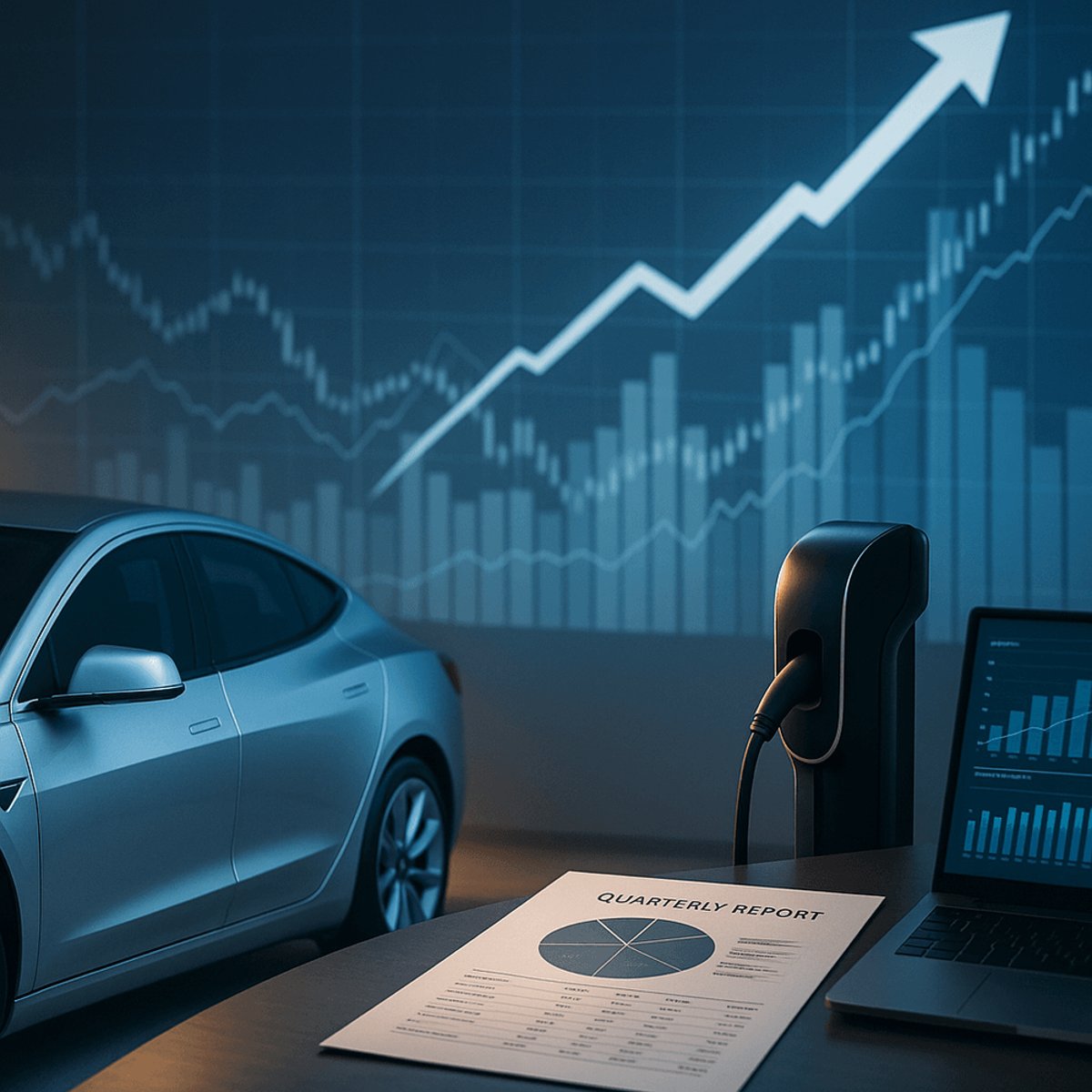
Tesla reports third-quarter earnings after the bell today, with analysts expecting 54 cents per share on $26.37 billion revenue - a potential return to growth after two straight quarterly declines. The EV giant's stock has rebounded from a brutal start to the year, but faces mounting challenges from European sales slumps and intensifying competition that could test investor confidence.
Tesla drops its third-quarter earnings report after market close today, and Wall Street's watching closely as the electric vehicle pioneer attempts to prove its recovery story is real. After a brutal start to 2025, the stock has clawed back much of its losses, but today's numbers will test whether that momentum can hold.
Analysts are betting on a comeback quarter. They're expecting 54 cents per share on revenue of $26.37 billion - which would mark a 4.7% jump from last year's $25.18 billion and end two consecutive quarters of year-over-year revenue declines. But here's the catch: early projections for Q4 already show revenue dropping 1.2% again, according to LSEG data.
The company did deliver some good news earlier this month with record Q3 vehicle deliveries hitting 497,099 units on production of 447,450 vehicles. Yet dig deeper and the picture gets murkier - through the first three quarters, total deliveries sit around 1.2 million, down about 6% compared to the same period in 2024.
CEO Elon Musk and CFO Vaibhav Taneja already warned investors during July's earnings call about headwinds from higher tariff costs and the expiration of federal EV tax credits. The end of those credits, tied to President Trump's spending bill, created an artificial sales surge as consumers rushed to buy before the incentive disappeared - a boost that's now working in reverse.
Cantor Fitzgerald analysts, who maintain a buy rating on the stock, wrote Tuesday they'll be laser-focused on Musk's commentary around "several upcoming key material potential near-term catalysts." That includes progress on Tesla's Robotaxi service rolling out in Texas and California, production updates on lower-cost Model 3 and Y variants, and adoption rates for premium driver assistance systems in China and Europe.
The bigger story brewing is Tesla's brand crisis in Europe, where sales continue slumping partly due to consumer backlash against Musk's increasingly political rhetoric and activism. Competition from established players like Volkswagen and Chinese upstart BYD isn't helping either.
That brand damage shows up in hard numbers. Tesla's ranking on the Interbrand 2025 Best Global Brands list tumbled to 25th place from 12th in 2024. Automotive rivals Toyota, Mercedes and BMW all ranked higher, with Toyota claiming the 6th spot overall.
"Tesla was once the main disruptive force in the automotive industry," the Interbrand report noted. "However a combination of rising competition in the EV market and Elon Musk's attention being diverted to political activities has led to a decline in profits in 2024 and financial forecasts for 2025."
The report didn't pull punches, adding that "a lack of innovation in products and low-cost competitors has led to concerns about Tesla's ability to sustain high margins."
Still, there are potential bright spots investors will be listening for. Tesla's supposed to launch its Cybercab next year - a two-seater robotaxi with no steering wheel or pedals. Updates on the company's humanoid Optimus robots, though not yet commercially deployed, could also move the needle.
S&P Global released research last week showing that despite easing tariff pressures, auto industry demand headwinds persist amid slowing disposable income growth, consumer pessimism and shifting trade policies. But the firm did revise U.S. light vehicle sales estimates upward by 2% to 16.1 million for 2025.
Second quarter automotive revenue hit $16.7 billion, including $439 million from regulatory credit sales - a revenue stream that's become increasingly important as core auto margins face pressure.
Today's earnings call at 5:30 PM ET will be critical for Tesla's narrative. While the company appears poised to return to revenue growth this quarter, underlying challenges around brand perception, European market share losses, and margin pressure from intensifying competition remain unresolved. Investors will be parsing every word from Musk about the Robotaxi timeline and whether Tesla can execute on its autonomous driving promises while navigating an increasingly crowded EV landscape.