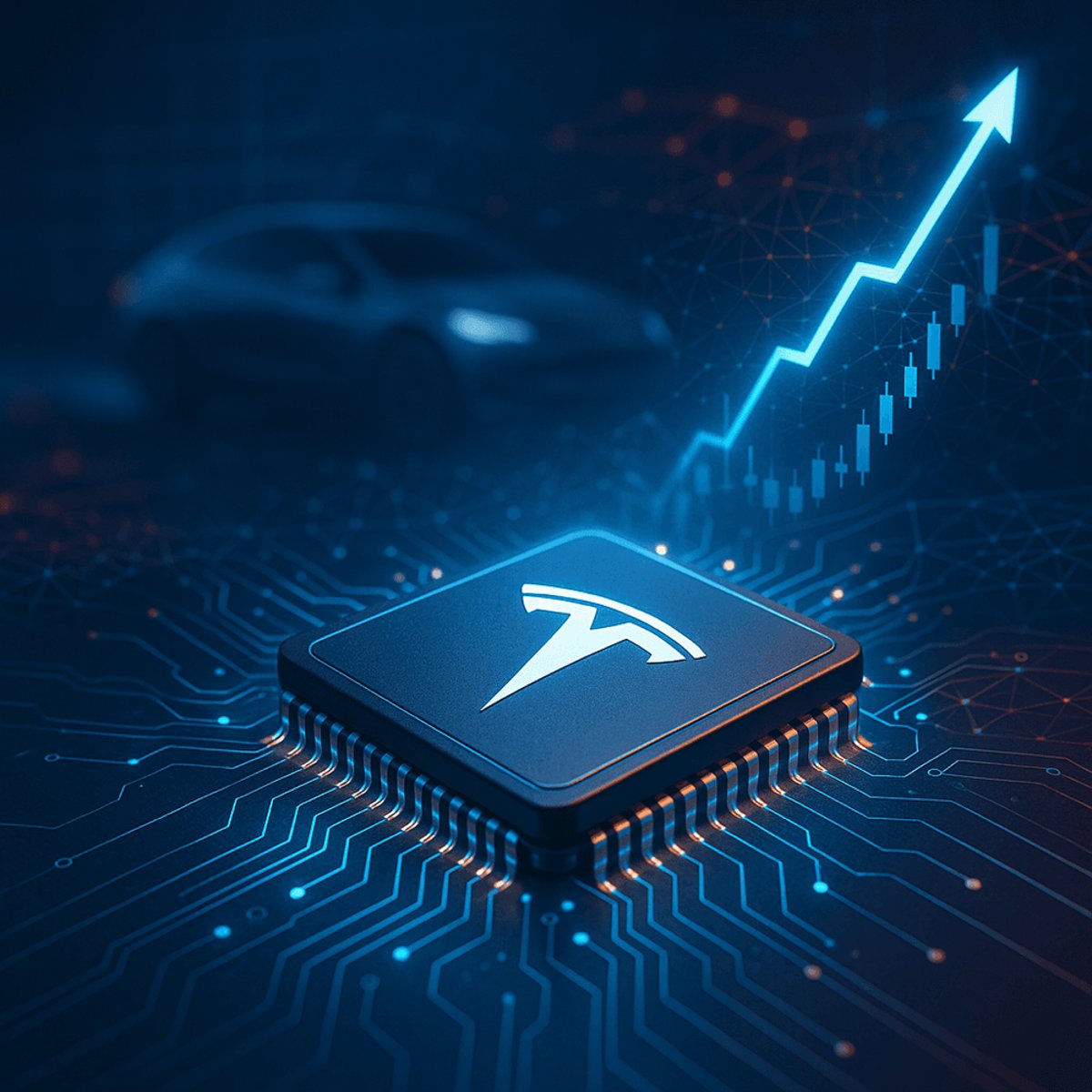
Tesla shares are climbing after UBS reversed its bearish stance on the electric vehicle maker, citing significant progress in the company's proprietary chip development. The upgrade marks a notable shift for the investment bank, which had maintained a cautious position on Tesla amid concerns about competition and valuation. The move comes as CEO Elon Musk doubles down on the company's AI and autonomous driving ambitions, with chip advancements taking center stage.
Tesla just got a crucial vote of confidence from one of its skeptics. UBS analysts flipped their rating on the electric vehicle giant this week, abandoning their previously bearish outlook as the company's chip development gains momentum. The upgrade sent Tesla shares higher, with investors betting that proprietary silicon could finally deliver on Elon Musk's long-promised autonomous driving future.
The timing couldn't be more strategic. Tesla's been locked in an arms race with competitors like Waymo and Cruise over who can crack the self-driving code first. But while rivals rely on third-party hardware, Tesla's vertical integration strategy - building everything from batteries to AI chips in-house - is starting to look prescient. UBS analysts pointed to recent advancements in Tesla's custom silicon as evidence the company's approach is paying off.
Musk has been telegraphing this shift for months. The billionaire CEO has repeatedly emphasized that Tesla is "as much an AI company as a car company," pivoting the narrative away from vehicle sales toward autonomous technology. The chip progress validates that positioning. Tesla's latest hardware reportedly delivers significant improvements in processing power and energy efficiency, critical factors for running complex neural networks in vehicles.
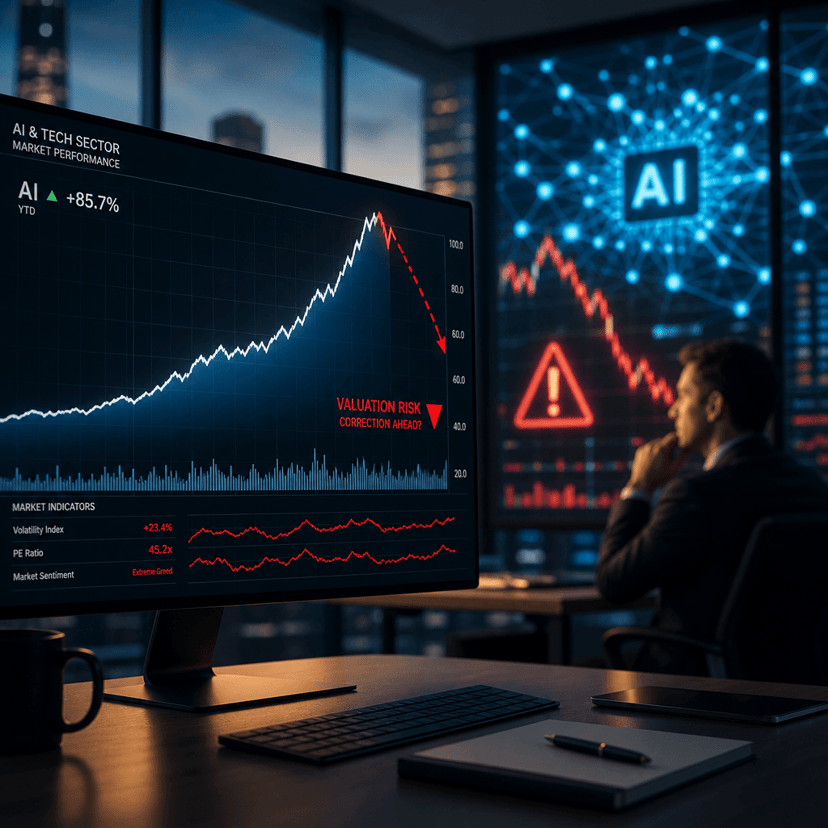
The upgrade represents a significant reversal for UBS, which had maintained a cautious stance amid concerns about Tesla's lofty valuation and intensifying competition in the EV market. Traditional automakers like Ford and General Motors have poured billions into electrification, while Chinese rivals like BYD have captured market share with lower-priced alternatives. Tesla's stock has been volatile as investors weighed these competitive pressures against the company's technological edge.
But chips change the equation. If Tesla can leverage superior hardware to deliver truly autonomous vehicles before competitors, the company's valuation multiple suddenly looks more justified. The robotaxi market alone could be worth hundreds of billions, according to industry estimates. Tesla's ability to design chips specifically optimized for its Full Self-Driving software gives it a potential advantage over rivals using off-the-shelf solutions from Nvidia or Qualcomm.
The move also highlights how Wall Street's perception of Tesla continues to evolve. Once viewed primarily as a carmaker, analysts increasingly evaluate the company through the lens of its AI and software capabilities. That shift mirrors broader trends in the tech industry, where companies with proprietary AI infrastructure - from Google with its TPUs to Amazon with its Trainium chips - command premium valuations.
Still, skeptics remain. Tesla's Full Self-Driving system, despite its name, still requires active driver supervision and has faced regulatory scrutiny over safety concerns. The company has repeatedly missed timelines for achieving full autonomy, and competitors aren't standing still. Nvidia just unveiled its latest automotive AI platform, while startups like Wayve are pursuing alternative approaches to self-driving that could prove more scalable.
The chip progress also comes as Tesla navigates a shifting automotive landscape. EV sales growth has slowed in key markets, forcing price cuts that have pressured margins. The company needs its AI bets to pay off to justify its premium valuation relative to traditional automakers. UBS's upgrade suggests analysts believe that payoff is becoming more tangible.
For Tesla bulls, the rating change validates their thesis that the market has underestimated the company's technological moat. The combination of manufacturing scale, vertically integrated hardware, and vast amounts of real-world driving data creates advantages that are difficult for competitors to replicate. If the chip improvements translate into meaningful advances in autonomous capability, Tesla could open up entirely new revenue streams beyond vehicle sales.
What remains unclear is the timeline. Musk has a history of aggressive predictions that prove overly optimistic. But the fact that previously skeptical analysts are coming around suggests something substantive is happening beneath the surface. The question for investors is whether to bet on Tesla's chip advantage today or wait for more concrete proof that the technology can deliver on its promise.
UBS's rating flip captures a pivotal moment for Tesla - the point where years of chip development investment either validates Musk's vision or proves a costly distraction. For now, Wall Street seems willing to give the company credit for its technological progress, but the real test comes in translating silicon improvements into safer, more capable autonomous systems. With competition intensifying across both the EV and self-driving markets, Tesla's chip advantage could be the differentiator that justifies its premium valuation - or just another ambitious promise that falls short of reality.