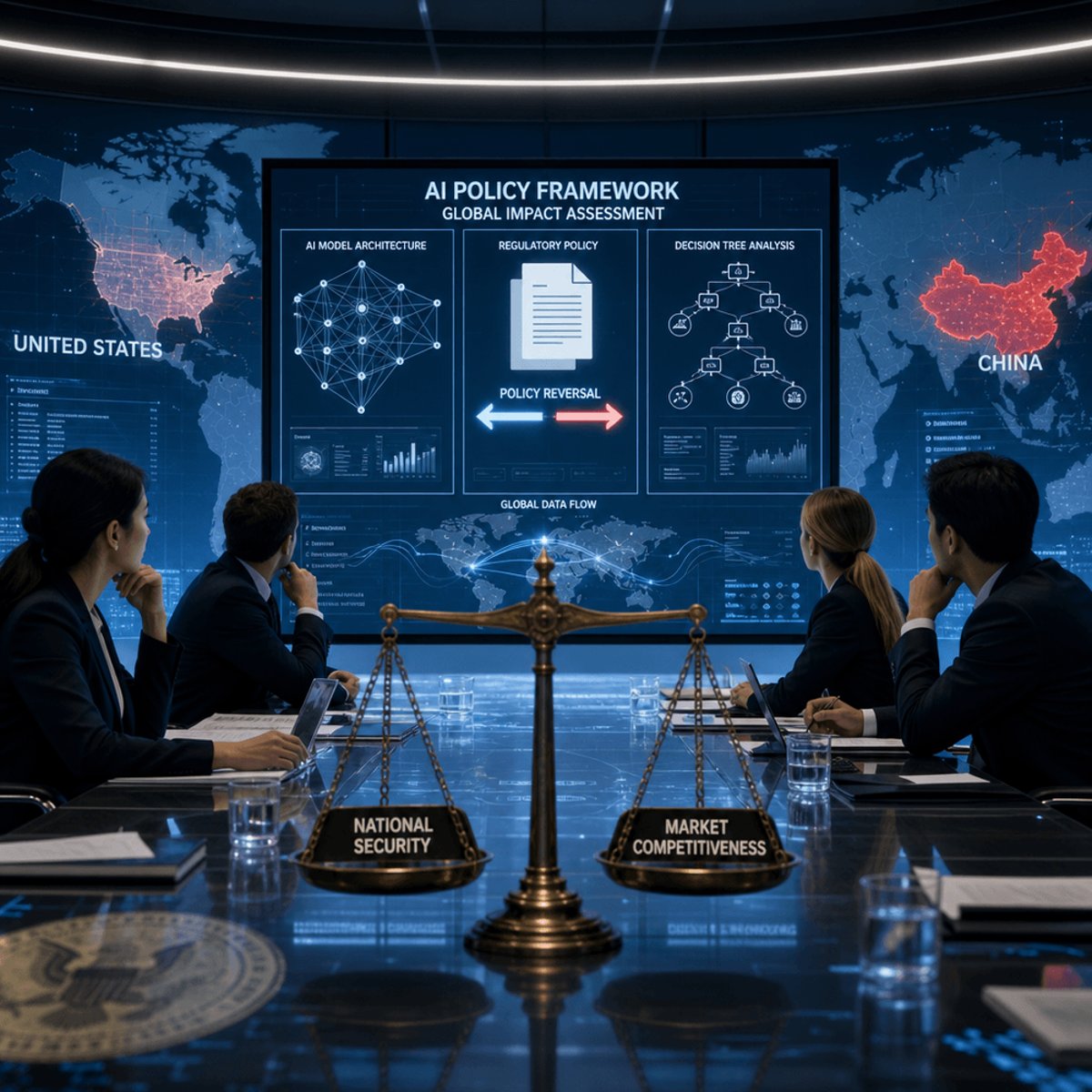
The Trump administration just pulled off a dramatic U-turn on AI export policy. After ordering Anthropic to cut off foreign nationals from its most advanced models just weeks ago, the White House is now lifting those restrictions entirely. The abrupt reversal on the Mythos and Fable AI systems exposes the chaotic state of US AI regulation as Washington struggles to balance national security concerns with keeping American companies competitive in the global race for AI dominance.
Anthropic can breathe again. The AI safety company just got word from the White House that export controls on its Mythos and Fable models are being lifted, marking a stunning reversal in US AI policy that took less than a month to complete.
The decision ends a brief but turbulent period for the San Francisco-based company, which had been forced to suspend access to its most capable AI systems for users outside the United States. Foreign researchers, developers, and enterprise customers who rely on Anthropic's technology suddenly found themselves locked out, scrambling to find alternatives or relocate operations.
But the bigger story here isn't just about one company getting regulatory whiplash. It's about an administration that appears to be making up AI policy on the fly, with potentially massive consequences for America's position in the global AI race.
The original restrictions came amid growing fears in Washington about advanced AI capabilities falling into the wrong hands. The logic was straightforward: if Anthropic's models are powerful enough to pose national security risks, then foreign adversaries shouldn't have access. Officials worried about everything from bioweapon design to sophisticated cyberattacks enabled by frontier AI systems.
That reasoning hasn't changed in the past few weeks. What has changed, apparently, is the administration's willingness to deal with the fallout. According to sources familiar with the deliberations, the White House faced an avalanche of pushback from the tech industry, which argued that export controls would simply hand market share to Chinese competitors without actually protecting American interests.
The concerns weren't theoretical. OpenAI, Google, and Microsoft all operate globally, and inconsistent export rules threatened to fragment the AI market in ways that would hurt US companies most. If Anthropic couldn't serve international customers, those customers would just turn to alternatives, including models developed in China or Europe.
Anthropics's Mythos and Fable models represent the company's push into more advanced reasoning and multimodal capabilities. While details about these systems remain closely guarded, they're understood to be more capable than the widely-deployed Claude 3 family, with enhanced abilities in complex problem-solving and extended context understanding.
The regulatory yo-yo puts Anthropic in an uncomfortable position. The company built its brand on responsible AI development and close cooperation with regulators. Co-founders Dario and Daniela Amodei, who previously led safety efforts at OpenAI, positioned Anthropic as the grown-up in the room when it came to AI risk management.
Now they're caught in a policy environment where the rules can reverse completely in a matter of weeks. That makes long-term planning nearly impossible and creates uncertainty for the researchers, investors, and customers trying to build on Anthropic's platform.
The episode also raises uncomfortable questions about how export controls would actually work in practice. AI models aren't like missile technology or nuclear secrets. They're software that can be copied, reverse-engineered, and replicated. China is already developing its own frontier models. Restricting access to American AI might slow foreign development marginally, but it definitely hurts US competitiveness.
Some national security experts argue that's a trade-off worth making. If cutting off access to advanced AI buys even a few months of lead time in a potential conflict, the economic cost is justified. But that calculation assumes export controls would actually work as intended, rather than just pushing development underground or overseas.
The reversal comes as Congress debates broader AI regulation, with lawmakers struggling to craft rules that address safety concerns without stifling innovation. The Mythos and Fable saga gives them a preview of how hard that balance will be to strike.
For now, Anthropic's international customers can access the full suite of models again. But the company and its competitors are left wondering whether this is really settled, or just the eye of the storm before the next regulatory curveball arrives.
The Anthropic export control saga exposes the fundamental tension at the heart of US AI policy. Washington wants to maintain technological leadership while preventing adversaries from accessing cutting-edge capabilities. But in a global market where AI development happens everywhere simultaneously, export restrictions might just be shooting ourselves in the foot. The question isn't whether advanced AI poses risks, it's whether blunt policy instruments like export bans can actually manage those risks without creating bigger problems. Based on the last few weeks, the administration doesn't seem to have an answer yet.