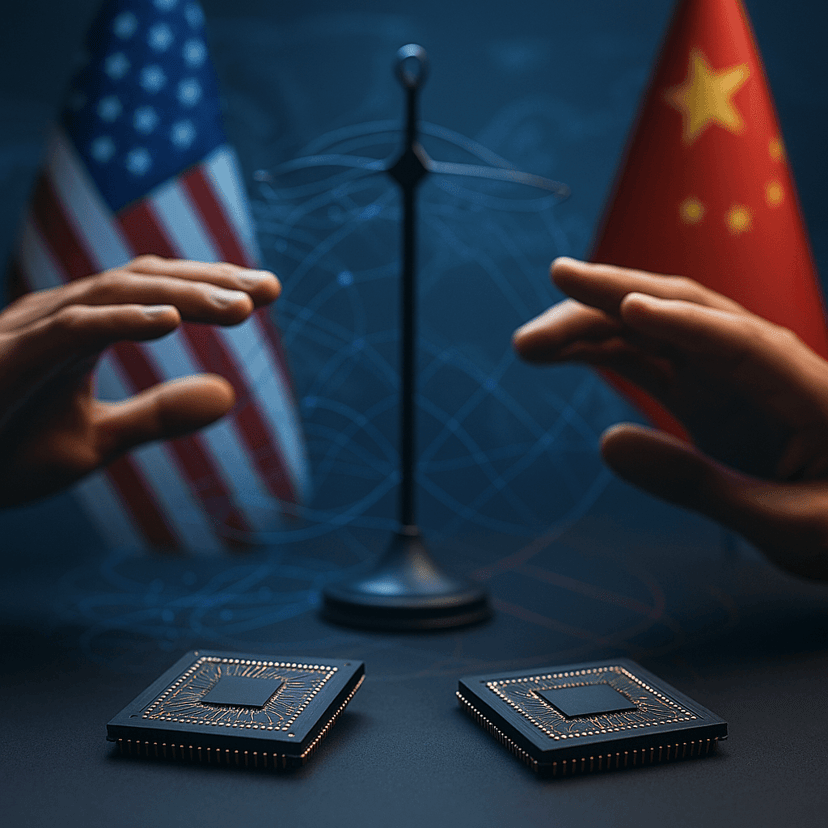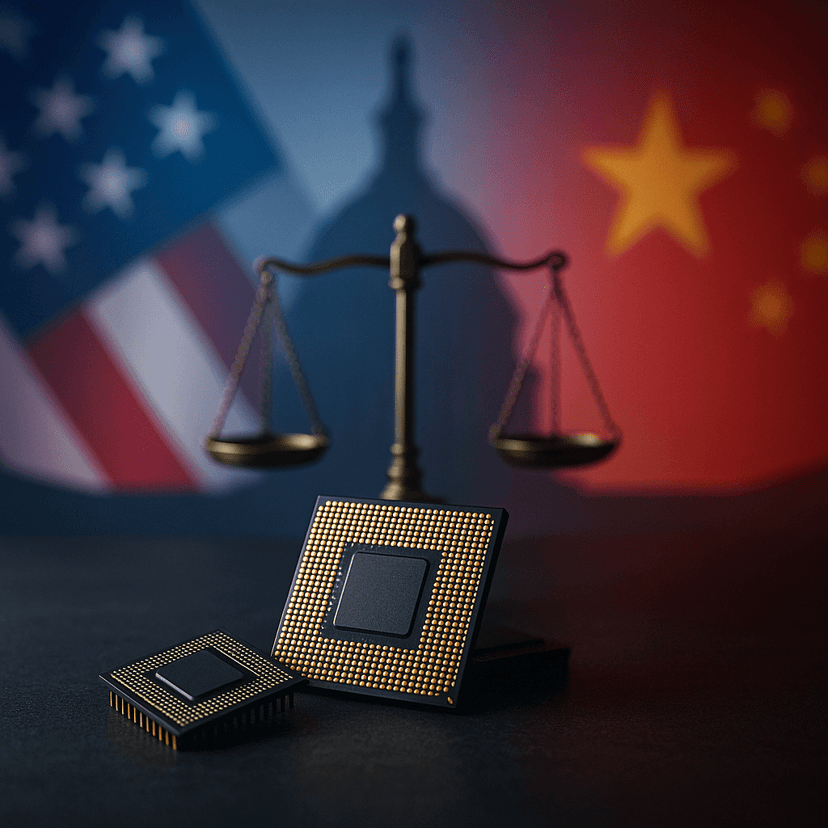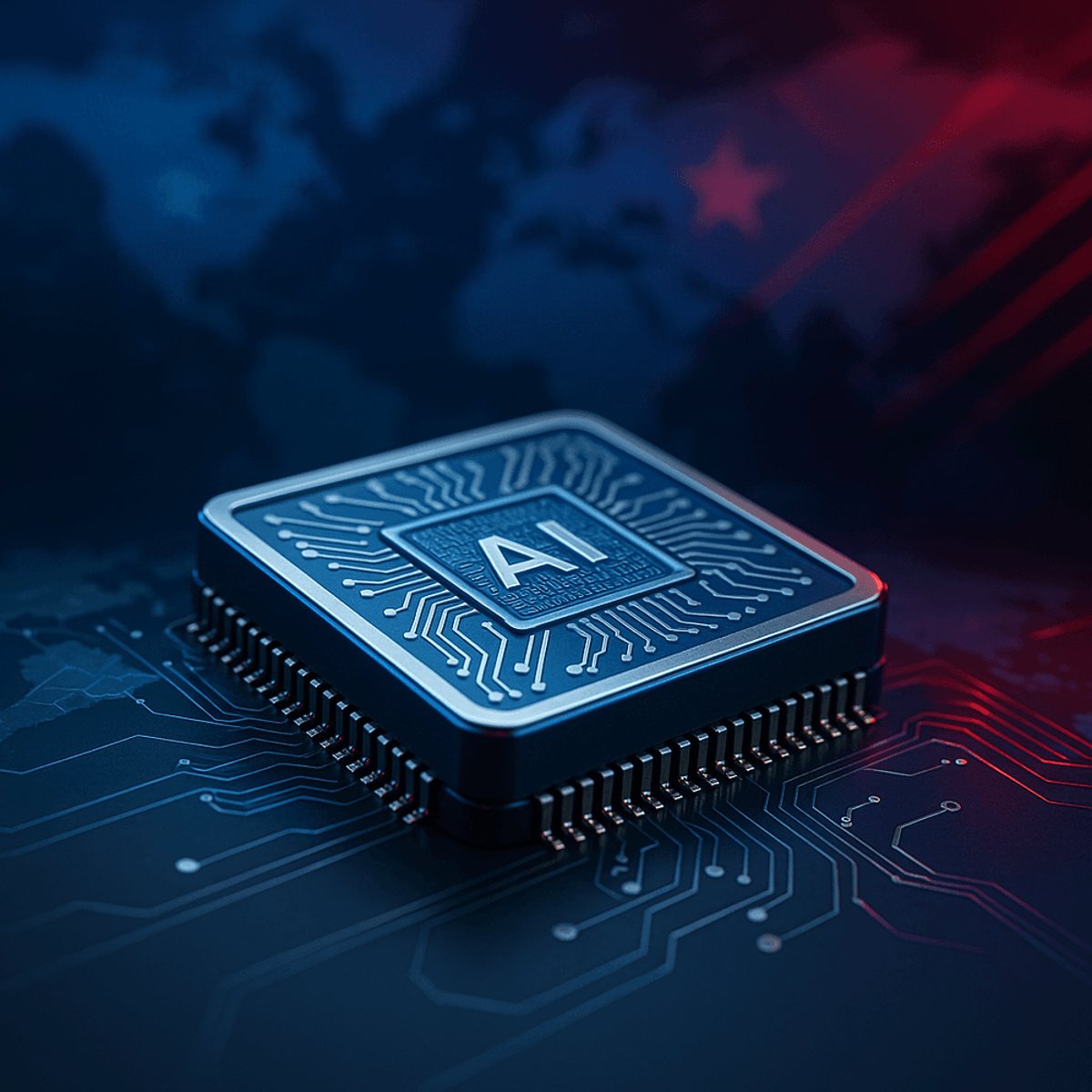
President Trump just confirmed he'll discuss Nvidia's cutting-edge Blackwell AI chips with Chinese President Xi Jinping during their Thursday meeting. The revelation puts the world's most advanced semiconductors squarely at the center of US-China trade negotiations, with billions in revenue hanging in the balance as both nations vie for AI dominance.
The stakes just got higher for the world's most valuable semiconductor company. President Trump's casual reference to Nvidia's Blackwell architecture as the 'super duper chip' during a Wednesday media scrum has suddenly thrust the company into the spotlight of high-stakes international diplomacy. When Trump sits down with Chinese President Xi Jinping on Thursday, Nvidia's future in the world's second-largest economy will be on the table. 'We'll be speaking about Blackwell, it's the super duper chip,' Trump told reporters, referring specifically to the GB200 Grace Blackwell Superchip - Nvidia's flagship AI processor that powers everything from ChatGPT to autonomous vehicles. The president wasn't shy about America's technological edge either, claiming the chips are 'about 10 years ahead of anybody else' in sophisticated semiconductor design. The timing couldn't be more critical for Nvidia. CEO Jensen Huang admitted earlier this month that the company is currently '100% out of China' with no market share there - a dramatic reversal from just months ago. The exclusion followed Beijing's surprise move to block Chinese companies from importing Nvidia chips, effectively killing what was once a multi-billion dollar revenue stream. This wasn't always the case. Back in July, Washington had actually rolled back restrictions on Nvidia's made-for-China H20 chips, and Trump himself had signaled openness to allowing downgraded versions of Blackwell processors into Chinese markets. But Beijing's counter-move caught everyone off guard, leading many trade experts to speculate that China is using Nvidia's market access as leverage in broader negotiations. The geopolitics are getting messy fast. Nvidia's Blackwell architecture represents the current pinnacle of AI computing power - these aren't just chips, they're the engines driving the global AI revolution. Every major tech company from Microsoft to Google is racing to secure Blackwell allocation for their data centers. Losing China means Nvidia loses access to roughly 20% of the global semiconductor market. For context, Nvidia's total revenue hit $60.9 billion in fiscal 2024, with data center sales alone reaching $47.5 billion. China historically represented a significant portion of those numbers before export controls tightened. Now, with Beijing playing hardball, Nvidia finds itself caught between two superpowers using technology as a weapon. The company's stock has reflected this uncertainty, with shares experiencing heightened volatility whenever US-China tensions flare. Thursday's Trump-Xi meeting represents more than just bilateral diplomacy - it's potentially a watershed moment for the entire AI industry. If Trump can negotiate some form of controlled access for Nvidia chips in China, it could unlock billions in revenue and validate his administration's approach to tech competition. But if talks stall, Nvidia may need to write off the Chinese market entirely while competitors rush to fill the void. The broader implications extend far beyond one company's bottom line. Control over advanced AI chips has become synonymous with national security and economic competitiveness. Whichever country dominates AI chip manufacturing and distribution essentially controls the future of artificial intelligence development. That's why Trump's casual reference to 'super duper chips' carries so much weight - he's talking about the building blocks of the next technological era.
Thursday's Trump-Xi meeting has transformed from routine diplomacy into a pivotal moment for the global AI industry. With Nvidia completely shut out of China and both nations treating AI chips as strategic assets, the conversation could either restart a multi-billion dollar trade relationship or cement a technological cold war. For Nvidia, the stakes are existential - losing permanent access to China means ceding a massive market to competitors while potentially limiting the global pace of AI development. The 'super duper chip' may be technologically superior, but geopolitics will ultimately determine where it can be sold.