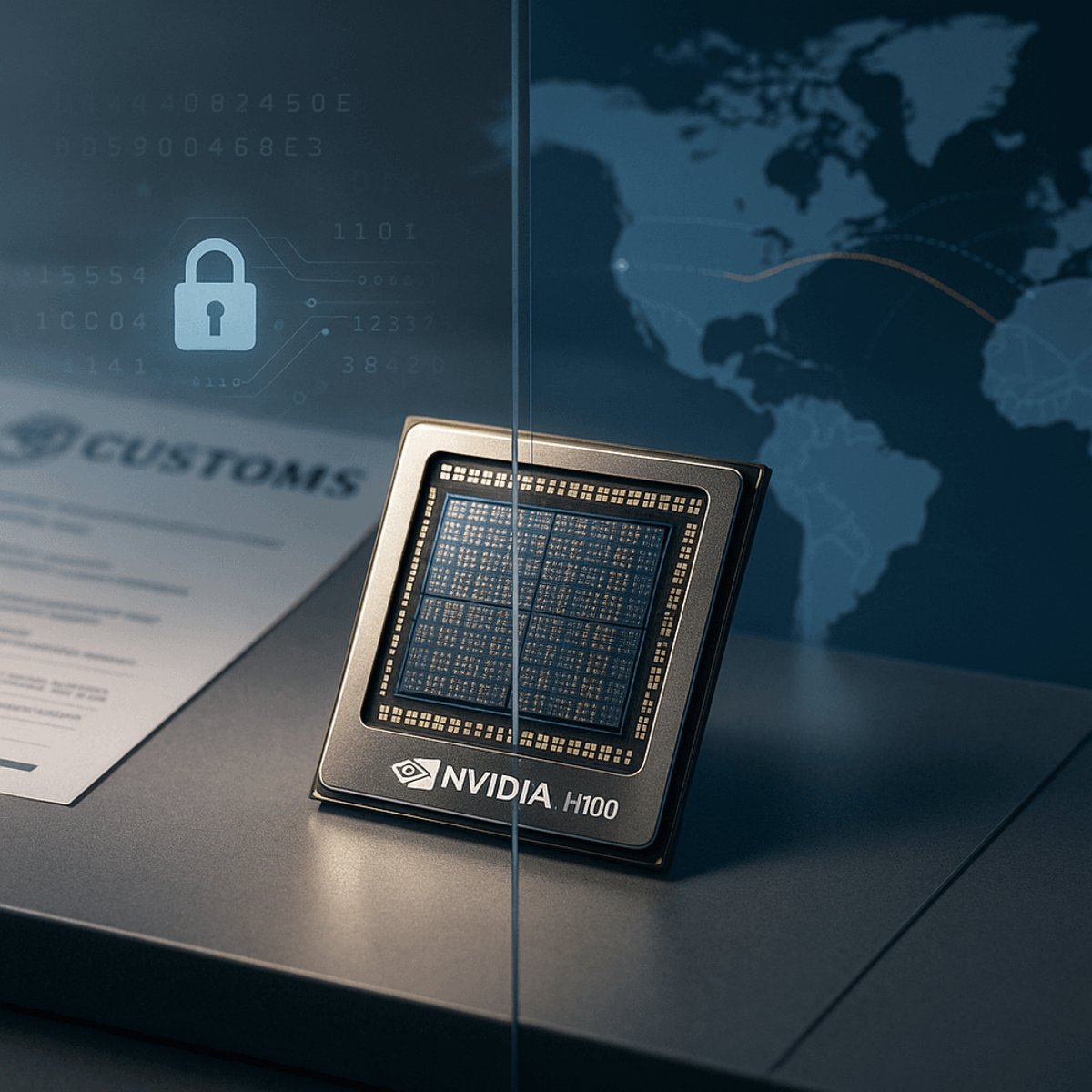
Federal prosecutors have charged multiple U.S. technology executives with smuggling Nvidia AI chips to China in violation of export controls, marking one of the most significant enforcement actions in the escalating semiconductor trade war. The criminal case underscores how Washington's restrictions on advanced chip exports have spawned an underground market for the hardware that powers cutting-edge artificial intelligence systems. The charges come as Nvidia dominates the global AI chip market, with its H100 and A100 processors becoming the most sought-after components for training large language models.
The Justice Department has launched criminal proceedings against U.S. technology executives accused of orchestrating an illegal scheme to smuggle Nvidia artificial intelligence chips to China, CNBC reports. The charges mark a sharp escalation in Washington's efforts to enforce export controls that aim to keep advanced semiconductor technology out of Chinese hands.
The case centers on Nvidia's high-performance AI processors, particularly the H100 and A100 chips that have become essential infrastructure for training large language models and running advanced AI systems. Since October 2022, the U.S. Commerce Department has prohibited the export of these chips to China without special licenses, citing national security concerns about their potential military applications.
But the restrictions created an immediate problem: Chinese tech companies and research institutions were already heavily invested in Nvidia's ecosystem and desperate to acquire the hardware needed to compete in the global AI race. That desperation, prosecutors allege, spawned a shadow market where intermediaries used shell companies, false documentation, and circuitous shipping routes to get the banned chips into China.
The criminal charges reveal how difficult it's become to police the semiconductor supply chain as AI development accelerates worldwide. Nvidia chips have effectively become the oil of the AI economy - whoever controls access to them holds significant leverage over which countries and companies can build state-of-the-art systems. The company reported data center revenue of $47.5 billion in fiscal 2024, driven almost entirely by AI chip demand.
Washington has repeatedly tightened its export control regime, adding new restrictions in October 2023 that closed loopholes and expanded the list of prohibited chips. The Biden administration argued that preventing China from accessing advanced AI chips would slow the country's military modernization and protect U.S. technological leadership. But enforcement has lagged behind policy, with semiconductor industry experts warning that determined buyers could still find ways to circumvent the rules.
The prosecution suggests federal authorities are now serious about cracking down on smuggling operations. Criminal charges against U.S. executives - rather than just foreign intermediaries - sends a message that American citizens who facilitate illegal chip exports will face serious consequences. The defendants could face significant prison time if convicted, though details about the specific charges and individuals involved haven't been fully disclosed.
For Nvidia, the case presents a delicate challenge. The company has publicly committed to complying with all export restrictions and even developed China-specific chip variants like the A800 and H800 that theoretically meet regulatory requirements. But CEO Jensen Huang has also warned that overly broad export controls could backfire by encouraging China to develop its own semiconductor industry, ultimately weakening American chip makers' market position.
The smuggling case comes as the global AI infrastructure race intensifies. OpenAI, Microsoft, Google, and Meta are all racing to secure chip supply for their next-generation models, creating unprecedented demand for Nvidia's hardware. Chinese companies like Alibaba, Baidu, and ByteDance face the same pressures but with far more limited access to cutting-edge processors.
Industry analysts note that the prosecution likely represents just the tip of the iceberg. Customs officials and intelligence agencies have documented numerous attempts to smuggle chips through third countries, often involving falsified end-user certificates and elaborate corporate structures designed to obscure the final destination. Singapore, Malaysia, and other Southeast Asian nations have become common transshipment points.
The charges also highlight tensions within the semiconductor industry about how export controls should work. Some executives argue that blanket restrictions push Chinese companies toward self-sufficiency and hurt American chip makers' revenues, which fund the R&D needed to maintain technological leadership. Others insist that national security concerns must take priority, even if that means sacrificing short-term profits.
What happens next will likely depend on both the specifics of the criminal case and the broader political environment around U.S.-China tech competition. The Trump administration has signaled it may take an even harder line on semiconductor exports, potentially expanding restrictions to cover more chip types and countries. That would increase pressure on the underground market and potentially lead to more prosecutions.
For companies racing to build AI infrastructure, the message is clear: the days of treating export controls as paperwork exercises are over. Federal prosecutors are watching the semiconductor supply chain closely, and executives who cut corners risk criminal liability. The question is whether enforcement actions like this one will actually slow China's AI development or simply make the smuggling operations more sophisticated.
The criminal charges against U.S. tech executives for smuggling Nvidia chips to China represent more than just another export control enforcement action - they signal that the semiconductor trade war has entered a new phase where individual executives face personal legal jeopardy. As demand for AI chips continues to outstrip supply and geopolitical tensions deepen, expect more prosecutions targeting the shadow market that's emerged around restricted hardware. The real test will be whether enforcement actions can actually prevent China from accessing advanced chips or whether they'll simply drive the underground market further into the shadows while accelerating Beijing's push for semiconductor self-sufficiency.