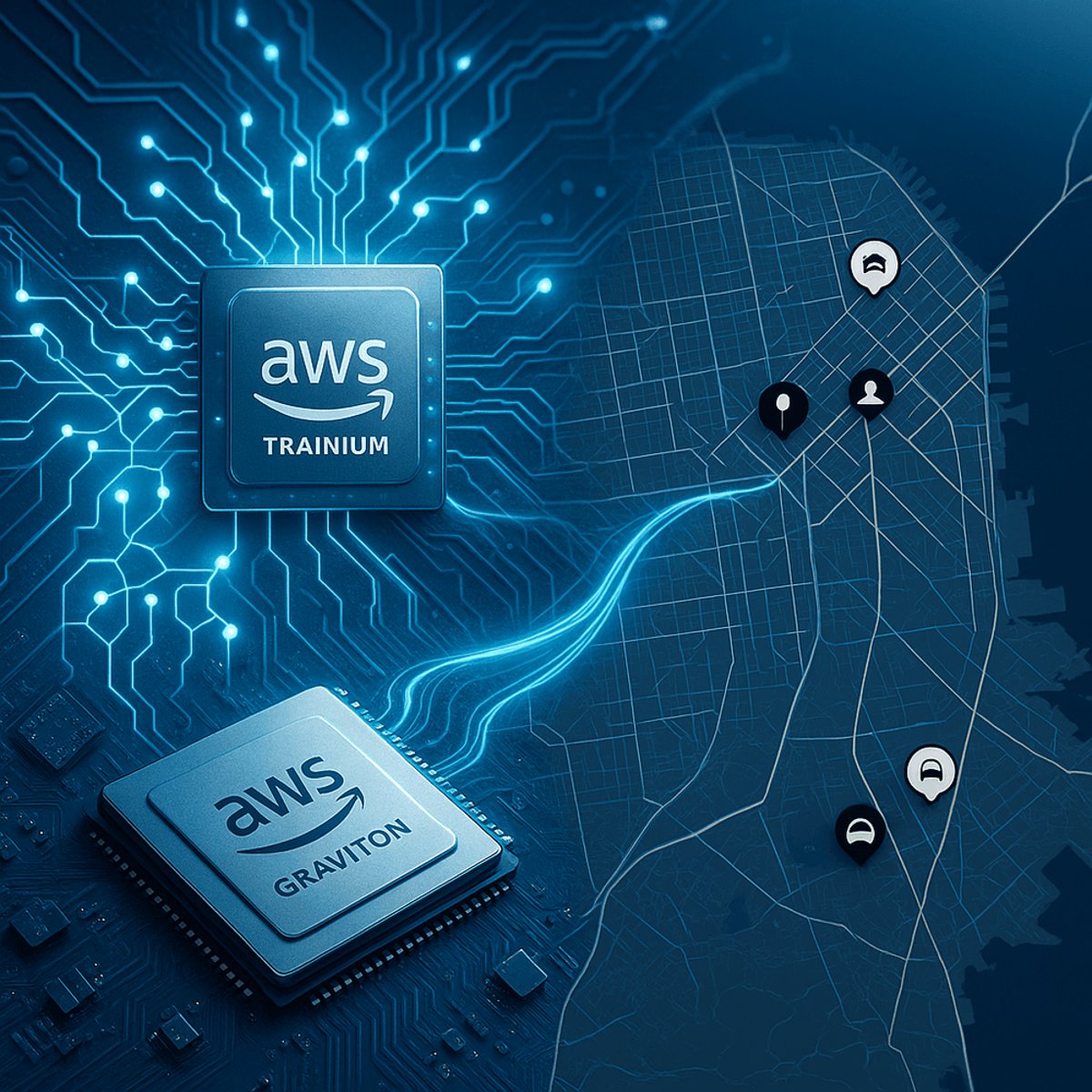
Uber just turbocharged its cloud infrastructure bet, doubling down on Amazon Web Services to handle the massive computational demands of matching millions of riders with drivers in real-time. The ride-sharing giant is now leveraging AWS's custom AI chips - Trainium for machine learning training and Graviton for compute workloads - marking one of the largest enterprise deployments of Amazon's homegrown silicon. It's a strategic move that signals how consumer platforms are racing to rebuild their infrastructure around AI-first architectures.
Uber is making a major infrastructure play that could reshape how it delivers rides and food to millions of customers daily. The company announced it's scaling its operations on Amazon Web Services, specifically tapping AWS's custom-designed AI chips to train the machine learning models that power everything from surge pricing to delivery route optimization.
The deployment centers on two key pieces of Amazon's chip strategy: Trainium for training large-scale AI models, and Graviton processors for general compute workloads. According to Amazon's announcement, this expansion enables Uber to handle the real-time computational demands of matching riders with drivers across hundreds of cities simultaneously.
What makes this partnership noteworthy isn't just the scale - though processing millions of trip requests daily is no small feat. It's that Uber is choosing AWS's proprietary chips over the industry-standard Nvidia GPUs that dominate AI training. That decision reflects a calculated bet on cost efficiency. Trainium chips, designed specifically for machine learning workloads, promise significant savings compared to traditional GPU instances, a crucial factor when you're training models on datasets encompassing billions of trip records.
Uber has been steadily investing in AI capabilities since its earlier challenges with profitability and operational efficiency. The company's routing algorithms need to process variables like traffic patterns, driver availability, weather conditions, and demand fluctuations in milliseconds. Every percentage point improvement in route efficiency translates directly to lower costs and faster pickups - metrics that matter intensely in the razor-thin margins of ride-sharing economics.
The AWS partnership also positions Uber to compete more effectively with rivals investing heavily in autonomous technology. While Waymo and Cruise pour billions into self-driving hardware, Uber is betting it can extract comparable value through software optimization and AI-driven logistics. The Trainium deployment suggests the company is training increasingly sophisticated models that could eventually support autonomous fleet management when that technology matures.
For Amazon, landing Uber as a showcase customer validates its multi-year effort to challenge Nvidia's dominance in AI infrastructure. AWS has been aggressively positioning Trainium as a cost-effective alternative for companies that don't need bleeding-edge performance but require massive scale. Uber's consumer-facing platform - where milliseconds matter but not at the precision required for, say, molecular modeling - fits that profile perfectly.
The timing also matters. As AI costs balloon across the tech industry, companies are hunting for ways to train models without burning through cash. Meta recently disclosed it's spending over $30 billion annually on AI infrastructure. Microsoft and Google are in similar spending ranges. Uber's move to AWS's custom chips could preview a broader industry shift as CFOs demand better unit economics from their AI investments.
What we're watching now is whether this infrastructure upgrade translates to noticeable improvements for riders. Uber's AI models handle everything from estimated arrival times to dynamic pricing to fraud detection. Faster training cycles could mean more accurate ETAs during rush hour or smarter surge pricing that balances supply and demand without alienating customers. The real test is whether the average rider opening the app notices their driver arrives 30 seconds faster or their delivery stays hot because routing improved.
The partnership also underscores how cloud infrastructure has become the hidden battleground in consumer tech. While users see sleek apps, the real competition happens in data centers where fractions of a second and pennies per compute hour determine which platform can offer the best service at the lowest cost. Uber processing trip data on Trainium chips isn't flashy, but it's the kind of operational leverage that separates market leaders from also-rans.
One detail worth noting: Uber hasn't disclosed specific performance metrics or cost savings from the AWS expansion. That's typical for enterprise deals, but it means we're left reading tea leaves about actual impact. The company's willingness to announce the partnership publicly suggests confidence in the results, but hard numbers would tell us whether this is transformative or incremental optimization.
Uber's infrastructure expansion on AWS represents the unsexy but critical work of rebuilding consumer platforms for an AI-native world. While headlines chase the latest chatbot or image generator, companies like Uber are rewiring their foundational systems to extract value from machine learning at scale. The bet on Trainium and Graviton chips over conventional GPUs signals a maturing market where operational efficiency matters as much as raw performance. For riders and delivery customers, the payoff should arrive in the form of faster pickups, smarter routing, and more reliable service - assuming the infrastructure delivers on its promise. What happens next depends on whether AWS's custom silicon can actually compete with Nvidia's ecosystem in real-world production environments, and whether Uber can translate cheaper compute into better customer experiences.