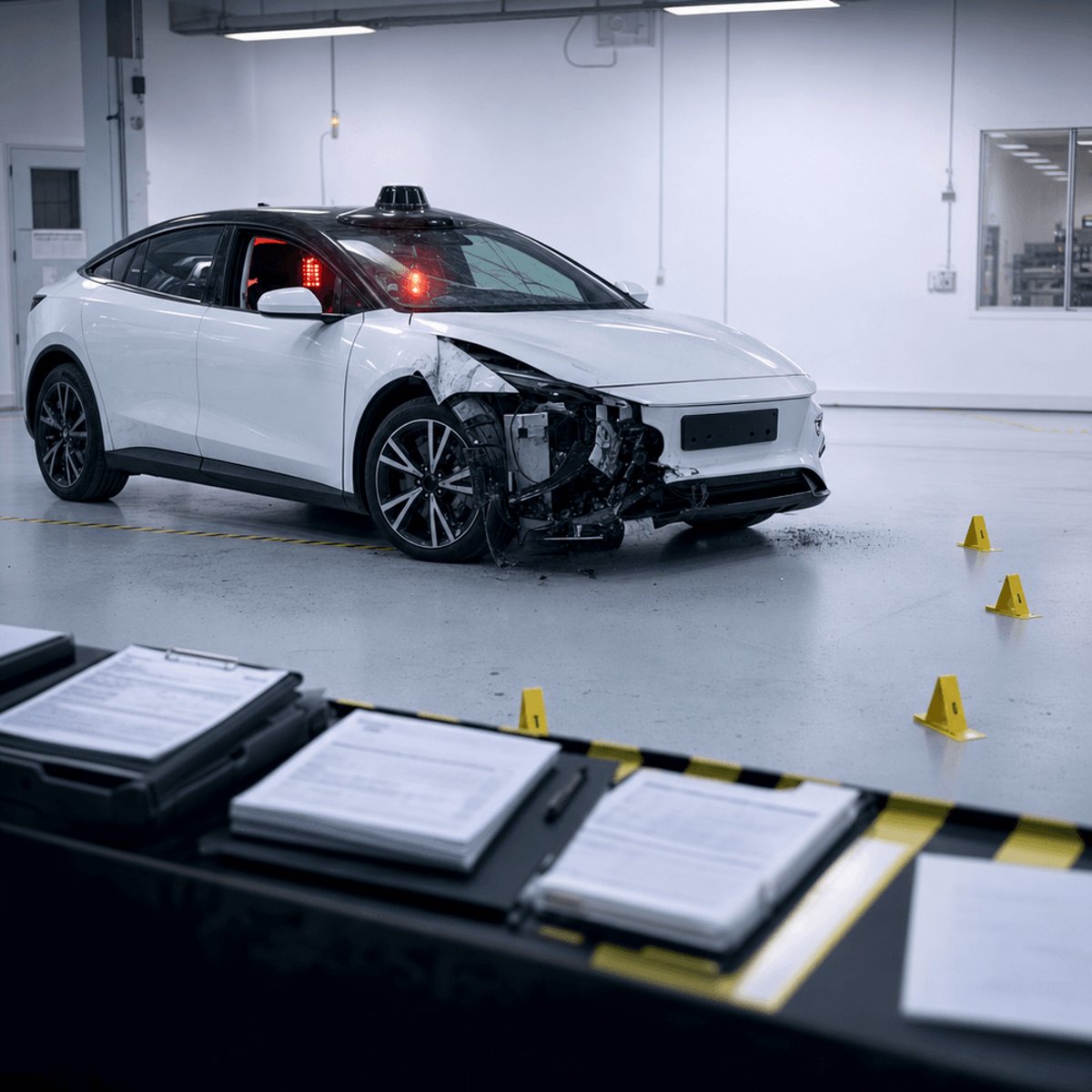
The autonomous vehicle industry just hit another regulatory speed bump. Federal safety regulators have opened an investigation into Avride, a self-driving startup partnered with Uber, after identifying more than a dozen crashes involving its autonomous vehicles and one minor injury. The probe marks yet another scrutiny point for the robotaxi sector as companies race to deploy fleets across U.S. cities, and it puts pressure on Uber's autonomous ambitions at a critical growth phase.
Avride, the autonomous vehicle startup that powers self-driving rides for Uber, is now under federal investigation after a string of crashes caught regulators' attention. The National Highway Traffic Safety Administration opened the probe after identifying more than 13 incidents involving Avride's autonomous fleet, including one that resulted in a minor injury.
The timing couldn't be worse for Uber. The ride-hailing giant has bet big on autonomous partnerships to cut labor costs and scale profitably, and Avride represents a key piece of that puzzle. The startup, which spun out of Russian tech giant Yandex before rebranding and relocating operations, has been quietly expanding its footprint in U.S. cities, deploying self-driving vehicles in test markets with Uber's backing.
But now those expansion plans face uncertainty. NHTSA investigations typically examine whether there's a systemic safety defect in a vehicle's design or operation. With more than a dozen crashes on record, regulators are likely scrutinizing everything from Avride's sensor arrays and decision-making algorithms to its remote monitoring protocols and safety driver training procedures.
The autonomous vehicle industry has faced growing pains before. Cruise, GM's robotaxi unit, suspended operations last year after a pedestrian dragging incident in San Francisco triggered regulatory backlash and internal upheaval. Waymo, Alphabet's self-driving unit and the industry leader, has also dealt with occasional crashes and property damage incidents, though it's largely avoided serious regulatory action thanks to its safety record across millions of autonomous miles.
Avride operates in a different tier. The company doesn't have Waymo's decade-plus head start or Cruise's General Motors backing. Instead, it's relied on strategic partnerships like the one with Uber to gain market access and real-world testing opportunities. The startup has been testing autonomous delivery robots alongside its ride-hailing vehicles, diversifying its revenue streams while collecting data to improve its systems.
The crashes raise questions about how ready Avride's technology actually is for prime time. While the company hasn't publicly disclosed details about the incidents, the fact that NHTSA felt compelled to open a formal investigation suggests the crashes share common characteristics or reveal potential systemic issues. One minor injury might sound modest, but in the zero-tolerance world of autonomous vehicle safety, even minor incidents can derail deployment plans.
For Uber, this creates an uncomfortable position. The company has pivoted hard toward profitability after years of losses, and autonomous vehicles represent both a long-term cost-saving opportunity and a hedge against rising driver costs. But backing a partner under federal investigation risks reputational damage and could slow Uber's autonomous rollout just as competitors like Waymo expand their own ride-hailing services in cities like Phoenix, San Francisco, and Los Angeles.
The investigation also comes as Congress and state legislators debate how to regulate autonomous vehicles. California, Arizona, and Texas have taken relatively permissive approaches, allowing companies to test and deploy with minimal restrictions. But high-profile incidents have sparked calls for stricter oversight, mandatory safety reporting, and clearer liability frameworks. An NHTSA finding against Avride could fuel those regulatory efforts and create new compliance hurdles for the entire industry.
What happens next depends on what investigators find. NHTSA could determine the crashes resulted from external factors like other drivers' mistakes, or it could identify flaws in Avride's systems that require fixes or even a temporary halt to operations. The agency has broad authority to demand recalls, software updates, or operational changes if it finds safety defects.
Meanwhile, Avride will need to navigate this probe while maintaining partner confidence and continuing development. The startup hasn't issued a public statement about the investigation, and Uber has remained silent on whether it will adjust its partnership or pause any joint deployment plans. That silence might be strategic, but it also leaves questions unanswered as the autonomous vehicle race intensifies and safety remains the industry's defining challenge.
The NHTSA investigation into Avride marks another pivotal moment for the autonomous vehicle industry as it transitions from controlled testing to broader public deployment. For Uber, the probe complicates an already challenging path toward profitable autonomous operations. For regulators, it's a test of whether existing oversight frameworks can keep pace with rapidly evolving self-driving technology. And for the wider robotaxi sector, the outcome will either validate current safety practices or trigger a new wave of regulatory requirements that could reshape how quickly autonomous vehicles reach mainstream adoption. The industry's watching closely, because what happens to Avride could set precedents that affect everyone racing toward a driverless future.