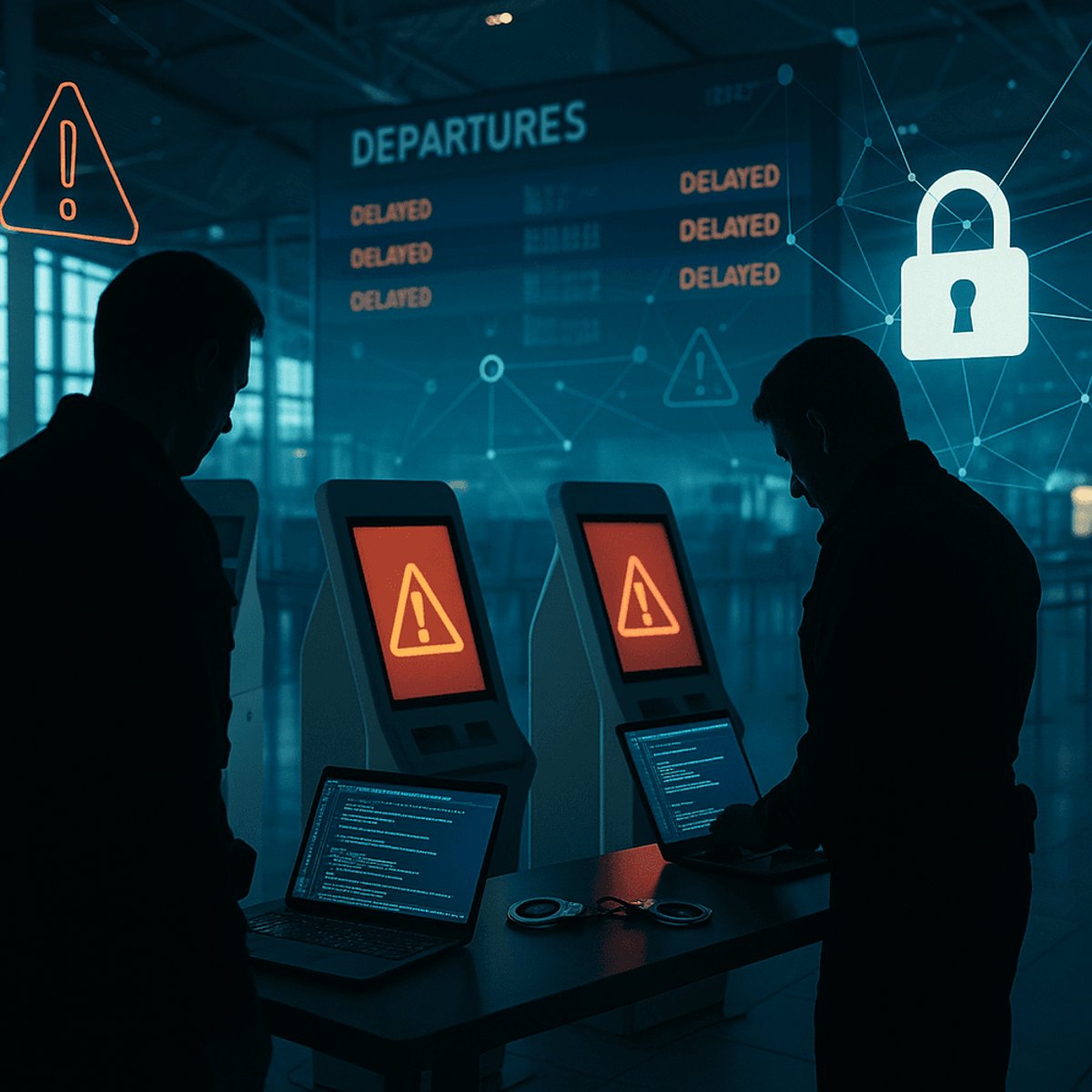
UK authorities have made their first arrest in the Collins Aerospace ransomware attack that crippled check-in systems across major European airports for four days. The National Crime Agency nabbed a suspect in West Sussex on Tuesday, marking a breakthrough in the investigation that brought Heathrow, Brussels, Berlin, and Dublin airports to their knees over the weekend.
The UK's National Crime Agency just delivered the first major breakthrough in Europe's most disruptive cyber attack of 2025. A man in his forties was arrested Tuesday in West Sussex, connected to the ransomware assault that brought four major airports to a standstill for nearly 100 hours.
The attack hit Collins Aerospace systems on Friday, immediately cascading across the continent's busiest travel hubs. Passengers at London's Heathrow, Brussels Airport, Berlin Brandenburg, and Dublin found themselves stranded as check-in systems went dark, forcing airlines to resort to manual processes that stretched wait times to hours.
"Although this arrest is a positive step, the investigation into this incident is in its early stages and remains ongoing," Paul Foster, deputy director of the NCA's National Cyber Crime Unit, told reporters Wednesday. The measured tone reflects the complexity of ransomware investigations, where arrests often represent just the tip of a much larger criminal operation.
The timing of the arrest - just five days after the initial attack - signals a new urgency in how law enforcement approaches critical infrastructure threats. Traditional ransomware investigations can drag on for months as authorities trace cryptocurrency payments and penetrate encrypted communications. This rapid response suggests either exceptional digital forensics work or that the suspect left a significant digital footprint.
Collins Aerospace, a subsidiary of RTX Corporation (formerly Raytheon Technologies), provides critical aviation infrastructure to hundreds of airports globally. Their ARINC vMUSE check-in platform processes millions of passenger transactions daily, making it an attractive target for criminals seeking maximum disruption. The company's systems handle everything from baggage tracking to gate assignments, explaining why the Friday attack caused such widespread chaos.
The suspect, whose identity remains sealed under UK law, has been released on conditional bail. This standard procedure allows investigators to continue building their case while monitoring the individual's activities. NCA spokesperson Richard Crowe declined to provide additional details beyond the agency's public statement, citing the ongoing investigation.
What's particularly striking about this case is the international coordination it required. The attack simultaneously affected systems across multiple EU countries, forcing rapid intelligence sharing between UK authorities, Europol, and national cyber crime units in Belgium, Germany, and Ireland. This level of cooperation, achieved within hours rather than weeks, demonstrates how seriously European governments now treat aviation cyber threats.
The aviation industry has become increasingly vulnerable as airlines digitize operations to handle record passenger volumes. Pre-pandemic, a system outage might delay dozens of flights. Today's interconnected networks mean a single point of failure can ripple across continents, affecting hundreds of thousands of travelers.
Ransomware groups have taken note. The REvil gang's 2021 attack on Kaseya affected 1,500 companies downstream. Last year's Costa Rica government hack by Conti demonstrated how quickly criminals can paralyze entire nations' digital infrastructure. Aviation represents the perfect storm - critical systems, time-sensitive operations, and passengers willing to pay premium prices for reliability.
The Collins Aerospace attack follows a troubling pattern of infrastructure targeting. Energy grids, hospital networks, and now aviation hubs are all seeing increased criminal attention. The attackers understand that disrupting these systems creates pressure not just on the immediate target, but on entire economic ecosystems dependent on smooth operations.
For Collins Aerospace, the reputational damage extends beyond the immediate operational disruption. Airlines are already questioning single-vendor dependencies for critical systems. Some are accelerating plans for redundant check-in platforms, potentially costing Collins millions in future contracts. The company's stock price has remained relatively stable, suggesting investors view this as an industry-wide risk rather than a Collins-specific vulnerability.
What happens next will likely set precedents for how authorities handle future aviation cyber attacks. If this arrest leads to a broader criminal network, it could demonstrate the effectiveness of rapid-response cyber policing. If the suspect proves to be a lone actor or low-level participant, it might highlight the challenges of prosecuting international ransomware operations where the real masterminds remain safely beyond reach.
This arrest represents more than just one suspected cybercriminal off the streets - it signals a new era of rapid-response cyber law enforcement. As ransomware groups increasingly target critical infrastructure, the speed of this investigation suggests authorities are finally matching the urgency these attacks demand. But with the suspect released on bail and the investigation still unfolding, the real test will be whether this leads to dismantling the broader criminal network or simply catching one piece of a much larger puzzle.