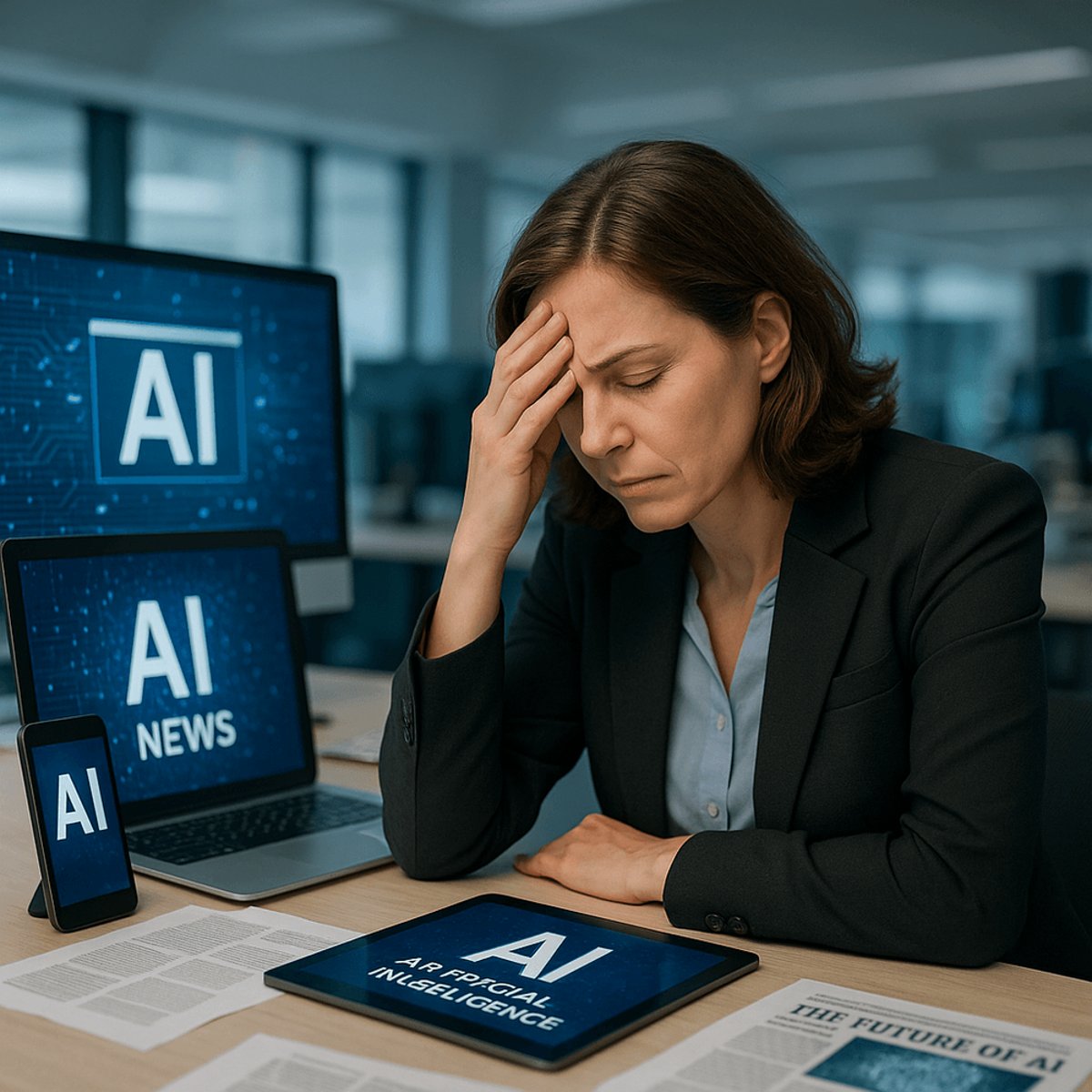
WIRED's editor-in-chief Katie Drummond just delivered the most brutally honest take on AI coverage you'll read this year. In a candid editorial, she argues the worst thing about artificial intelligence isn't the technology itself - it's that everyone won't shut up about it. Her message to the tech industry and media: calm down, it's not that profound.
The tech world's most uncomfortable truth just got delivered by someone who actually has to live with the consequences. WIRED editor-in-chief Katie Drummond published a scathing takedown of AI coverage fatigue that reads like a frustrated scream into the void - if the void was packed with venture capitalists and PR flacks.
"I have been inundated - fully drowning, water rushing into the nostrils and flooding the lungs - with inquiries about my point of view on the technology," Drummond writes in her editorial. The requests come from everywhere: conference organizers, her dad, fellow journalists, even her dermatologist who apparently has an AI diagnostic tool she wants opinions on.
But here's the kicker - Drummond's frustration isn't just personal. She's calling out what many in tech have been thinking but afraid to say: this AI moment might be more hype than substance. "The technology has been around and iterating and evolving for decades," she explains, noting that current AI fanaticism specifically refers to deep-learning models trained on massive datasets.
The timing couldn't be more pointed. While OpenAI continues pushing Sora and Google integrates AI features that arguably make search worse, Drummond is asking everyone to take a breath. She describes generative AI as "genuinely useful in some contexts, profoundly useless in others, and decidedly unproven in most."
The economic reality check hits hardest. "A growing number of signs indicate it is an economic bubble," Drummond writes, echoing concerns from analysts who've been tracking AI company valuations against actual revenue. The infrastructure costs alone - training, deploying, and commercializing these models - suggest the current spending spree isn't sustainable.
For journalism specifically, Drummond takes direct shots at Big Tech's handling of publishers. She describes Google's relationship with news organizations as "decades-long abusive," where publishers face either "taking a major haircut or shutting down entirely" if they try to escape the search giant's ecosystem. Meanwhile, Meta gets dismissed even more brutally - she calls their AI-generated video feed "slop, basically. Total shit, pretty much."
The editorial reveals how WIRED plans to navigate this landscape. They'll use AI selectively - for copyediting, research, and what Drummond calls "brainstorming with the automated equivalent of a fairly stupid intern." But the core journalism work? That stays human. "Unearthing and communicating new and newsworthy information? Landing on the turn of phrase that says exactly what you want, so damn beautifully?" she writes. "That's human work, by humans and for them."
What makes Drummond's critique so cutting is her position. As the leader of one of tech's most influential publications, she could easily ride the AI wave for clicks and conference invitations. Instead, she's pushing back against the very ecosystem that feeds tech media. Her advice to readers? Learn the basics, use what's useful, but "please relax. The world is always changing; technology didn't begin with ChatGPT."
The broader implications extend beyond journalism. If the editor of WIRED - a publication that lives and breathes tech innovation - is calling for AI coverage fatigue, it signals a potential shift in how the industry discusses these technologies. The breathless coverage of every AI announcement, the endless speculation about artificial general intelligence, the treating of each model update as world-changing news - Drummond is essentially saying it's exhausting and counterproductive.
Her final dig perfectly captures the absurdity: she ends the piece by saying she needs to run because she has "a mole on my back that I need a human opinion on." Even for medical diagnosis, apparently, human expertise still matters.
The editorial comes as AI companies face increasing scrutiny over energy consumption, copyright issues, and whether their massive valuations match real-world utility. When even tech media leaders are calling for less AI coverage, it might signal we're approaching peak hype.
Drummond's editorial represents more than media fatigue - it's a reality check from someone at the center of tech journalism. Her message is clear: AI has useful applications, but the relentless hype cycle is drowning out meaningful coverage of what actually works. As the industry grapples with sustainability questions and economic realities, having a major tech publication's leader call for less breathless coverage might just be the perspective shift the conversation needs. The question now is whether the rest of tech media - and the industry itself - will listen.