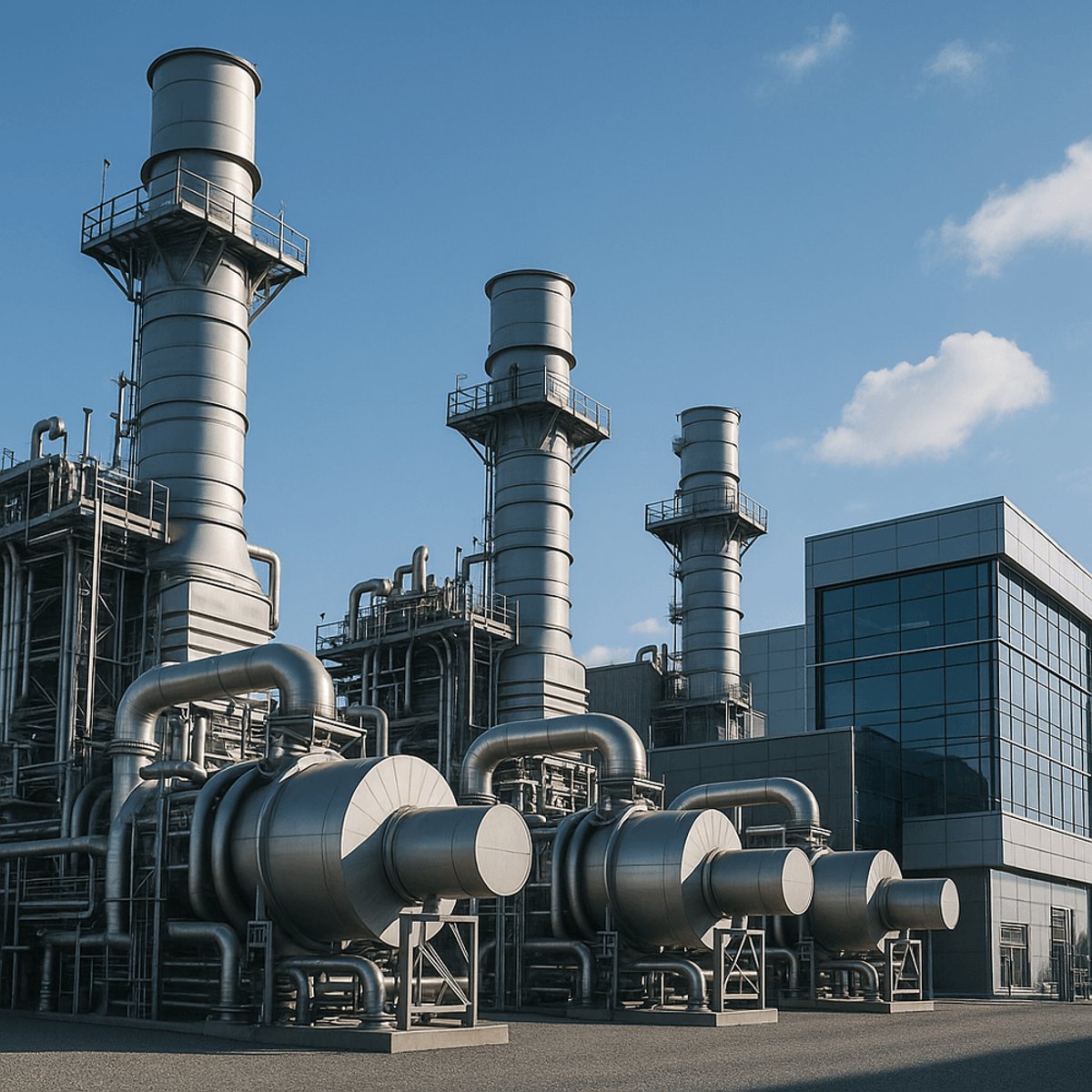
Elon Musk's xAI just cleared a major hurdle in the AI infrastructure arms race. Mississippi regulators approved permits for a massive 41-turbine natural gas power plant in Southaven, designed exclusively to power the company's expanding data center operations. The decision comes despite vocal opposition from environmental groups concerned about air quality impacts, highlighting the growing tension between AI's insatiable energy demands and climate commitments.
Elon Musk's xAI just secured what might be the most controversial infrastructure win in the AI buildout race. Mississippi state regulators approved permits for a 41-turbine natural gas power plant in Southaven, a facility designed exclusively to feed the company's growing fleet of data centers. The decision landed Tuesday despite mounting pressure from environmental advocates who argued the plant would worsen air quality in an already overburdened region.
The approval marks a watershed moment in the AI industry's energy crisis. While Microsoft, Google, and Amazon have been racing to secure power purchase agreements and explore nuclear options, xAI is taking a more direct approach - building its own dedicated power generation. The 41-turbine facility represents one of the largest single-purpose AI energy projects announced to date, according to CNBC's reporting.
Mississippi's regulatory commission apparently weighed economic development against environmental concerns and chose growth. The state has been aggressively courting tech infrastructure projects, offering tax incentives and streamlined permitting to companies willing to build in the region. xAI's facility promises hundreds of construction jobs and ongoing operational positions, a pitch that resonated with regulators facing pressure to diversify the state's economy beyond traditional industries.
But the environmental math tells a different story. Natural gas-burning turbines, even modern efficient ones, produce significant carbon emissions and local air pollutants. Environmental groups that opposed the permit argued that adding 41 turbines to Southaven's existing industrial footprint could push the area into non-attainment status under federal air quality standards. The concern isn't just theoretical - AI data centers are already straining power grids across the country, forcing utilities to delay coal plant retirements and fire up backup generators.
The energy crunch hitting AI companies is real and getting worse. Training large language models like xAI's Grok requires massive computational power, which translates directly into electricity consumption. A single training run for a frontier model can consume as much power as a small city uses in a month. As companies race to train larger models faster, the power demands are growing exponentially. Microsoft recently signed a deal to restart Three Mile Island's nuclear reactor, while Amazon is investing in small modular reactor technology.
xAI's decision to build dedicated gas generation suggests the company doesn't believe existing grid capacity can support its ambitions. The Southaven facility will sit adjacent to xAI's data center campus, eliminating transmission losses and giving the company direct control over power reliability. That level of control matters when you're running training jobs that can't tolerate interruptions and cost millions of dollars per run.
The competitive implications are significant. While rivals negotiate with utilities and wait for renewable projects to come online, xAI could be training models at full capacity within 18-24 months once construction completes. That timeline advantage could prove decisive in the race to achieve artificial general intelligence, a goal Musk has repeatedly emphasized as xAI's primary mission.
Mississippi's approval also sets a precedent that other states are likely watching closely. If xAI successfully builds and operates the facility, expect similar proposals in other jurisdictions eager for tech investment. The playbook is straightforward - offer streamlined permitting and regulatory certainty in exchange for jobs and capital investment. States with existing industrial infrastructure and less stringent environmental review processes suddenly become attractive locations for AI buildouts.
The environmental trade-off won't go unnoticed by investors and customers increasingly focused on ESG commitments. Google and Microsoft have both pledged to reach carbon neutrality and are investing heavily in renewable energy and carbon offsets. xAI's gas-burning approach puts the company at odds with those commitments, potentially limiting partnerships with enterprises that have strict sustainability requirements for their AI vendors.
What happens next depends partly on how quickly xAI can break ground and navigate the inevitable legal challenges. Environmental groups have already signaled they're exploring options to appeal the permit or seek federal intervention under the Clean Air Act. Those challenges could delay construction, eroding xAI's timeline advantage. But if Musk's track record with Tesla and SpaceX is any guide, expect an aggressive construction schedule that aims to present regulators with a fait accompli.
Mississippi's decision to greenlight xAI's power plant crystallizes the central tension in AI's next phase - the technology's potential versus its environmental cost. As training runs get bigger and models more capable, energy becomes the limiting factor. Companies that solve the power equation first gain a decisive advantage, but potentially at the cost of their climate credibility. The Southaven approval suggests that in the race between AI ambition and environmental concerns, at least some regulators are betting on the former. Whether that calculation looks wise in hindsight depends on whether xAI delivers breakthroughs that justify the emissions, or simply adds another fossil fuel facility to power another incrementally better chatbot.