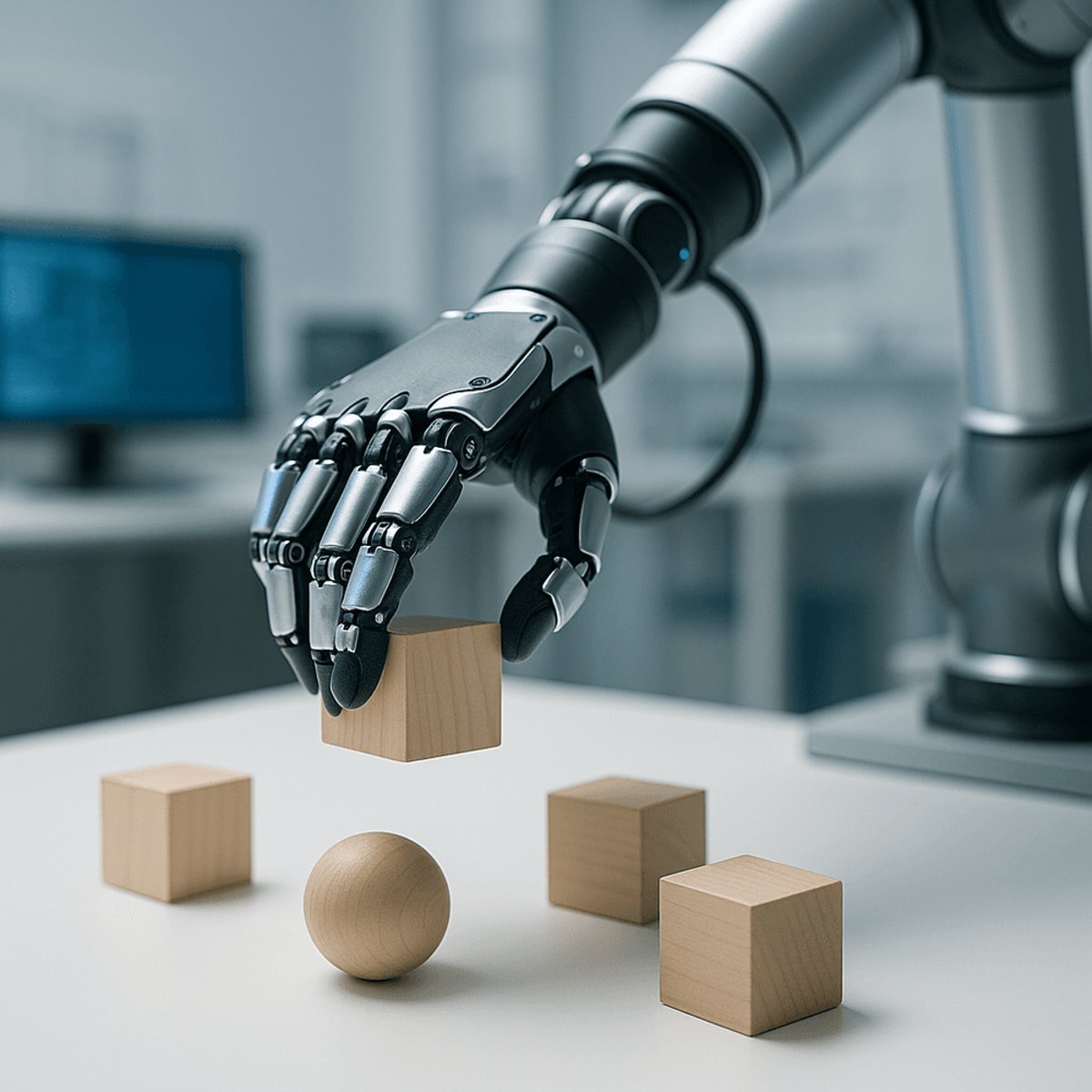
One of AI's founding fathers just placed a billion-dollar bet against the technology everyone else is chasing. Yann LeCun, the Turing Award-winning scientist who spent years leading Meta's AI research, has raised $1 billion for AMI, a startup pursuing what he calls the real path to human-level intelligence - machines that understand the physical world, not just language. The move marks one of the largest contrarian plays in AI history, coming as competitors pour resources into ever-larger language models.
Meta's former chief AI scientist is making his biggest bet yet - and it's a direct rebuke of nearly everyone else in Silicon Valley. Yann LeCun, the legendary researcher who helped lay the foundations for modern deep learning, has secured $1 billion in funding for AMI, a startup built on the conviction that the industry's obsession with large language models is leading AI down the wrong path.
The funding round, one of the largest Series A raises in tech history, comes as OpenAI, Anthropic, and Google race to build ever-more-powerful chatbots. LeCun's been vocal about his skepticism. At conferences and on social media over the past two years, he's argued that true intelligence requires understanding physics, causality, and the three-dimensional world - capabilities that can't emerge from predicting the next word in a sentence.
"Language is a shadow of reality," LeCun told audiences at a 2024 AI conference, a talk that now reads like AMI's founding manifesto. While ChatGPT and Claude can write code and summarize documents, they can't intuitively grasp that a coffee cup will fall if you let go of it - knowledge that human infants master within months.
AMI's formation represents a clean break from LeCun's two-decade tenure at Meta, where he built one of the world's premier AI research labs. The company confirmed his departure in a brief statement, noting that his contributions "shaped the field of AI as we know it." Industry insiders suggest the split was amicable, with Meta CEO Mark Zuckerberg reportedly encouraging LeCun to pursue his vision independently rather than redirect the company's existing LLM investments.
The startup's investor list reads like a who's who of tech power brokers, though AMI hasn't disclosed specific backers. Sources familiar with the deal say the $1 billion valuation reflects both LeCun's pedigree and the potential market size if physical AI unlocks new categories in robotics and automation. His 2018 Turing Award - often called the Nobel Prize of computing - came for pioneering convolutional neural networks, the technology that powers everything from iPhone face recognition to autonomous vehicle vision systems.
What sets AMI apart isn't just the capital but the technical approach. While competitors train models on trillions of words scraped from the internet, LeCun's team is reportedly building systems that learn from sensory data - video, depth sensors, touch feedback - to construct internal models of how objects move and interact. Think less ChatGPT, more robot toddler learning physics through trial and error.
The timing is crucial. Tesla's Optimus robot and emerging competitors in warehouse automation have demonstrated demand for machines that navigate complex physical environments. Current solutions rely heavily on hand-coded rules and pre-mapped spaces. AMI's pitch is that AI trained on physical understanding could adapt to novel situations the way humans do, potentially unlocking trillion-dollar markets in manufacturing, logistics, and elder care.
But the technical challenges are immense. Physical world data is exponentially more complex than text - a single second of video from multiple camera angles contains more information than thousands of pages of text. Training systems to extract causal relationships from that noise has stumped researchers for decades. LeCun's betting that recent advances in self-supervised learning, a technique his lab helped pioneer, can crack the problem.
The funding also sets up a fascinating ideological battle. Sam Altman at OpenAI has argued that scaling language models will naturally lead to physical understanding. LeCun's counter-argument - now backed by a billion dollars - is that you can't learn to see by reading descriptions of vision. Google's DeepMind division is somewhere in the middle, with projects spanning both LLMs and robotics.
Wall Street is watching closely. The AI boom has largely been driven by language model applications in coding, customer service, and content generation. If AMI demonstrates breakthroughs in physical reasoning, it could shift investment toward robotics and industrial AI - sectors that have seen less hype but potentially larger economic impact. Manufacturing alone represents a $15 trillion global market where better automation could unlock massive productivity gains.
LeCun's reputation gives AMI instant credibility, but it also raises expectations. His academic work in the 1980s and 90s laid groundwork that took decades to bear commercial fruit. Investors are betting this time will be faster, but the startup faces pressure to show results before the billion-dollar runway runs out. Early hires suggest an initial focus on robotic manipulation - teaching machines to handle objects with the dexterity and adaptability humans take for granted.
LeCun's billion-dollar gamble on physical AI represents more than just another well-funded startup - it's a referendum on the entire direction of artificial intelligence. If AMI succeeds in building systems that genuinely understand the physical world, it could reshape everything from factory floors to home robotics while proving that the path to human-level AI runs through embodied experience, not bigger chatbots. If it struggles, the result will validate the current LLM-centric approach and potentially close the door on alternative architectures for years. Either way, one of AI's most influential researchers is now racing against his former peers to define what intelligence actually means.