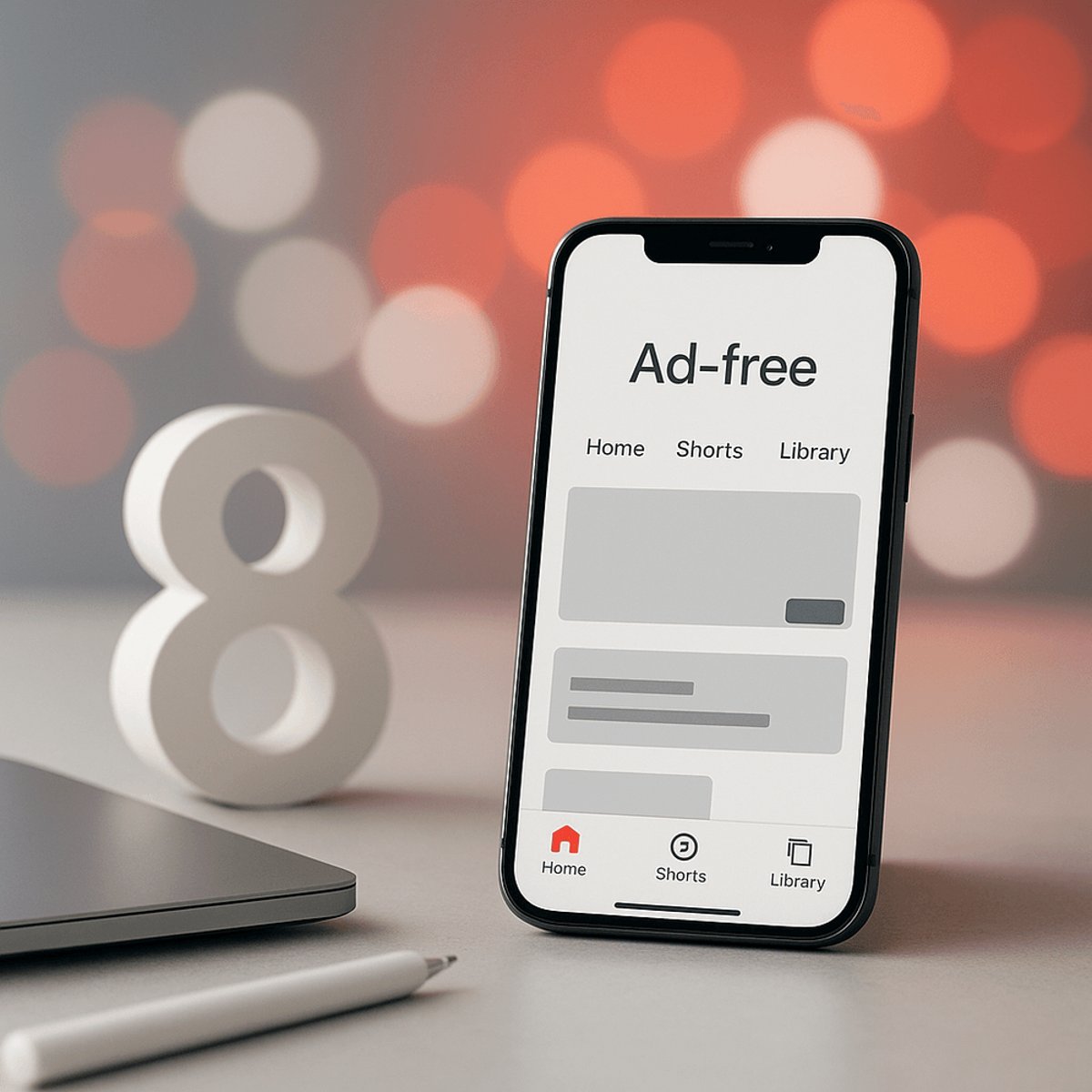
Google just rolled out YouTube Premium Lite, a streamlined $8 monthly subscription that strips ads from most YouTube videos while leaving music and Shorts untouched. The move creates a middle ground between free YouTube's ad-heavy experience and the full $14 Premium package, potentially capturing price-sensitive users who've been reluctant to pay for YouTube's premium tier.
Google is betting that millions of YouTube users will pay $8 monthly for a partial escape from the platform's relentless advertising barrage. The company's new YouTube Premium Lite tier, quietly launched this week, removes ads from most videos while keeping them intact on music content and YouTube Shorts - a calculated compromise that could reshape how users think about paying for "free" platforms.
The launch comes as Google faces mounting pressure to diversify YouTube's revenue beyond traditional advertising. With over 2 billion monthly users consuming hundreds of hours of video, the platform's data storage costs run into the billions annually. "YouTube doesn't charge a cent for hosting all of your uploaded videos," notes Wired's analysis, "but those data storage costs are presumably astronomical."
Unlike the full YouTube Premium experience, Lite subscribers still encounter ads during music videos - a strategic decision that protects Google's lucrative music advertising revenue while offering core video ad removal. The $8 price point sits exactly between free YouTube and the $14 Premium tier, creating what industry analysts call a "good, better, best" pricing ladder that maximizes revenue capture across different user segments.
The timing isn't coincidental. Streaming subscription fatigue has reached a tipping point, with the average American household juggling 4.7 paid services according to recent Deloitte research. Google's bet is that users overwhelmed by $15-20 monthly streaming bills might embrace a cheaper, more focused offering that tackles their biggest YouTube frustration: pre-roll and mid-roll ads.
"It's really jarring when friends show me clips on their phone and we have to wait to get through the ads first," writes Wired's David Nield, capturing the friction that Google hopes to monetize. For heavy YouTube users, those "five and 10 second chunks will quickly add up over the course of a week and a month."
But Premium Lite's limitations are deliberate. By excluding offline downloads and YouTube Music Premium - features that cost Google significant infrastructure investment - the company maintains healthier margins while pushing power users toward the full $14 tier. It's a classic freemium strategy applied to an already-free platform.
The market response could determine whether other tech giants follow suit. Meta has experimented with paid tiers for Instagram and Facebook in Europe, while Twitter/X continues pushing its premium subscription model. If YouTube Lite succeeds, expect similar "partial premium" tiers across major platforms.
For Google, the stakes extend beyond YouTube. The company needs to prove it can extract more value from users without driving them to competitors like TikTok or emerging video platforms. Premium Lite represents a calculated middle ground - expensive enough to meaningfully impact revenue, cheap enough to avoid sticker shock.
Early adoption metrics will be crucial. Google hasn't disclosed subscriber targets, but industry watchers estimate the company needs roughly 50 million Lite subscribers to match the revenue impact of its current Premium base. That's ambitious but achievable given YouTube's massive user base and the universal frustration with video ads.
YouTube Premium Lite's $8 price point represents Google's most sophisticated attempt yet to monetize ad-averse users without cannibalizing its full Premium offering. Success hinges on whether millions of viewers will pay to skip most ads while accepting music video interruptions - a compromise that could define how major platforms balance free access with premium experiences. For users spending significant time on YouTube, the math is simple: does saving hours of ad-watching monthly justify the subscription cost? For Google, the answer needs to be a resounding yes to justify this carefully calibrated pricing experiment.