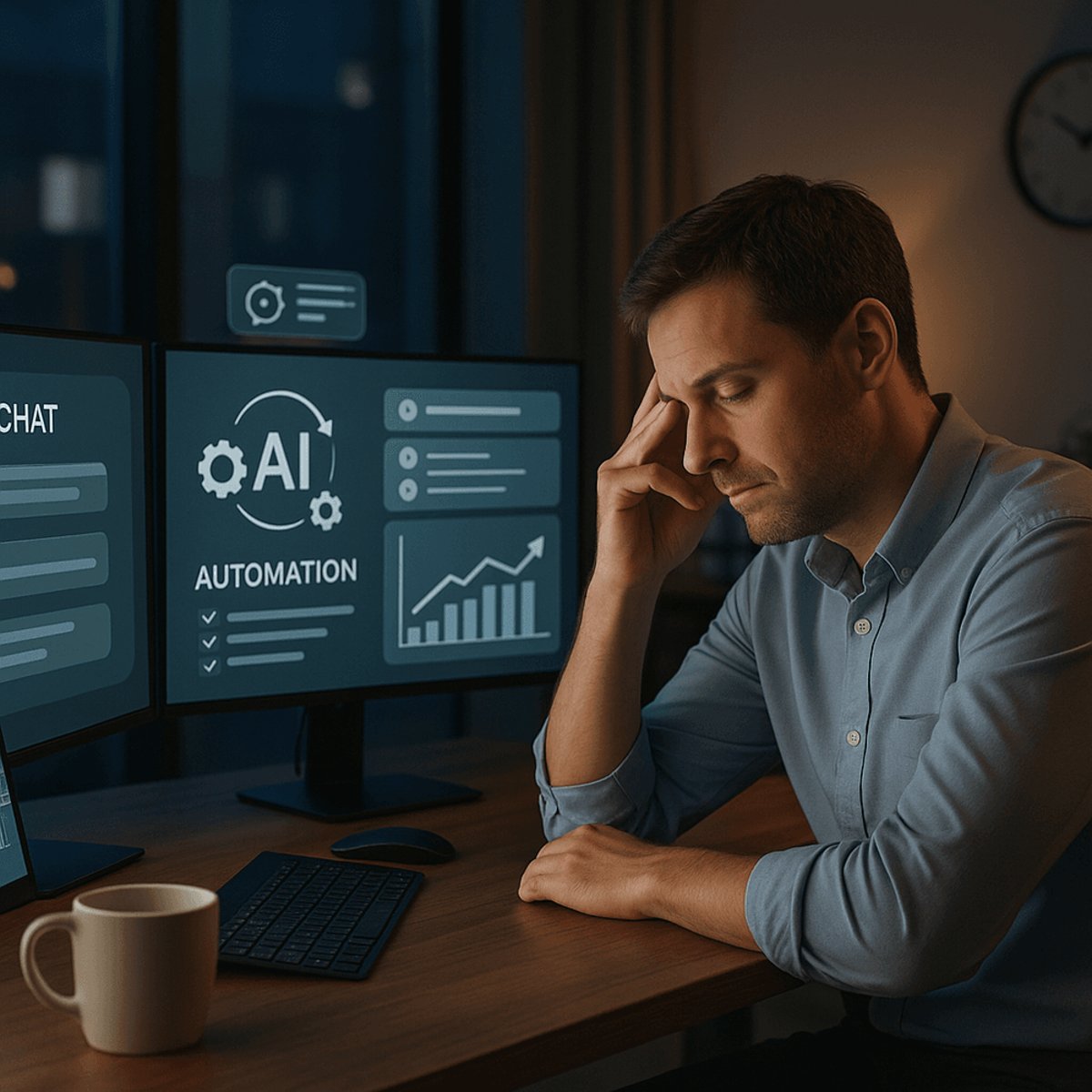
The promise of AI was supposed to give workers their time back. Instead, it's doing the opposite. A troubling pattern is emerging across companies that embraced AI tools early - the employees who adopted automation fastest are now showing the first signs of burnout. According to TechCrunch, the paradox is simple but brutal: because employees could do more, work began bleeding into lunch breaks and late evenings, with to-do lists expanding to fill every hour AI freed up, and then kept going.
The AI productivity revolution just hit its first major roadblock, and it's not the technology that's failing - it's the humans using it. Workers who jumped on AI tools like ChatGPT, Microsoft Copilot, and enterprise automation platforms are now facing an unexpected consequence: they're burning out faster than colleagues who resisted the change.
The pattern emerging from early enterprise AI deployments tells a story Silicon Valley didn't anticipate. When knowledge workers started using AI to write emails, generate reports, and automate routine tasks, they didn't get afternoons off. Instead, managers saw the productivity gains and simply piled on more work. One marketing professional who adopted OpenAI's tools told TechCrunch that her capacity to produce content tripled - and so did her quota.
This phenomenon reveals a fundamental misunderstanding about how organizations absorb new technology. The economic principle at play here isn't new - it's Jevons paradox, where increased efficiency leads to increased consumption rather than conservation. When steam engines became more fuel-efficient in the 1800s, coal consumption went up, not down. Now we're seeing the same dynamic with human attention and AI.
The workplace implications are starting to worry enterprise leaders who championed AI adoption. Companies that pushed employees toward Microsoft's Copilot or Google's Workspace AI are noticing something troubling in their internal surveys. The most enthusiastic AI users report working longer hours, not shorter ones. Lunch breaks disappeared as employees discovered they could knock out "just one more task" with AI assistance. Evening work crept in because drafting that presentation with AI only takes 20 minutes now.
What's particularly insidious is how this burnout sneaks up on people. Traditional overwork feels oppressive - you're grinding through tasks you hate. But AI-assisted work can feel empowering right up until you crash. You're getting more done, hitting goals, impressing stakeholders. The dopamine hit of completing tasks faster masks the fact that you're working 60-hour weeks without realizing it.
The data backing up these observations is still emerging, but workplace researchers are taking notice. The burnout patterns mirror what happened during the early remote work boom, when the absence of a commute simply became extra working hours rather than personal time. Meta and other tech giants that deployed internal AI tools broadly are now studying whether their productivity metrics are masking a retention crisis in the making.
For enterprise SaaS companies betting big on AI productivity tools, this creates an uncomfortable marketing problem. How do you sell automation that makes people more productive when that productivity becomes a trap? Microsoft has been positioning Copilot as a way to eliminate "drudge work," but if that just means room for more high-stakes work, the value proposition gets murky.
Some forward-thinking companies are trying to get ahead of this. A few are implementing "AI productivity caps" - limits on how much output increases can grow quarter-over-quarter regardless of what the technology enables. Others are experimenting with four-day work weeks specifically for teams that adopt AI tools, trying to ensure the time savings actually benefit workers. But these remain exceptions in a business culture that instinctively optimizes for maximum extraction of productivity gains.
The irony isn't lost on anyone paying attention: the technology that was supposed to free us from busywork is creating a new kind of digital overwork that's harder to identify and resist. It's productivity theater taken to its logical extreme, where the performance of getting things done becomes indistinguishable from actual overwork.
The AI productivity crisis unfolding among early adopters is a warning shot for every enterprise deploying these tools. Technology that amplifies human capability without structural changes to work expectations doesn't liberate workers - it just raises the bar for what counts as adequate performance. As AI tools spread from tech early adopters to mainstream workplaces, companies face a choice: redesign work around genuine human flourishing, or watch their most productive employees burn out first. The current trajectory suggests we're headed for the latter unless business leaders recognize that productivity gains mean nothing if they destroy the people generating them.