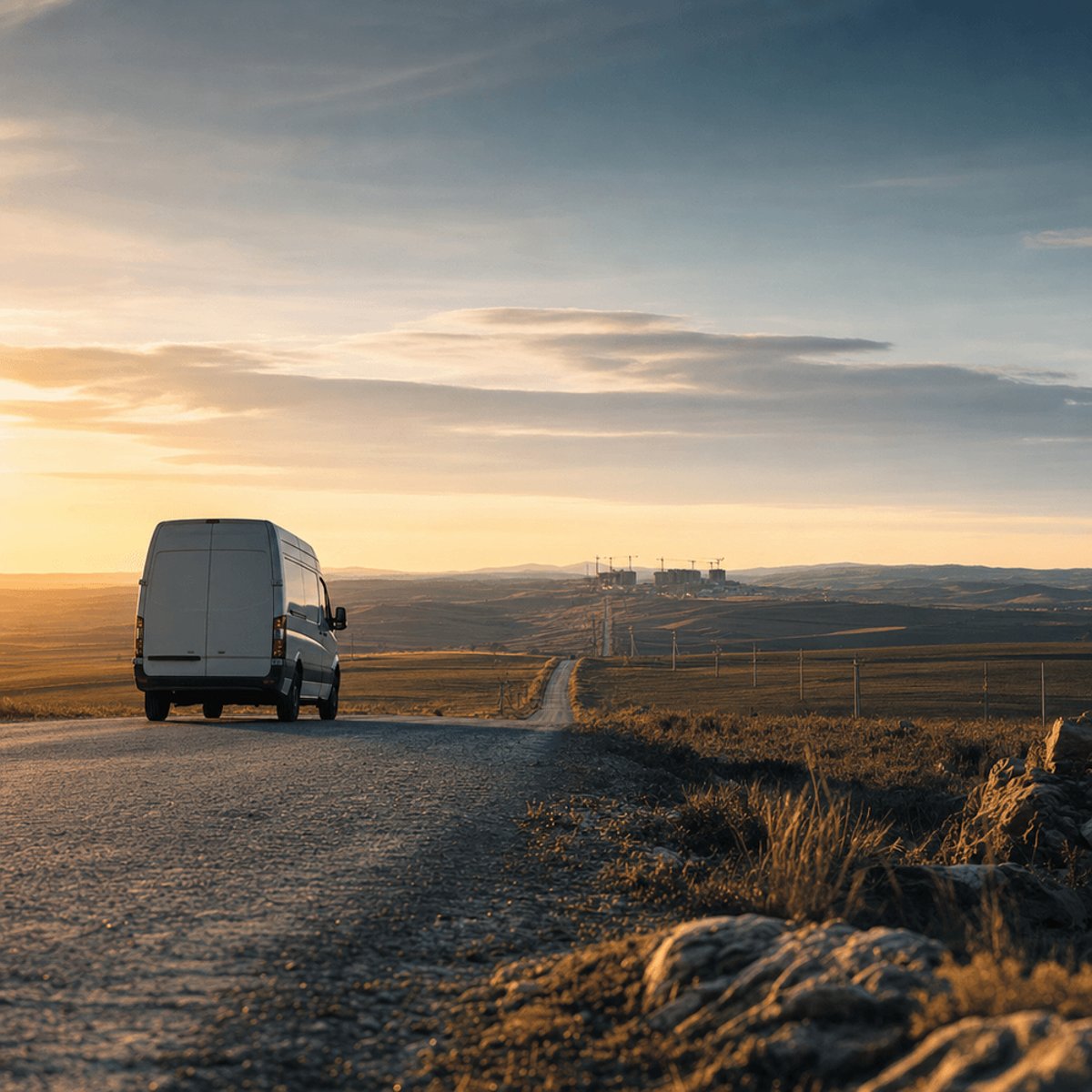
Amazon is doubling down on rural America while its competitors pull back. CEO Andy Jassy revealed the company has invested $4 billion in rural delivery infrastructure, a strategic move that positions Amazon as the dominant logistics player in underserved markets. The announcement, made during a CNBC interview with Jim Cramer, signals Amazon's willingness to tackle the most challenging—and potentially lucrative—corners of e-commerce that others are abandoning.
Amazon CEO Andy Jassy just made it clear that the company sees opportunity where others see only cost. In a revealing interview with CNBC's Jim Cramer, Jassy disclosed that Amazon has poured $4 billion into rural delivery infrastructure—at the exact moment when "other companies have been backing away" from these expensive, hard-to-reach markets.
The timing couldn't be more strategic. While FedEx and UPS have openly discussed reducing service in unprofitable rural routes, Amazon is building out the very infrastructure that makes those areas viable. It's a classic Amazon play—accept short-term costs to lock in long-term dominance.
The $4 billion figure represents a massive capital commitment that few companies could stomach. Rural delivery is notoriously expensive, with lower package density, longer distances between stops, and higher per-delivery costs. But for Amazon, controlling the entire supply chain—from warehouse to doorstep—has always been worth the premium. The company has systematically reduced its dependence on third-party carriers, and this rural investment is the logical extension of that strategy.
Jassy's comments to Cramer reveal Amazon's calculation: as traditional carriers retreat, Amazon gains pricing power and customer loyalty in markets where it becomes the only reliable option. Rural customers who can't get consistent service from competitors become Amazon Prime subscribers by necessity, not just convenience. It's infrastructure investment that doubles as customer acquisition.
The investment likely encompasses a mix of rural fulfillment centers, delivery stations, and local carrier partnerships. Amazon has been quietly building out smaller facilities closer to rural population centers, reducing the distance packages need to travel from urban hubs. The company has also expanded its Delivery Service Partner program, which enables local entrepreneurs to run fleets of Amazon-branded vans—a model particularly well-suited to rural areas where traditional carriers struggle.
But there's a competitive moat being built here that goes beyond logistics. Every dollar Amazon spends on rural infrastructure is a dollar its e-commerce rivals—Walmart, Target, Shopify merchants—can't match without similar investments. As third-party carriers deprioritize rural routes, these competitors face higher costs and longer delivery times, making Amazon's two-day (or faster) Prime promise even more valuable.
The political dimension can't be ignored either. Rural America has been a focal point of infrastructure debates, and Amazon's investment positions the company favorably with policymakers who've criticized tech giants for neglecting heartland communities. Jassy's public emphasis on this commitment—particularly in a high-profile CNBC interview—suggests Amazon is aware of the goodwill value.
The $4 billion also needs to be understood in the context of Amazon's overall logistics spending, which has topped $80 billion annually in recent years. But directing this specific sum to rural infrastructure shows intentionality. These aren't markets that will generate quick returns, but they're markets where Amazon can establish monopolistic control while competitors are still debating whether to serve them at all.
What makes this particularly shrewd is the optionality it creates. Amazon isn't just building delivery capacity for its own e-commerce operations—it's building infrastructure that could eventually serve third-party sellers, local businesses, and even competitors who need last-mile solutions. Amazon Logistics has already started offering delivery services to non-Amazon merchants in select markets. Rural infrastructure could become a profit center in its own right.
The move also insulates Amazon from regulatory pressure around carrier relationships. As antitrust scrutiny intensifies, having a fully independent delivery network—including in challenging rural territories—means Amazon isn't beholden to carriers who might face pressure to treat all retailers equally.
For rural communities, the impact is tangible but complicated. Faster, more reliable delivery improves quality of life and can help local businesses compete online. But it also accelerates the shift away from local retail, as consumers increasingly default to Amazon for everything from groceries to hardware. The infrastructure Amazon is building could outlast any local alternatives that still exist.
Amazon's $4 billion rural infrastructure bet is textbook competitive strategy—invest heavily where rivals won't, lock in customers who have no alternatives, and build a moat that becomes prohibitively expensive for anyone else to cross. Jassy isn't just buying delivery capacity; he's buying market control in regions where Amazon can become the default—and eventually only—option. As traditional carriers continue pulling back from unprofitable routes, Amazon's infrastructure advantage compounds. The question isn't whether this investment will pay off, but whether anyone else can afford to compete once Amazon owns the roads into rural America.