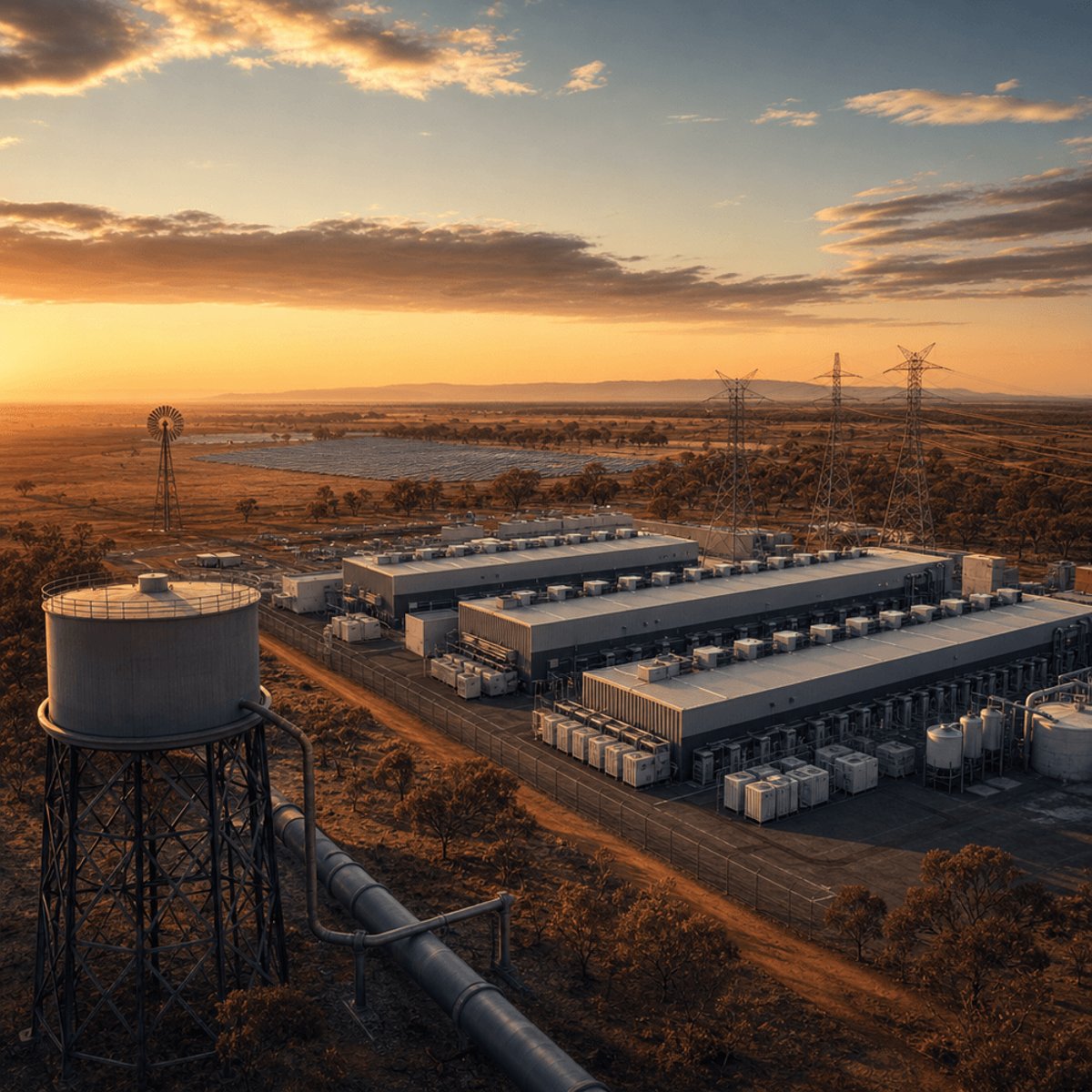
Australia is in the middle of a data centre construction spree, with tech giants racing to plant server farms across the country to feed the AI boom. But as BBC reports, the jobs pitch from industry advocates is running headlong into growing alarm from communities worried these facilities will drain power grids and water supplies while delivering little back to the towns that host them.
Australia has quietly become one of the hottest fronts in the global data centre arms race, and the reaction on the ground is anything but quiet. As BBC reports, new facilities are popping up across the country as cloud and AI infrastructure providers race to keep pace with demand, and the debate over whether that's good news or bad news for ordinary Australians is heating up fast.
The pitch from industry boosters is straightforward: these buildings mean jobs, both in construction and in the ongoing technical operations needed to keep thousands of servers humming. Local politicians in regions competing for these projects have leaned into that message, framing data centres as a ticket to economic diversification in areas that might otherwise be reliant on mining or agriculture.
But that framing is running into pushback from residents and environmental advocates who say the actual employment numbers rarely match the hype. Data centres, once built, don't need many people to run day-to-day. What they do need, in massive quantities, is electricity and water, and that's where the real friction is showing up. Cooling systems for server racks can consume millions of litres of water annually, and in a country that regularly grapples with drought conditions, that math doesn't sit well with everyone.
This isn't a uniquely Australian problem. The same tension has played out in Virginia's Data Center Alley, in Ireland, and across parts of the American Southwest, where Microsoft, Amazon and Google have all faced local resistance over grid strain tied to their AI infrastructure buildouts. Utilities in several US states have had to delay retirements of fossil fuel plants specifically to keep up with data centre demand, a pattern regulators in Australia are watching closely as they consider how to handle the current wave of applications.
The timing matters too. This surge is happening right as the AI boom is pushing compute demand to levels the industry didn't anticipate even two years ago. Training and running large language models requires enormous data centre capacity, and that's driving a global buildout that shows no signs of slowing. Australia, with its relatively stable political environment, proximity to Asian markets and available land, has become an attractive target for that expansion, alongside markets like Japan, India and Southeast Asia.
What's less clear is who actually benefits when the dust settles. Advocates for the projects argue that new data centres pull in local investment and put pressure on state governments to upgrade grid infrastructure that will benefit everyone, not just the tech tenants. Critics counter that residential electricity customers often end up subsidizing that grid work through higher rates, while the water and power actually consumed goes almost entirely toward keeping servers cool rather than serving the communities nearby.
There's also a transparency problem baked into a lot of these deals. Many data centre agreements come with non-disclosure terms around exact power and water usage, making it hard for local councils or watchdog groups to independently verify claims from either side of the debate. That opacity has fueled distrust in some of the communities where projects are being proposed or already under construction.
What happens next in Australia will likely hinge on how state and federal regulators handle permitting, water allocation and energy pricing for new facilities. There's growing pressure for stricter disclosure requirements and sustainability benchmarks before approvals get greenlit, especially as more AI-focused capacity comes online. If Australia follows the pattern already playing out in the US and Europe, expect this to become a recurring flashpoint as long as the AI infrastructure boom keeps accelerating.
The clash playing out in Australia is really a preview of a tension that's going to keep showing up wherever the AI infrastructure boom lands next. Jobs and investment are real, but so are the strains on power grids and water supplies that come with hosting the physical backbone of the AI economy. How Australian regulators balance those competing interests, and how much transparency they demand from the companies building these facilities, will likely set a template other countries watch closely as their own data centre pipelines fill up.