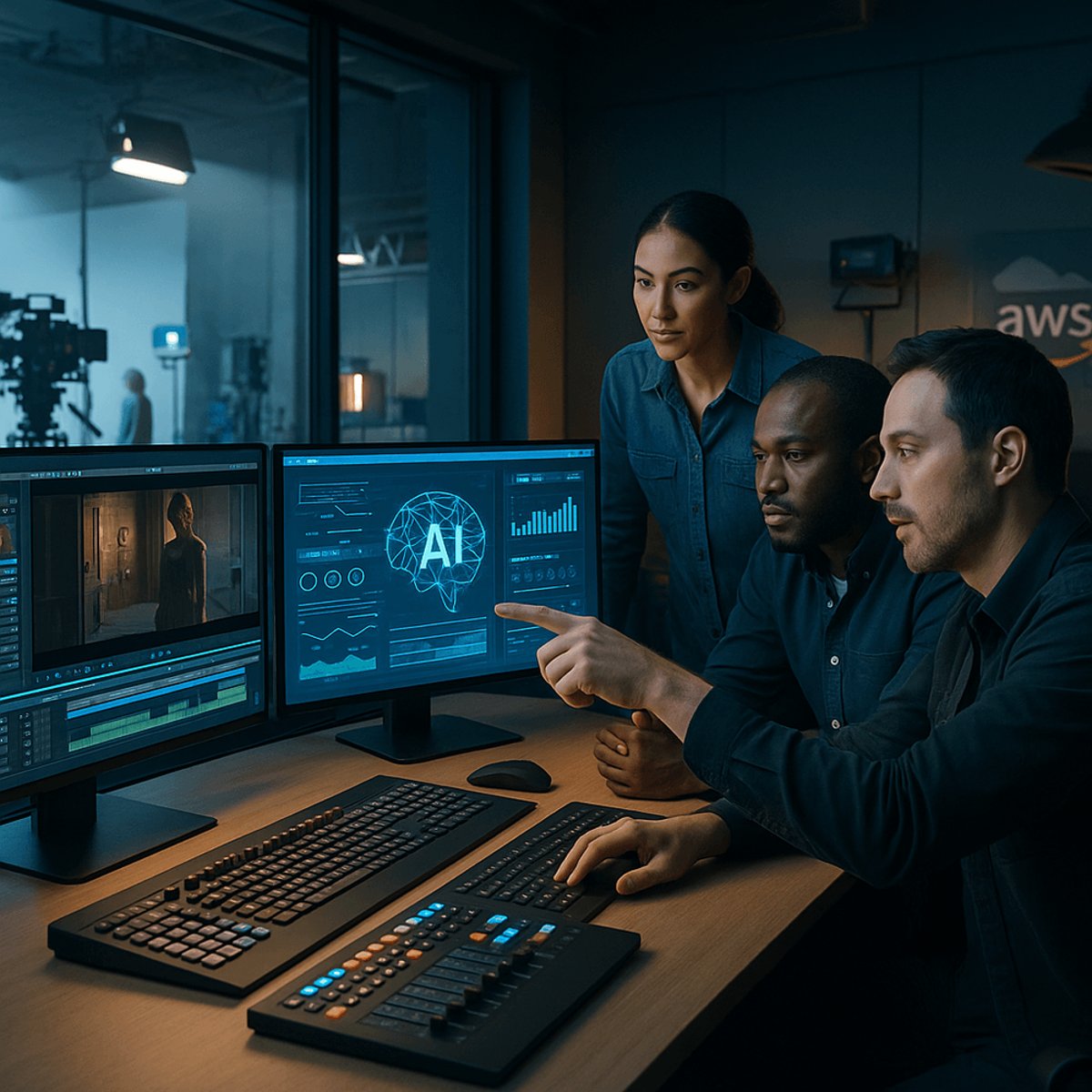
Amazon MGM Studios is opening up its AI production toolkit to Hollywood insiders next month, marking the tech giant's most aggressive push yet into generative AI for entertainment. The closed beta program, launching in March, will give select industry partners access to proprietary tools designed to streamline everything from pre-production planning to post-production editing. With initial results expected by May, Amazon's betting it can reshape how movies and TV shows get made while the industry's still wrestling with what AI means for creative work.
Amazon just dealt Hollywood a reality check. After months of quiet development inside its dedicated AI Studio, the tech and entertainment giant is ready to share its production tools with the industry - whether creatives are ready or not.
The company's launching a closed beta program in March that'll put its proprietary AI toolkit in the hands of select producers, directors, and production teams, according to Reuters. Amazon MGM Studios formed the AI Studio last summer with a specific mandate: build tools that make film and TV production faster and cheaper without sacrificing creative vision. Now those tools are moving beyond internal testing.
The timing's no accident. While competitors like Netflix dip their toes in generative AI - Co-CEO Ted Sarandos recently revealed "The Eternaut" used AI to create a building collapse scene - Amazon's going all-in with a systematic approach that leverages its cloud infrastructure advantage through Amazon Web Services.
The beta program's not just a tech demo. Amazon's partnered with serious Hollywood talent to stress-test these tools in real production environments. Robert Stromberg, the production designer behind "Maleficent," is working with the team. So is Kunal Nayyar from "The Big Bang Theory" and Colin Brady, a former Pixar animator. These aren't AI evangelists - they're established creatives being asked to figure out where these tools actually help versus where they get in the way.
Albert Cheng, who heads the AI Studios initiative, insists the goal is supporting creative teams, not replacing them. But the proof's already on screen. Amazon's biblical epic "House of David" featured 350 AI-generated shots in season two, a scale that would've been prohibitively expensive or time-consuming using traditional VFX methods.
The tools reportedly focus on character consistency across different shots and scenes - a persistent headache in production where continuity errors cost time and money to fix. Pre-production planning and post-production workflows are also getting AI assists, though Amazon's staying tight-lipped on specifics until the beta results come in. The company told TechCrunch it expects to share initial outcomes by May.
What sets Amazon's approach apart is the infrastructure play. The company's tapping multiple large language model providers rather than betting on a single AI vendor, and it's building everything on AWS backbone. That gives Amazon control over data security and intellectual property protection - crucial concerns in an industry paranoid about AI models training on proprietary content.
Cheng emphasized that Amazon's ensuring AI-generated content won't get absorbed into other companies' training datasets, a safeguard that could ease some creative industry fears. But it won't quiet all the concerns.
Hollywood's relationship with AI has gone from curiosity to existential anxiety in record time. The technology promises efficiency gains that studios desperately want - production costs keep climbing while streaming economics demand more content for less money. But it also threatens jobs across the creative spectrum, from concept artists to editors to VFX specialists.
Amazon's own recent history underscores the tension. The company eliminated 16,000 jobs in January and 14,000 last October, explicitly citing AI-driven efficiency improvements as a factor. When executives talk about "supporting creative teams" while simultaneously cutting thousands of positions, the mixed message lands hard.
The closed beta structure suggests Amazon knows it's walking a political minefield. By inviting select partners rather than broadly releasing tools, the company gets feedback from industry insiders while controlling the narrative around how AI gets deployed. It's a softer approach than simply announcing "we're automating film production now" - even if that's ultimately where this heads.
Competitive pressure's mounting fast. Netflix's public experiments with generative AI signal that streaming giants see this as table stakes for the next decade of content production. Traditional studios are watching closely, trying to figure out if they build, buy, or partner for similar capabilities. Meta and Google both have generative AI video tools in development that could eventually target entertainment production.
Amazon's betting its combination of content expertise through MGM Studios, cloud infrastructure through AWS, and AI research capabilities gives it a unique position. The March beta will test whether Hollywood's creative community sees Amazon as a helpful partner or an existential threat.
The results Amazon shares in May won't just be about technical capabilities - they'll reveal how willing the industry is to embrace AI assistance when it comes from a company that's already reshaped retail, cloud computing, and now wants to transform how stories get told on screen.
Amazon's March beta represents Hollywood's clearest signal yet that AI in production isn't a question of if but how fast. With the company promising results by May, the industry's about to get hard data on whether these tools actually deliver efficiency gains without sacrificing creative quality. But the bigger test isn't technical - it's whether an industry already anxious about job security and creative control will accept AI assistance from a company that's publicly linked automation to mass layoffs. How Hollywood's creative community responds to this beta will shape not just Amazon's strategy but the entire entertainment industry's approach to generative AI over the next decade.