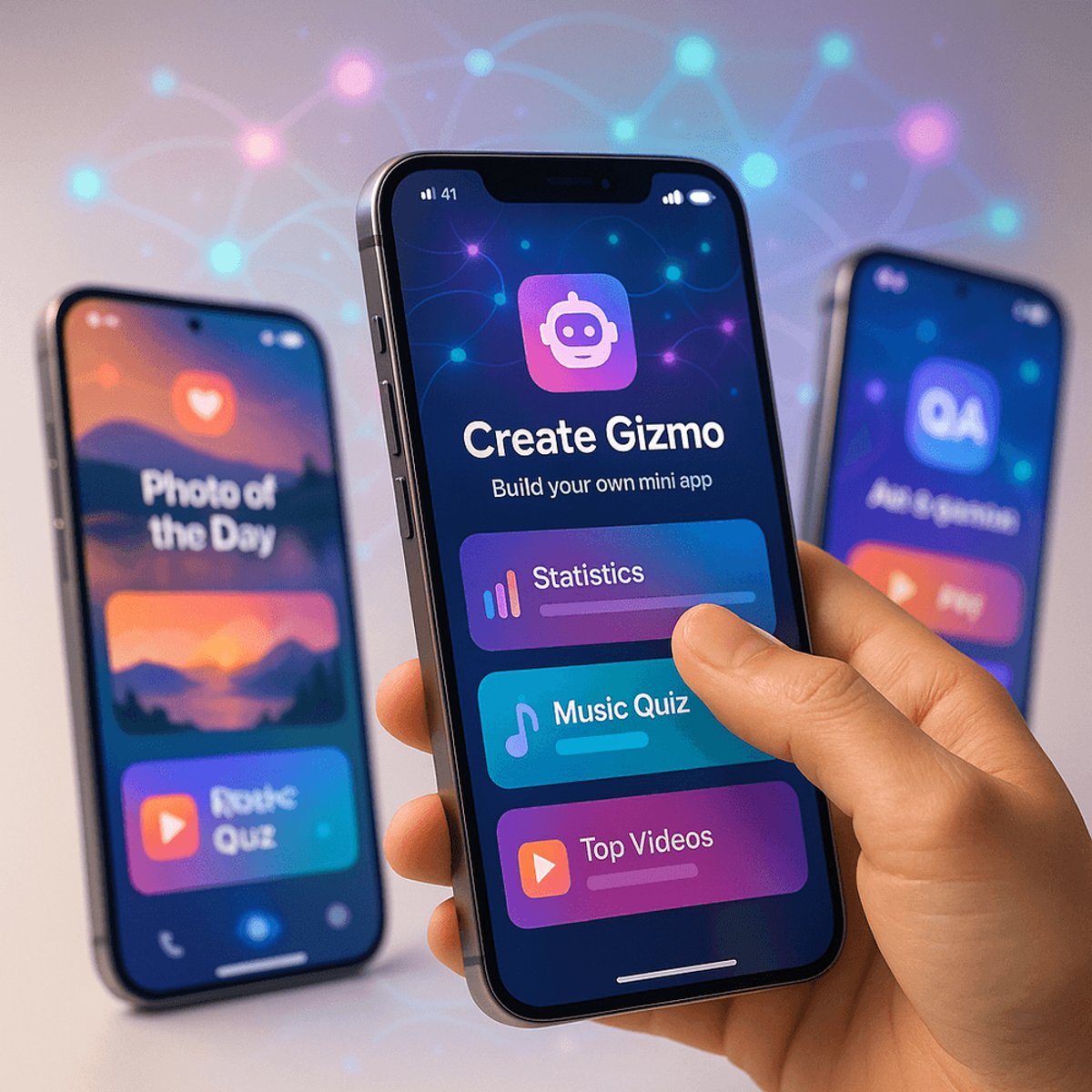
A new kind of social feed is gaining traction, and it's not about watching - it's about playing. Gizmo, the TikTok-style app from New York startup Atma Sciences, has quietly racked up 600,000 installs in less than six months by letting anyone create interactive mini-apps using nothing but AI prompts. The app's December growth alone - 235,000 downloads - signals a fresh appetite for creativity tools that blur the line between coding and casual creation.
Gizmo is rewriting the rules of what a social feed can be. Instead of passively scrolling through videos, users swipe through a vertical stream of interactive mini-apps - digital toys that respond to taps, swipes, drags, and drawing. Think puzzles, animated art, quirky memes, and experiences that defy easy categorization. The twist? Anyone can create them using nothing but text prompts.
The app comes from Atma Sciences, a New York startup co-founded by Rudd Fawcett, Brandon Francis, CEO Josh Siegel, and CTO Daniel Amitay. The team raised a $5.49 million seed round from First Round Capital and others last year, according to PitchBook data. Their mission, as stated on their playfully interactive website, centers on "combining powerful technology with simple, elegant foundations."
What makes Gizmo stand out in the increasingly crowded vibe-coding space is its refusal to make users think like programmers. Other platforms like Anything focus on utility - building micro-apps for specific tasks. Gizmo takes a different path, prioritizing fun over function. You're not building a productivity tool. You're creating something that makes someone smile, or think, or poke their screen repeatedly just to see what happens.
The creation process is disarmingly simple. Type out what you want in natural language - "make a quiz about 90s cartoons" or "create a bouncing ball that changes colors" - and Gizmo's AI coding technology generates the underlying code, renders it visually, and checks that everything runs smoothly. The company uses both AI and human moderation to vet apps for safety, according to its FAQ.
In testing, TechCrunch reporter Sarah Perez found the AI quickly generated a mini quiz, though she had to prompt it to fix a title that got cut off at the top of the screen. Once you're happy with your creation, you can share it to Gizmo's public feed, message it to friends, or post it to social media via a unique URL. Other users can like, comment, and even remix existing Gizmos to create their own versions.
The growth numbers tell a compelling story. According to market intelligence firm Appfigures, Gizmo has pulled in roughly 600,000 installs since launching less than six months ago, with about half coming from U.S. users. December alone accounted for 235,000 downloads - 39% of the app's total installs. From October to December, Gizmo's growth exploded 312%, with December installs up 50% month-over-month and November up 180% from October.
That trajectory puts Gizmo in interesting territory. It's not trying to be a professional development tool or a serious coding platform. Instead, it feels like a mashup between TikTok's addictive scroll and Rooms, the interactive 3D space designer that Google backed with $1 million. But where Rooms introduced the Lua programming language for advanced users, Gizmo keeps everything prompt-based and accessible.
The company's founders didn't respond to multiple interview requests from TechCrunch through emails, investor connections, and LinkedIn outreach. One investor confirmed the team isn't ready for press yet - a curious stance for a consumer app seeing this kind of organic growth. That silence might be strategic. Let the product speak for itself while the team focuses on scaling infrastructure and keeping the feed fresh.
What Gizmo represents is a shift in how we think about app creation and social media consumption. The rise of AI-assisted coding tools has spawned a new category - call it creative coding for the masses. But most platforms in this space still feel like work. Gizmo feels like play. That difference might be what drives its next 600,000 installs.
The app is available on both iOS and Android, with no paywalls or premium tiers visible yet. How Atma Sciences plans to monetize this engagement remains an open question. For now, the focus appears to be growth and community building - letting users discover that coding doesn't have to feel like coding.
Gizmo's rapid climb to 600,000 installs in under six months suggests there's real hunger for creative tools that don't feel like tools. By making app creation feel more like play than work, Atma Sciences has found a sweet spot between TikTok's addictive engagement and the emerging vibe-coding movement. The question now isn't whether Gizmo can attract users - it's whether the team can maintain quality as the feed scales, build a sustainable business model, and keep the experience feeling fresh. If December's 50% month-over-month growth continues, we'll likely see Gizmo hit a million users before spring. That's when the real test begins - turning a viral moment into a lasting platform.