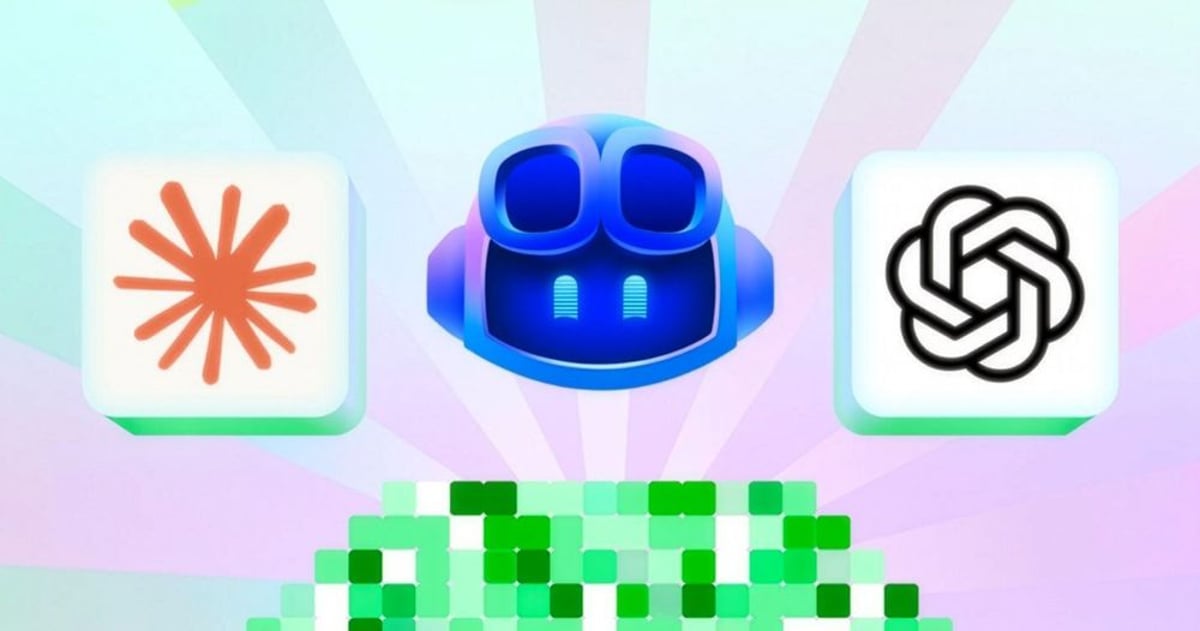
GitHub just cracked open its developer platform to rival AI coding agents, launching public preview access to Anthropic's Claude and OpenAI's Codex alongside its own Copilot. The move signals a major strategic shift for Microsoft, which owns GitHub but is now letting enterprise developers mix and match competing AI tools directly inside their workflow. Available today for Copilot Pro Plus and Enterprise subscribers, the integration marks the first time developers can assign different AI agents to specific tasks, issues, and pull requests without leaving GitHub's ecosystem.
GitHub is making a bold bet that the future of developer tools isn't about locking teams into a single AI provider - it's about letting them choose the best agent for each job. The Microsoft-owned platform launched Agent HQ today, bringing Anthropic's Claude and OpenAI's Codex directly into the developer workflow alongside GitHub's own Copilot.
The integration goes live in public preview across GitHub, GitHub Mobile, and Visual Studio Code for developers with Copilot Pro Plus or Copilot Enterprise subscriptions. Instead of context-switching between different AI coding tools, developers can now select which agent handles each task, from debugging pull requests to generating entire features.
"Context switching equals friction in software development," GitHub's chief product officer Mario Rodriguez told The Verge. "With Codex, Claude, and Copilot in Agent HQ, you can move from idea to implementation using different agents for different steps without switching tools or losing context."
The technical implementation lets developers assign specific agents to issues and pull requests, with each AI coding agent consuming a premium request from their subscription. More importantly, developers can compare how Copilot, Claude, and Codex each approach the same problem - essentially running a live bake-off between competing AI systems on real production code.
This isn't GitHub's first flirtation with multi-model AI. The platform already opened access to underlying models from Anthropic, Google, xAI, and OpenAI inside Copilot last October. But integrating full AI agents - not just models - represents a significant escalation in how developers interact with AI tools.
The timing is particularly interesting given Microsoft's internal testing of Anthropic's Claude Code. Developers inside Microsoft have been quietly comparing Claude Code against GitHub Copilot for months, according to reports from The Verge, in what appears to be an effort to identify gaps and improve Copilot's performance. Now that same competitive dynamic is playing out openly on GitHub's platform.
For enterprise development teams, the implications are massive. Instead of standardizing on a single AI coding assistant based on procurement contracts or vendor relationships, teams can deploy Claude for complex reasoning tasks, Codex for rapid prototyping, and Copilot for GitHub-native workflows. The agent that performs best for each use case wins the work.
GitHub isn't stopping with Claude and Codex. The company confirmed it's working with Google, Cognition, and xAI to bring additional agents into GitHub, Visual Studio Code, and the Copilot CLI. Access will also expand beyond premium subscription tiers soon, though GitHub hasn't specified the timeline or which subscription levels will gain access.
The strategic calculus here is fascinating. Microsoft has poured billions into OpenAI and positioned GitHub Copilot as a centerpiece of its AI developer strategy. Yet GitHub is now platformizing itself as the Switzerland of AI coding tools, potentially at the expense of Copilot's market dominance. The bet appears to be that owning the platform where developers choose between AI agents matters more than forcing adoption of Microsoft's preferred AI.
For Anthropic and OpenAI, GitHub's 100 million-plus developer user base represents immediate distribution for their coding agents. But they're also entering a gladiator arena where their performance gets directly compared against competitors on every task. The transparency cuts both ways - developers get better tools, but AI providers face constant performance scrutiny.
The developer community has been pushing for exactly this kind of flexibility. Early reactions suggest teams are eager to test which AI agent handles different coding challenges best, rather than being locked into a single provider's approach to code generation, debugging, or refactoring.
GitHub's Agent HQ launch represents a pivotal moment in the AI coding wars - instead of walled gardens, we're seeing the emergence of an open marketplace where AI agents compete on performance rather than vendor lock-in. For developers, it means access to best-in-class tools without the friction of switching platforms. For Microsoft, it's a calculated risk that owning the platform matters more than monopolizing the AI layer. And for the industry, it sets a new standard: multi-agent flexibility might become table stakes for any serious developer tool. Watch how enterprise adoption unfolds over the next quarter - if teams embrace multi-agent workflows, expect every major IDE and developer platform to follow GitHub's lead.